
Free on-site gate assessment - hinges, posts, and your LiftMaster or Nice gate operator checked before anything is quoted
The assessment is free and the quote is the invoice.
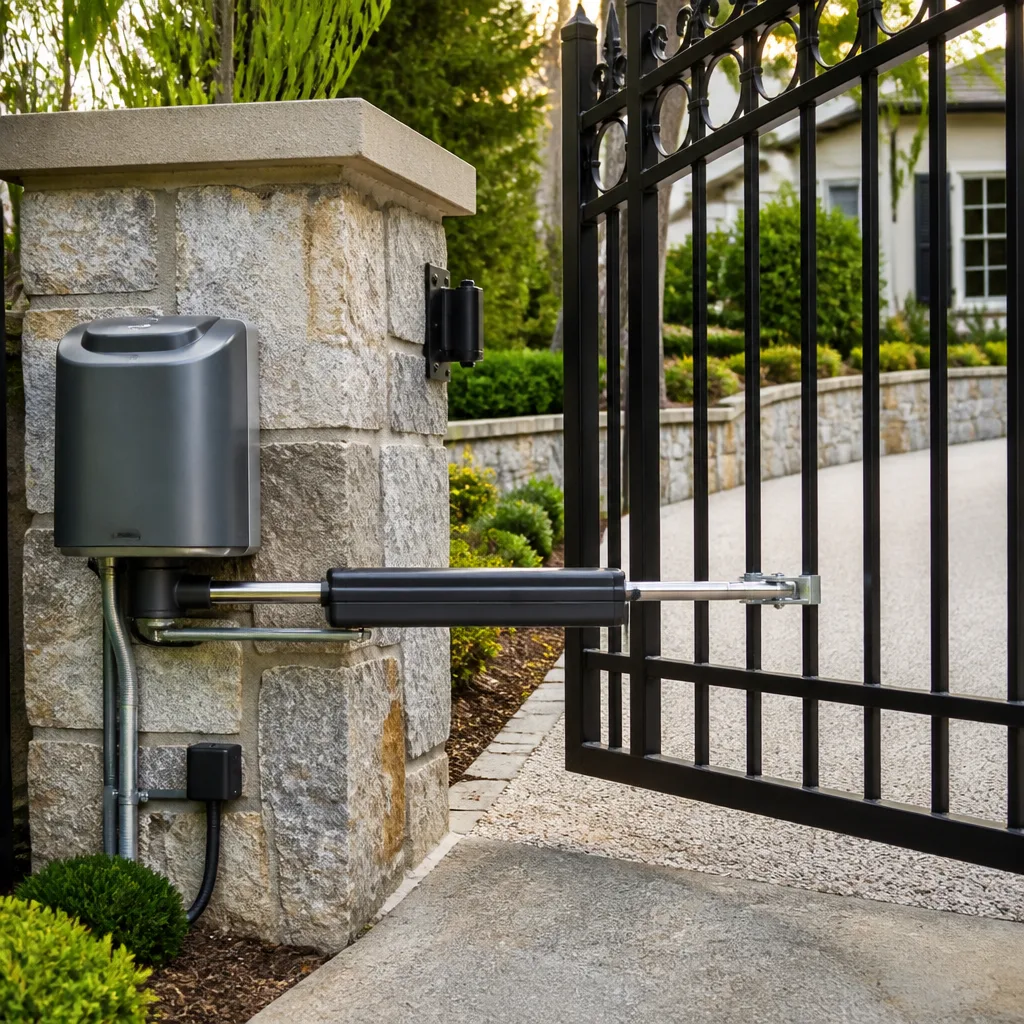
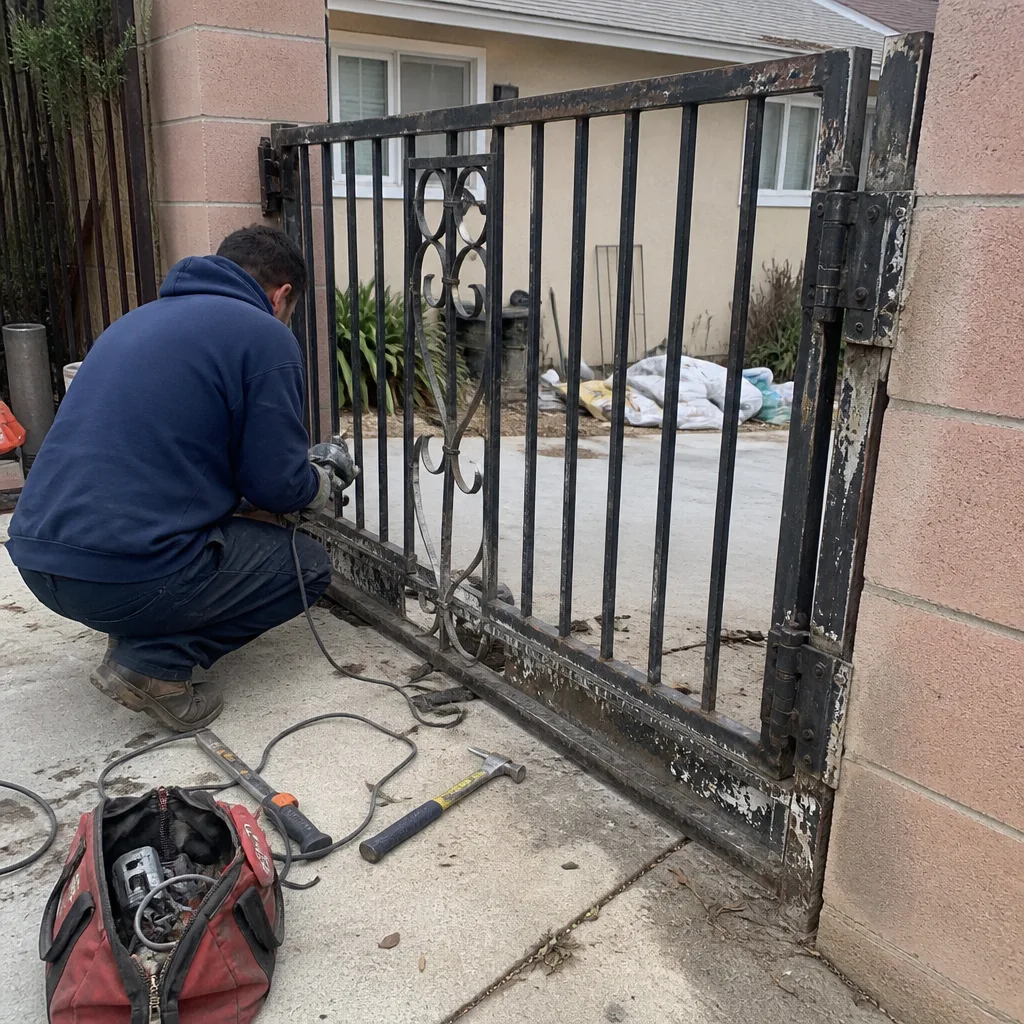 Before
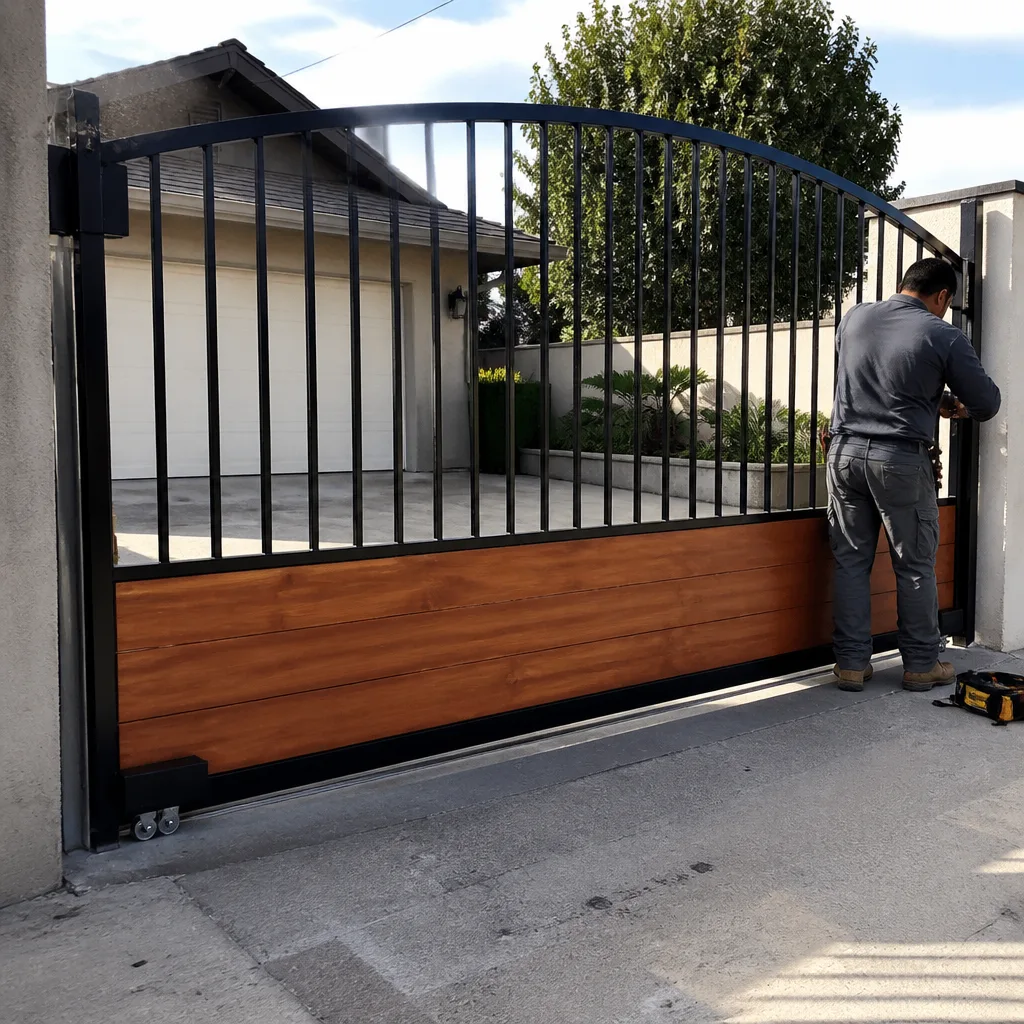 After
After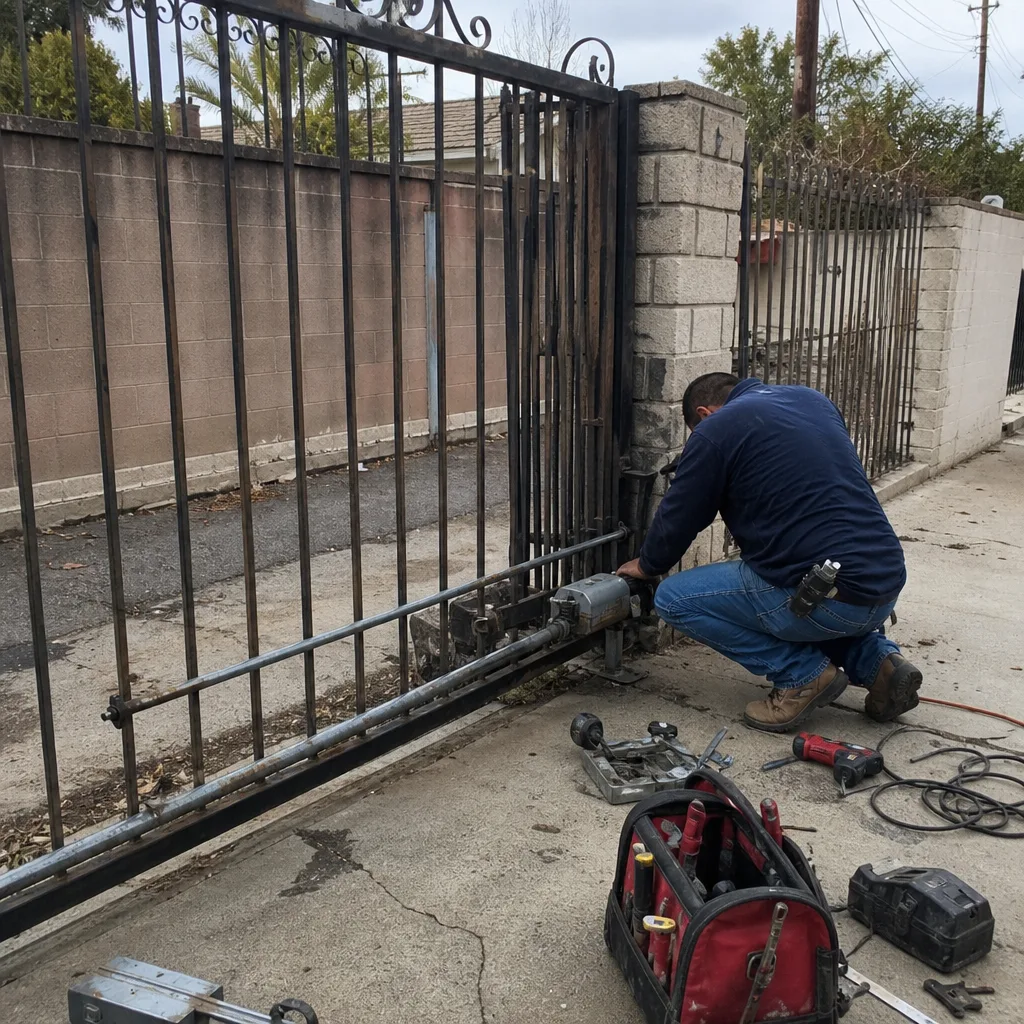 Before
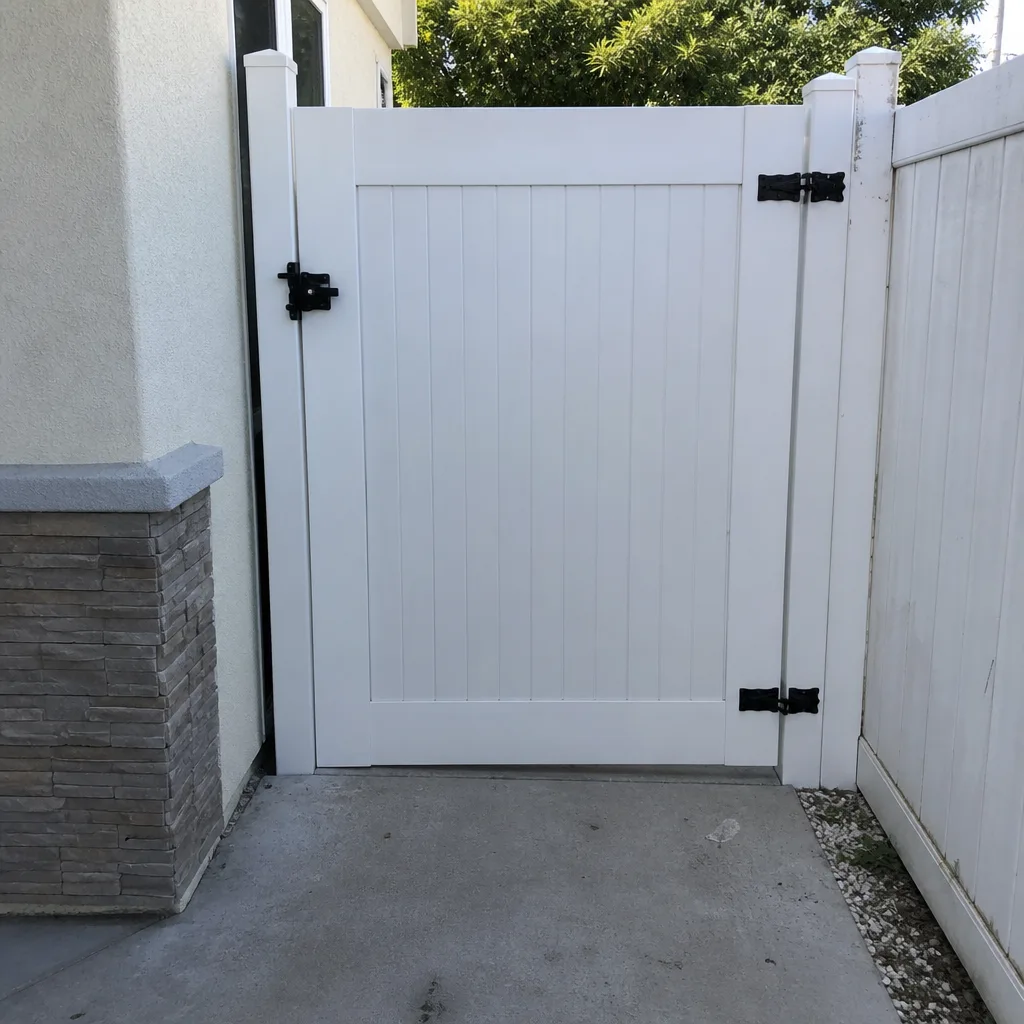 After
After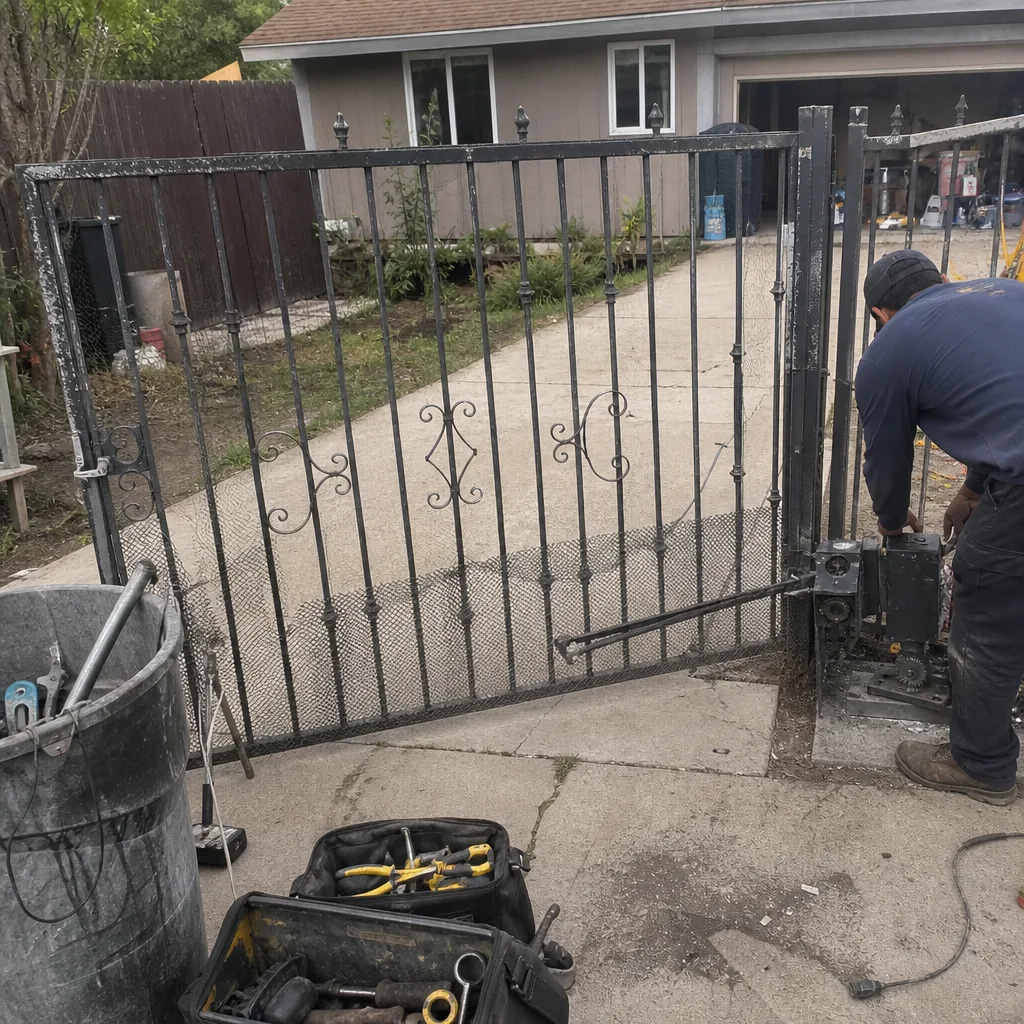 Before
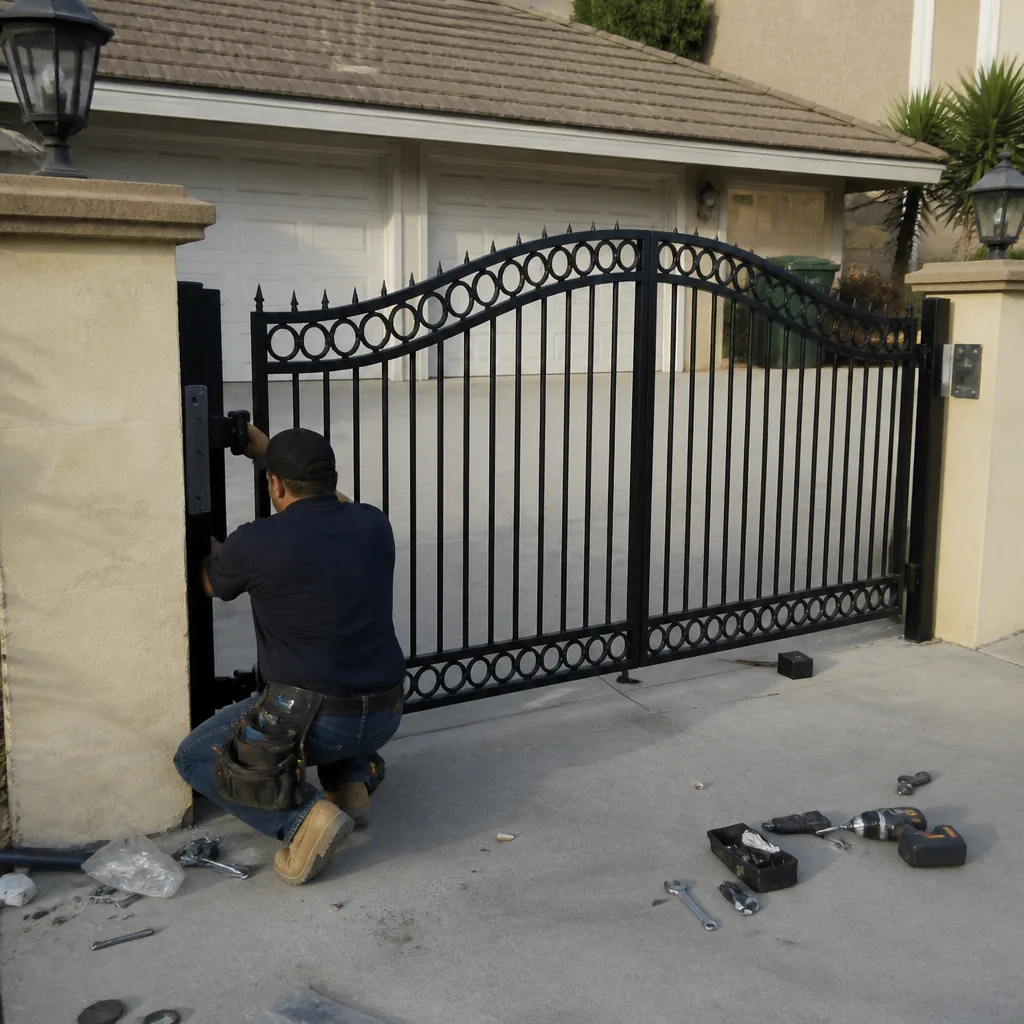 After
AfterLinear Hinge & Roller Replacement: The Northridge Owner’s Guide
Linear hinge and roller replacement in Northridge typically runs $210-$380 installed for a standard single gate, and we usually complete the job the same day we arrive. Most owners discover the problem the same way: the gate suddenly scrapes the ground, swings with a shimmy it never had, or starts to sag so far the latch won’t line up. What felt like an automatic opener failure is often simpler than it sounds - the rollers underneath have given out, pulling the hinges out of alignment, and the fix is far less expensive than a new gate or motor.
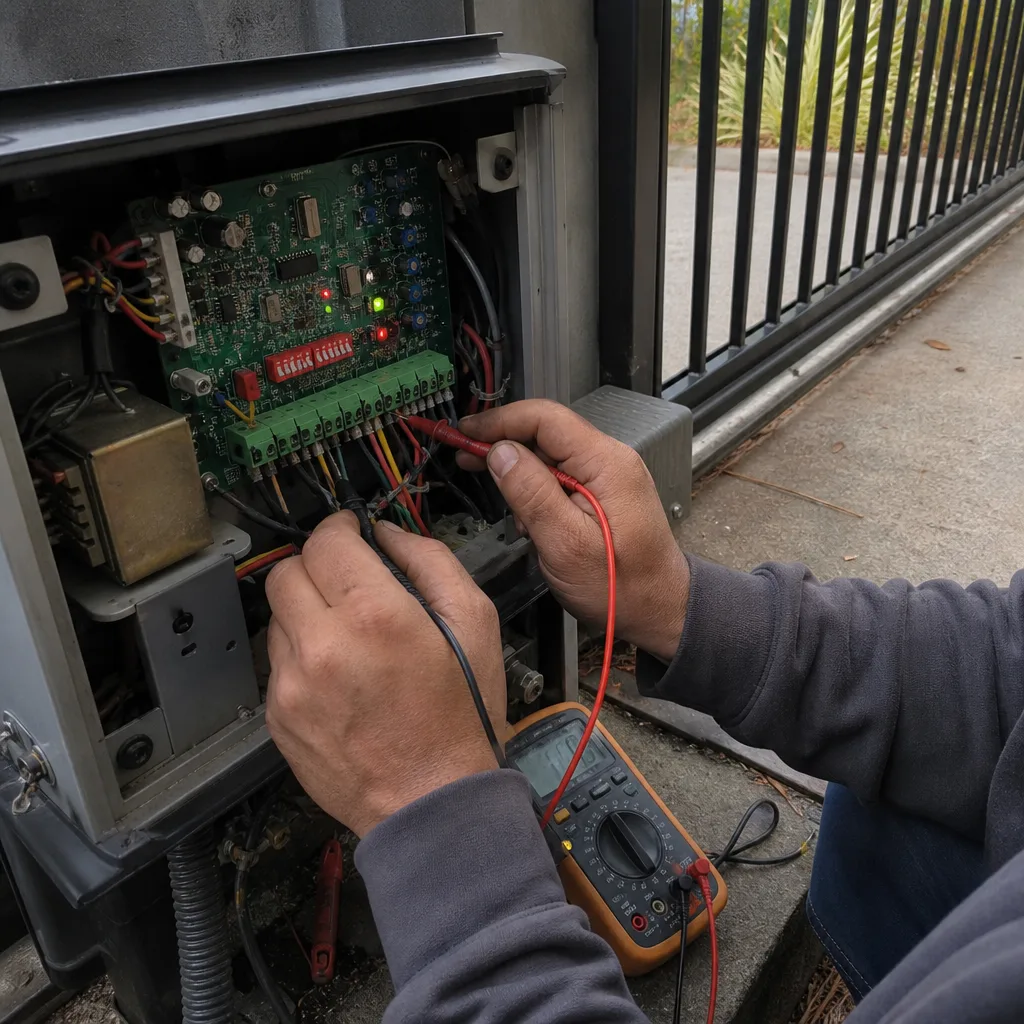
The truth about Linear gate hardware is that it’s not exotic. Linear builds dependable slide and swing gate systems, but the rollers and hinges are the workhorse parts. They carry the full weight of the gate every single time it cycles, and in Northridge they do it in sun, dust from the Santa Ana winds, and long dry stretches that turn grease to paste. When they wear out, the gate tells you loudly before it stops moving.
Ironworks Gate Co. is an independent gate service company - not affiliated with Linear - and we stock Linear-compatible hinges, rollers, bearing assemblies, and mount brackets on our trucks. We carry OEM Linear replacement parts and quality aftermarket equivalents so we can match whatever is on the gate today, not just what’s easiest to order. Our technicians are trained on nine gate-automation brands including LiftMaster, Mighty Mule, Ghost Controls, and Linear, so the diagnosis and the fix happen in one trip.
Which Linear Models This Applies To
Linear’s slide-gate rollers and swing-gate hinges share common sizing across several model families - but you should never assume interchangeability. The rollers on a Linear SL-series slide gate and a Linear-installed swing gate are completely different parts with different jobs. Here’s how to sort it out before you spend a dollar.
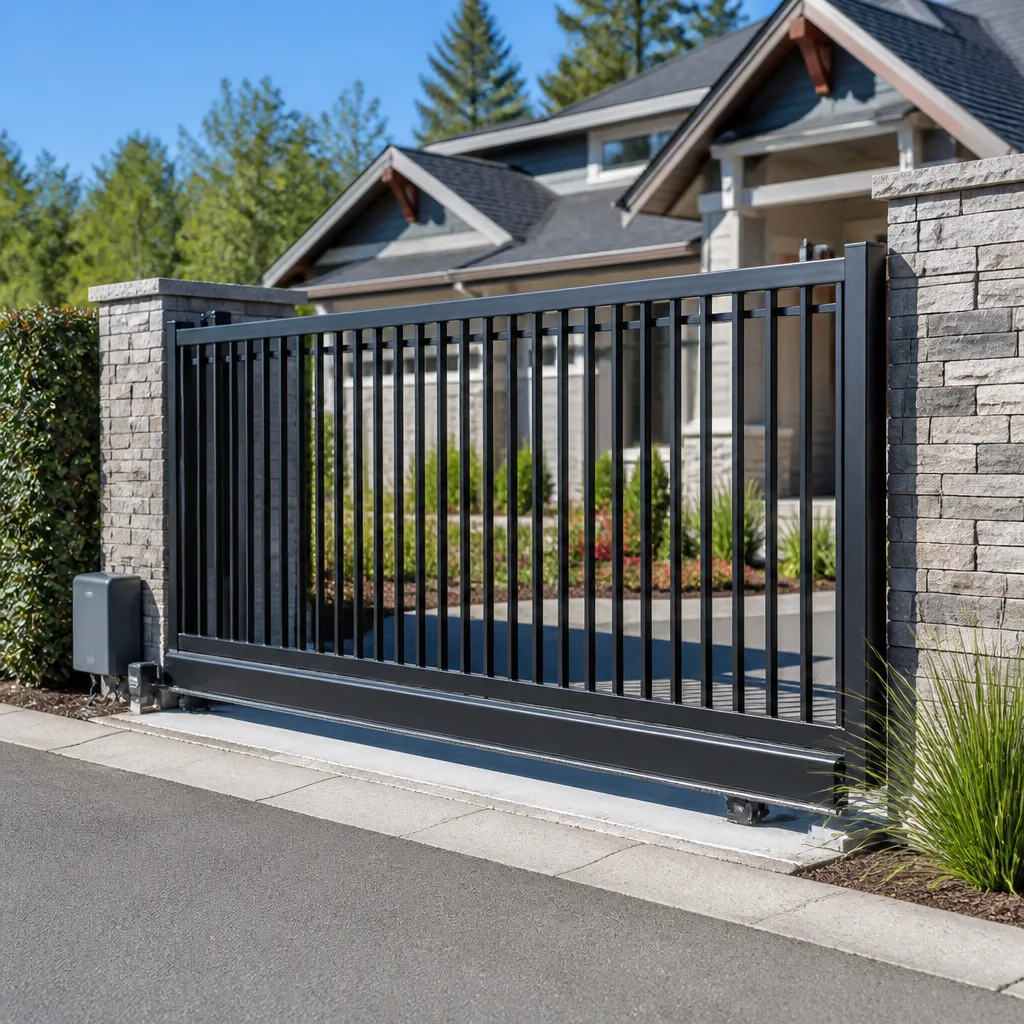
Slide gate rollers: Common on Linear SLD, SLS, and some access-control-integrated residential gates. These are either V-track rollers (a steel wheel with a grooved edge that rides on an inverted angle-iron track) or flat-track rollers (a wheel riding on top of a flat rail, often with a guide roller underneath). The gotcha: Linear’s V-track rollers come in different stem lengths and wheel diameters - usually 4″ or 6″ - and you need to match both. A 6-inch wheel on a bracket built for a 4-inch wheel raises the gate and throws off the receiver alignment.
Swing gate hinges: Common on Linear-actuated swing gates, including retrofit jobs where a Linear arm opener was added to an existing driveway gate. These are usually barrel hinges, ball-bearing hinges, or weld-on adjustable hinges. The critical measurement is the pin diameter and the leaf pattern - older Northridge gates often have hand-fabricated hinges from a previous contractor, which means we measure the existing plate before we quote. You don’t want to weld new hinges onto rust-thinned steel; sometimes the hinge is fine and the post has moved.
Here’s the part most online guides skip, and it matters here specifically: in the San Fernando Valley, the sun eats powder coating on south-facing gate hardware in about eight to ten years. A roller that still spins might have a bracket with UV-embrittled paint and hidden pitting underneath. When we replace a Linear roller in Northridge, we inspect the bracket, the wheel, the axle, and the mounting surface - not because you asked, but because a new roller on a rotten bracket fails again in eighteen months. That’s the difference between a part swap and a repair you don’t think about again.
Signs Your Linear Hinge & Roller Replacement Is Failing
- The gate scrapes or drags along the ground. This is the most common symptom in Northridge, where slate, decomposed granite, and concrete aprons are common. Scraping usually means the rollers have worn flat on one side or the wheel bearing has seized, so the gate is sliding on the metal tire instead of rolling. Left alone, it takes out the track next.
- The gate shimmies side to side while it moves. That lateral play is almost always the guide rollers losing contact. The gate’s moving mass starts hunting for the path of least resistance, which translates into a wobble you can see from the driveway. On a Linear slide gate, the issue is typically a worn guide roller or a v-wheel that’s lost its groove.
- The latch won’t line up anymore. This one gets blamed on settling, and sometimes it is. But a sagging gate that used to latch fine now means the hinges have developed vertical play. The pin and barrel wear together, and a 1/16-inch of slop at the hinge becomes three inches of drop at the latch post, past the driveway edge.
- You hear a graunchy, grinding noise on every cycle. Dust in Northridge is fine and gritty, and it works its way into everything. Once a sealed roller bearing loses its grease to heat and contamination, the roller doesn’t roll so much as chew. That noise is the bearing telling you it’s already damaged.
- The gate hesitates, then bucks forward. When rollers stick, the opener motor has to push through the resistance. That hesitation-and-lurch cycle is brutal on Linear’s control board and limit switches, and it’s how a hundred-dollar roller replacement becomes a six-hundred-dollar motor repair.
Replacement Cost & What’s Included
Installed hinge and roller replacement in Northridge - parts and labor together - runs $210 to $380 for a standard single gate. A paired driveway gate or an estate gate with heavier hardware lands at the upper end, and if the job calls for new hinge weld plates or post reinforcement, we’ll show you the number before the torch comes out.
What drives the range is mostly what’s underneath. If the track is still true and the mounting surface is solid, we swap the rollers, re-align the gate to the receiver, and torque everything down. If the bracket is rusted through or a weld has cracked - both of which we see on Northridge gates that have been through twenty or thirty valley summers - the job includes cutting out the old mount, fabricating a new plate, and welding it in before the new parts go on. That’s the honest difference between a $210 roller swap and a $380 repair, and we will never discover it on the invoice after the fact. The price is quoted, written down, and agreed to before we start. Our 90-Day Done Right Promise covers every hinge and roller replacement we install: if it isn’t right, we come back and make it so. No forms, no arguing.
DIY or Call Us?
What you can safely do: watch the gate for two full cycles with your hand on the disconnect, note where the noise starts, and check whether the gate sits level when it’s fully closed and fully open. A homeowner can also clear the track of gravel and built-up dirt - that alone silences a surprising number of gates in Northridge, where landscaping runs right up to the rail.
What you shouldn’t do yourself: replace the rollers. Sliding gates are not heavy in theory; they are heavy in practice. A 14-foot steel gate can weigh 500 pounds or more, and when you unbolt the load-bearing hardware that holds it up, all of that weight finds a new path to the ground. People get pinned under gates every year, and it happens fast. Swapping a roller while the gate is under tension is work for a trained tech with the gate supported and the right equipment. We also check what caused the roller to fail - because replacing the wheel without fixing the cause just buys you a summer. If the gate is grinding, give us a call at (925) 966-4150 and talk it through. A live person answers, 24 hours a day, every day. We will tell you straight whether it’s worth having us out, and if it is, you’ll get a price before we turn a bolt.
FAQs
You can expect eight to twelve years from good-quality Linear-compatible hardware on a properly installed gate - but south-facing gates in the valley tend to wear hardware faster because heat breaks down bearing grease and UV degrades paint and seals. A gate that isn’t serviced and lubricated is on the shorter end of that range. If yours is past ten years and starting to sag, it’s likely due, and a seasonal tune-up earlier in its life might have extended it. Call (925) 966-4150 and we can tell you over the phone whether it sounds like wear or something else.
Rarely, and usually not worth your money. Once a roller bearing seizes or the wheel wears flat-spotted, the damage is done - cleaning and re-greasing a damaged bearing doesn’t un-damage it. The same goes for hinges that have worn pins or elongated the plate holes. In almost every case, the cost of the new part is modest, and the repaired version would still be a worn part with months, not years, left in it. We’ll give you an honest recommendation on site, and if a repair would actually hold, we’ll say so and charge less.
Most standard single-gate replacements take 60 to 90 minutes from setup to final gate alignment. If the job requires cutting out a rusted bracket and welding in a new plate, it’s more often two to three hours, and we’ll tell you that before we schedule. We come loaded with the common Linear wheel diameters, stem lengths, and hinge plates, which is how we finish most jobs in one visit.
We stock common Linear-compatible rollers, wheels, brackets, and hinge sets on the truck, and we carry both OEM Linear parts and quality aftermarket equivalents. For uncommon configurations we can usually source the part within one to two business days through our suppliers, and we’ll give you the straight answer on lead time before you commit to anything. If it’s a standard Northridge slide gate, there’s a good chance the right part is on the truck the day we arrive.
Written by Victor Salinas, Owner, Ironworks Gate Co. at Ironworks Gate Co., serving Northridge and nearby areas.