
Quick Summary
Selecting, maintaining, and diagnosing swing gate operators requires balancing motor torque and dynamic wind resistance with structural post alignment and mandatory UL 325 entrapment safety standards. Using a repair-first troubleshooting approach, Ironworks Gate Co. isolates common mechanical drag, misaligned photo eyes, and electrical surge issues before performing unnecessary system replacements. After exploring drive options ranging from electromechanical linear arms to continuous-duty hydraulic rams, property owners can schedule a free on-site swing gate operator inspection and upfront estimate.
Swing Gate Operators – Reliable Setup & Repairs
When an automated swing gate begins grinding, dragging along the driveway, or stopping inches short of the catch post, pinpointing the real mechanical or electrical cause saves property owners from unnecessary replacements. At Ironworks Gate Co., we take a repair-first approach to gate automation. Our technicians troubleshoot electrical and mechanical faults, keeping your existing system running whenever possible. When a complete replacement or new installation is required, we provide clear, upfront estimates before any work begins.
Proper gate operation requires balancing motor torque with site-specific factors like hinge friction, wind exposure, and entrapment safety. Underwriters Laboratories governs vehicular gate operators under the UL 325 standard, meaning every setup must match the physical gate dimensions while integrating tested safety devices. Whether your gate uses electromechanical linear arms or hydraulic rams, we deliver diagnostics and repairs throughout Northridge and the greater San Fernando Valley.[2]
Swing Gate Operator Fundamentals: Sizing, Mechanics, and Diagnostics
Swing gate operators automate vehicular gates using electromechanical linear actuators, articulating arms, or hydraulic rams. Sizing an operator properly involves evaluating factors like leaf weight, gate length, post alignment, and wind-load resistance. UL 325 covers vehicular gate operators, requiring at least two independent entrapment protection means in each direction of travel, unless no entrapment zone exists in one direction, while ASTM F2200 sets safety standards for the design and construction of the gate itself. A proper setup helps ensure reliable daily cycling, electrical surge protection, and dependable emergency battery backup.[4]
Many gate operational issues stem from mechanical or electrical faults rather than total motor burnout. Environmental conditions, electrical issues, and ground settling affecting hinge posts can impact performance. According to Ironworks Gate Co., a methodical diagnostic check helps isolate these faults before they cause further component wear.
Core Operational Requirements
Every automatic swing gate opener must balance motor capability with reliable obstacle sensing. Pairing electromechanical or hydraulic swing gate motor units with proper electrical protection helps safeguard electronic components. For gates with high daily traffic or exposure to seasonal winds, selecting an appropriate drive mechanism helps prevent premature wear on drive components and structural hinges.
Practical Takeaways for Property Owners
- Drive Selection: Linear actuators mount to standard posts, while articulating arms can accommodate wider brick or masonry pillars.
- Real-World Sizing: Wind blowing against solid wood, vinyl, or composite privacy panels increases the torque required to move the gate leaf.
- Industry Standards: DASMA guidance specifies that gate operators should carry a certification mark from a recognized laboratory (such as UL, ETL, or CSA) demonstrating compliance with ANSI/CAN/UL 325.
- Targeted Repairs: Blown fuses, misaligned safety sensors, and sagging hinges are common causes of gate stoppages.
Comparing Types: Linear Arm, Articulating Arm, and Hydraulic Swing Gate Motors
Need swing gate operators?
We’re available now - call for a fast, free estimate.
Choosing the right drive setup depends on post geometry, daily cycle volume, and wind resistance rather than gate weight alone. Linear actuators fit narrow posts, articulating arms help overcome pillar setbacks, and hydraulic systems can handle higher-demand commercial entries or heavy solid-panel estate gates.
| Feature | Linear Actuator | Articulating Arm | Hydraulic Ram |
|---|---|---|---|
| Post Clearance | Narrow / Standard Steel Posts | Wide Masonry & Brick Pillars | Universal Pad or Post Mount |
| Mechanism | Internal Screw / Worm Drive | Jointed Mechanical Linkage | Pressurized Fluid Pump |
| Duty Cycle | Residential (Standard Daily Use) | Residential to Light Commercial | Continuous Duty / High-Traffic |
| Wind Resistance | Moderate | Moderate | High Torque Output |
Linear Actuator Mechanics
A linear electromechanical gate opener uses an internal threaded drive mechanism to extend and retract, moving standard ornamental iron or steel gate leaves. Because linear arms mount along the axis of the gate, they require minimal clearance behind the post. However, they must be mounted with appropriate offset geometry to maintain leverage throughout the swing cycle.
Articulating Arm Operators
When stone, brick, or masonry columns place the hinge point behind the post face, articulating arms use a jointed linkage that reaches around the pillar, allowing smooth opening and closing geometry without altering decorative masonry.
When to Choose Hydraulic Swing Gate Motors
A hydraulic swing gate motor uses pressurized fluid pumps rather than purely mechanical gearing. This design provides smooth operation under heavy wind loads and high hinge resistance. Hydraulic units are frequently utilized on higher-traffic commercial entrances and heavy estate gates. When hydraulic pressure drops over time, components such as valves, seals, and oil reservoirs can often be serviced on-site.
Solar-Powered and Low-Voltage DC Options
Low-voltage 24V DC systems allow property owners to install solar panel setups and battery banks in locations where running standard AC power is cost-prohibitive. DC motors also provide soft-start and soft-stop operation, which helps reduce mechanical stress on hinges and mounting brackets.
How to Size a Swing Gate Operator: Dynamic Wind Load and Hinge Drag
Sizing swing gate operators accurately involves evaluating surface wind resistance and mechanical friction alongside total gate weight. Solid infill panels catch wind during gusts, increasing the torque needed to move and hold the gate leaf.
The Flaw of Static Weight Ratings
Manufacturer specification sheets often base weight limits on open-picket fencing where wind passes through freely. When solid wood, composite slats, or privacy paneling are added, wind resistance increases significantly. An electromechanical gate opener selected solely on static weight may stall or experience excessive strain under moderate wind resistance.
Calculating Dynamic Wind-Load Torque
Wind pressure creates rotational resistance that increases with wind speed and the surface area of the gate leaf. On solid driveway gates, wind force can add substantial resistance against the operator. In high-wind areas, installing operators with appropriate torque ratings and adding positive-locking latches helps keep the gate securely in place when closed.
Diagnosing Hinge Friction and Post Deflection
Post sag and ungreased or damaged hinge bearings create mechanical drag that can mimic motor failure. Before replacing an operator, Ironworks Gate Co. technicians check how freely the gate swings by hand with the drive arm disconnected. If the gate binds, scrapes the driveway, or resists movement, the issue is structural. Leveling the hinge post, replacing worn hinges, or reinforcing mounts must be addressed before installing or calibrating a gate operator.
Safety Standards and Sensor Setup: UL 325 and ASTM F2200 Compliance
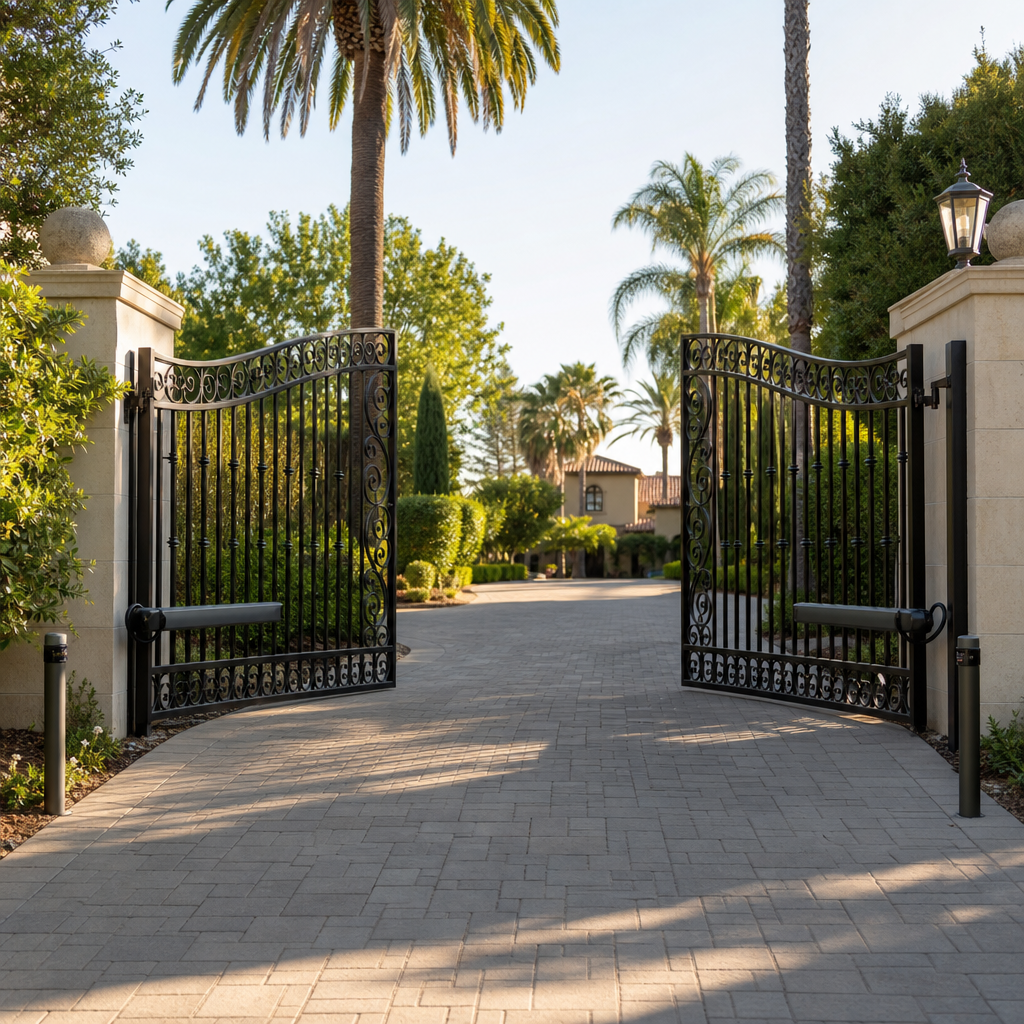
Automated vehicular gate systems require adherence to safety standards to protect pedestrians, vehicles, and property from entrapment hazards. The primary standard governing operators is ANSI/CAN/UL 325, while ASTM F2200 governs the structural design and construction of the gate itself.[1]
Mandatory Monitored Entrapment Protection
Under UL 325, vehicular swing gate operators require at least two independent entrapment protection means in each direction of travel, unless no entrapment zone exists in one direction. The operator’s control board monitors these safety sensors (such as photo eyes and safety edge sensors). If a monitored sensor fails, is disconnected, or detects an obstruction, the system prevents automatic operation until the fault clears.[3]
Photo-Eye Alignment and Weather Safeguards
Gate reversals can occur due to misaligned retro-reflective safety eyes, sunlight interfering with optical sensors, or mineral buildup from nearby sprinklers. Installing monitored through-beam sensors with sturdy mounting posts and protective weather hoods helps prevent false sensor trips and maintains dependable operation.
Access Control and Loop Detector Integration
Access control devices (including keypads, telephone entry units, card readers, and vehicle loops) integrate with the primary operator controls. UL states that UL 294 complements UL 325 by addressing access control system units used with gate and door operators. Running low-voltage control lines, safety sensor wiring, and inductive loop cables inside conduit helps protect wiring from moisture and environmental damage.
Swing Gate Operator Brands and System Selection
Need swing gate operators?
We’re available now - call for a fast, free estimate.
Gate automation requires selecting equipment suited to a site’s layout and usage requirements. Ironworks Gate Co. technicians service and install units from recognized manufacturers, maintaining access to compatible replacement parts, controls, and safety hardware.
Electromechanical Linear Operators
Manufacturers like LiftMaster and Viking Access offer linear arm operators designed for residential and commercial gate applications, providing compact profiles and compatibility with battery backup and monitoring accessories.
Pad-Mount and Commercial Articulating Operators
For community entrances, commercial properties, and installations with wide pillars, pad-mounted and articulating arm units from manufacturers like DoorKing (DKS) provide heavy-duty mechanical linkages and enclosures for control boards and accessories.
Continuous-Duty Hydraulic Systems
For large architectural gates, heavy custom fabrications, and high-frequency entry points, hydraulic units from manufacturers like FAAC and BFT provide fluid-damped operation suited for demanding installations.
What Factors Influence Swing Gate Operator Costs?
The total investment for repairing or installing a swing gate operator depends on several electrical and structural factors:
- Single vs. Dual Leaf: Dual-swing gate setups require two coordinated operators, additional conduit across the driveway, and entrapment protection covering both leaves.
- Drive Mechanism Type: Standard residential electromechanical linear arms generally carry different hardware costs compared to commercial-grade hydraulic rams or heavy pad-mounted articulating units.
- Electrical Infrastructure: Bringing dedicated electrical power to the gate post may require trenching and conduit, while low-voltage solar configurations provide an alternative where utility power is inaccessible.
- Safety and Access Peripherals: Equipping a system with monitored photo eyes, safety edges, keypads, vehicle exit loops, and access control interfaces affects total project costs.
- Structural Gate Prep: Correcting post sag, replacing worn hinges, or modifying mounting brackets prior to motor installation.
Frequently Asked Questions About Swing Gate Operators
What is the difference between linear arm and articulating arm swing gate operators?
Linear arm operators use a straight screw or hydraulic shaft that pulls and pushes the gate leaf directly, mounting cleanly to standard narrow posts. Articulating arm operators use a jointed two-piece metal arm designed to reach around wide masonry, brick, or stone pillars where the gate hinges are set deep back from the pillar face.
How do I size a swing gate operator based on gate weight and length?
According to Ironworks Gate Co., sizing requires evaluating static leaf weight, total leaf length, and dynamic wind resistance. While manufacturer charts show maximum weight and length limits for open-picket gates, gates with solid wood, metal, or vinyl privacy panels catch wind and require operators with sufficient torque output to manage wind resistance.
Can electric swing gate operators be powered by solar panels?
Yes. Low-voltage 24V DC swing gate operators can run on solar power by connecting compatible solar panels and deep-cycle battery banks. System requirements depend on the gate’s daily cycle count, connected accessories (such as safety eyes and keypads), and available sunlight at the installation site.
What safety sensor requirements apply to automatic swing gate systems?
Under the UL 325 safety standard, vehicular swing gate operators require at least two independent entrapment protection means in each direction of travel, unless no entrapment zone exists in one direction. These monitored devices (such as optical photo eyes or edge sensors) communicate with the control board to reverse or stop the gate upon detecting an obstacle.[5]
How do I know if my gate issue is the motor or the hinges?
Disconnect the operator drive arm using the manual release mechanism, then swing the gate leaf open and closed by hand. If the gate binds, scrapes the ground, resists movement, or squeaks heavily, the problem is related to hinges, post sag, or mechanical alignment rather than an electrical motor failure.
Need swing gate operators?
We’re available now - call for a fast, free estimate.
Sources
- New Safety Standard for Automatic Security Gates Helps … – cpsc.gov (2000)
- Garage Door Operators/Gate Operators | CPSC.gov – cpsc.gov
- Automatic Gate Operator Market Report: Size, Growth, Trends … – verifiedmarketresearch.com (2033)
- UL 325 Ed. 7-2017 – Door, Drapery, Gate, Louver, and … – webstore.ansi.org (2017)
- [PDF] Section 1 | Doorking – doorking.com (2018)
Frequently Asked Questions
How do extreme summer heat and electrical surges damage swing gate operators?
High ambient temperatures can degrade hydraulic fluid viscosity and stress control board capacitors, while utility power surges often blow fuses or fry delicate logic boards. Ironworks Gate Co. uses precision diagnostics to isolate surge-damaged components and install dedicated surge protectors, saving property owners from full system replacements.
What additional infrastructure is required to install dual swing gate operators?
Dual systems require cross-driveway conduit trenching to connect the primary and secondary motors, coordinated master-slave control programming, and dual-zone UL 325 safety sensor arrays. Ironworks Gate Co. ensures both leaves are mechanically aligned and synchronized to prevent mid-cycle binding or catching in windy conditions.
What is included during an on-site swing gate operator inspection?
A thorough evaluation includes measuring dynamic wind resistance, testing manual hinge friction with disconnected arms, checking photo-eye alignment, and testing emergency battery systems. Ironworks Gate Co. delivers a free on-site inspection and upfront estimate, pinpointing structural and electrical faults before recommending any repairs.
About the author
 |
David Caldwell David is a technical writer specializing in home services and automated access systems. With over a decade of experience covering residential and commercial property maintenance, he translates complex gate repair concepts and pricing structures into clear, actionable advice. He holds a B.A. in Communications from California State University, Northridge. |
Gate not opening, off track, or opener dead?
We’re available now - call for a fast, free estimate.
Call Now - Free Estimate