
Last updated August 25, 2026
Free on-site gate assessment - hinges, posts, and your LiftMaster or Nice gate operator checked before anything is quoted
The assessment is free and the quote is the invoice.
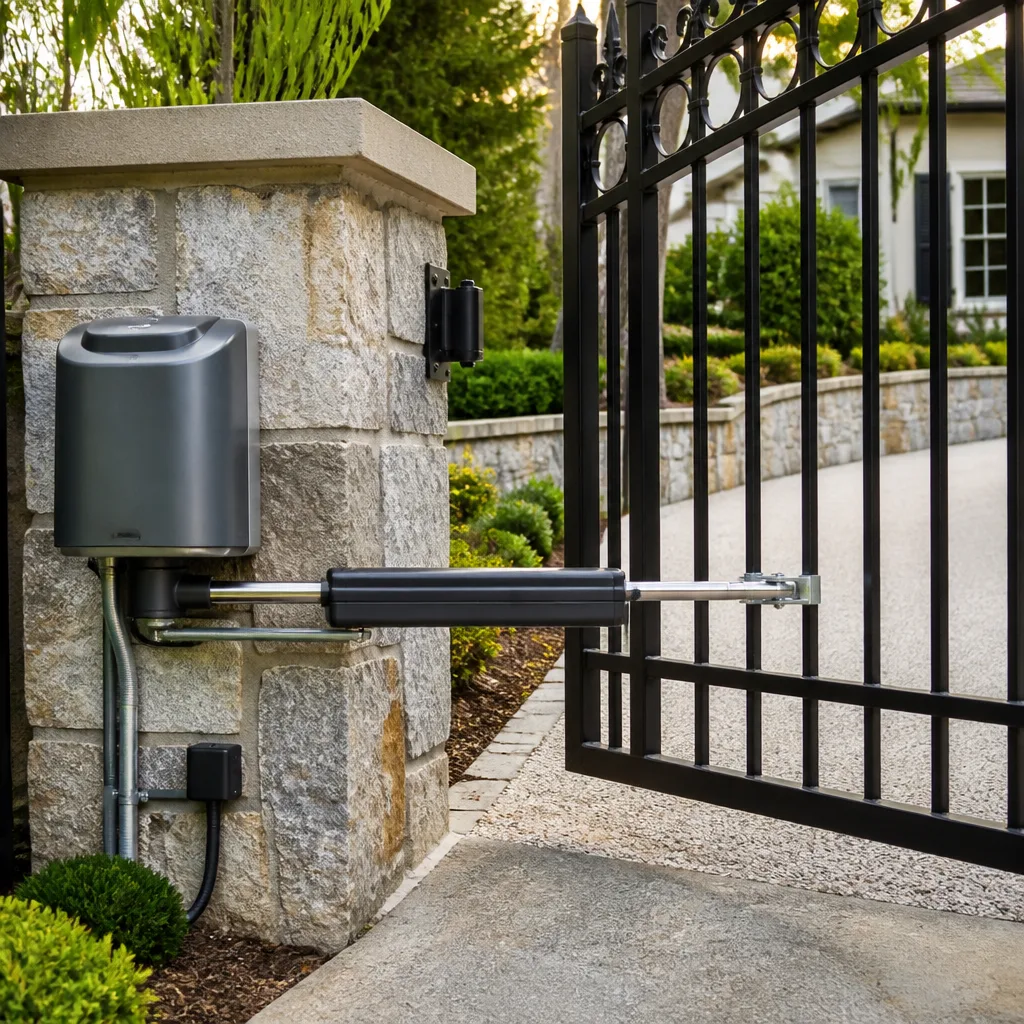
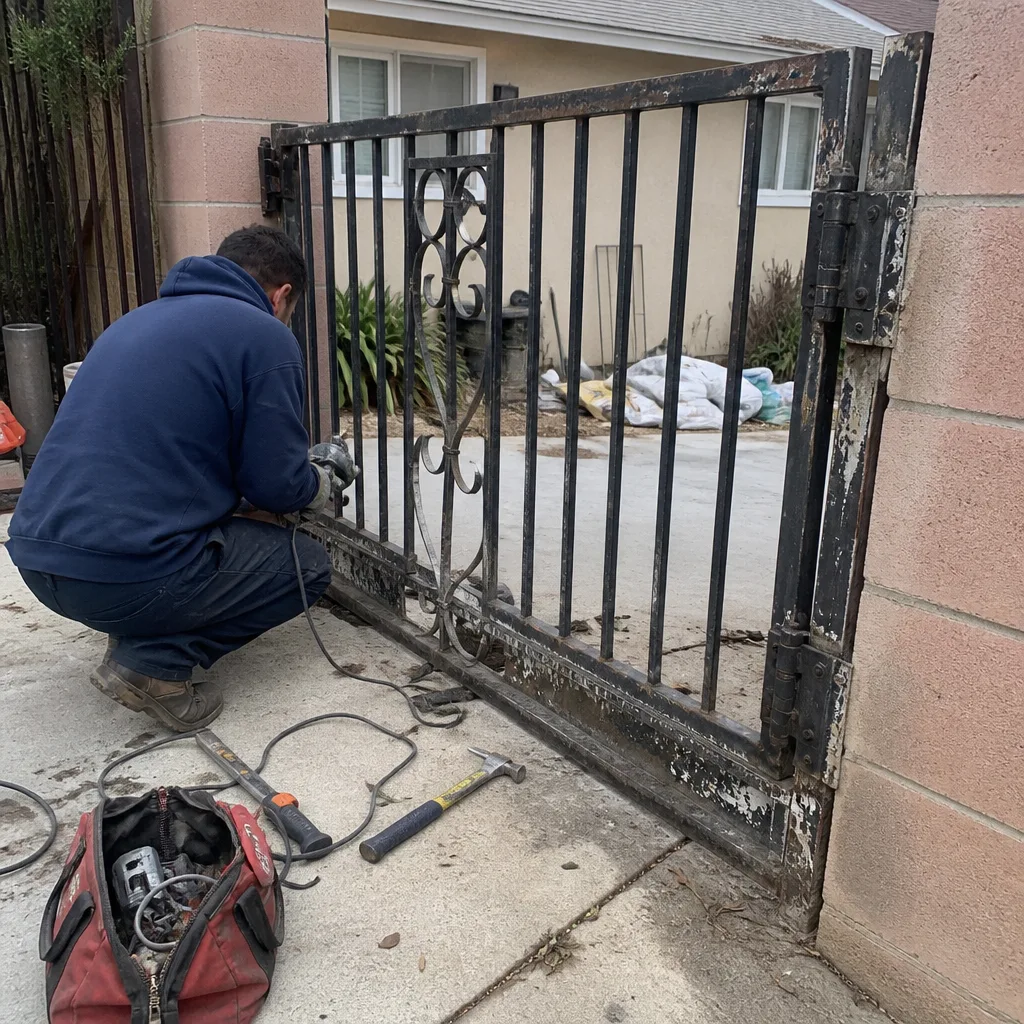 Before
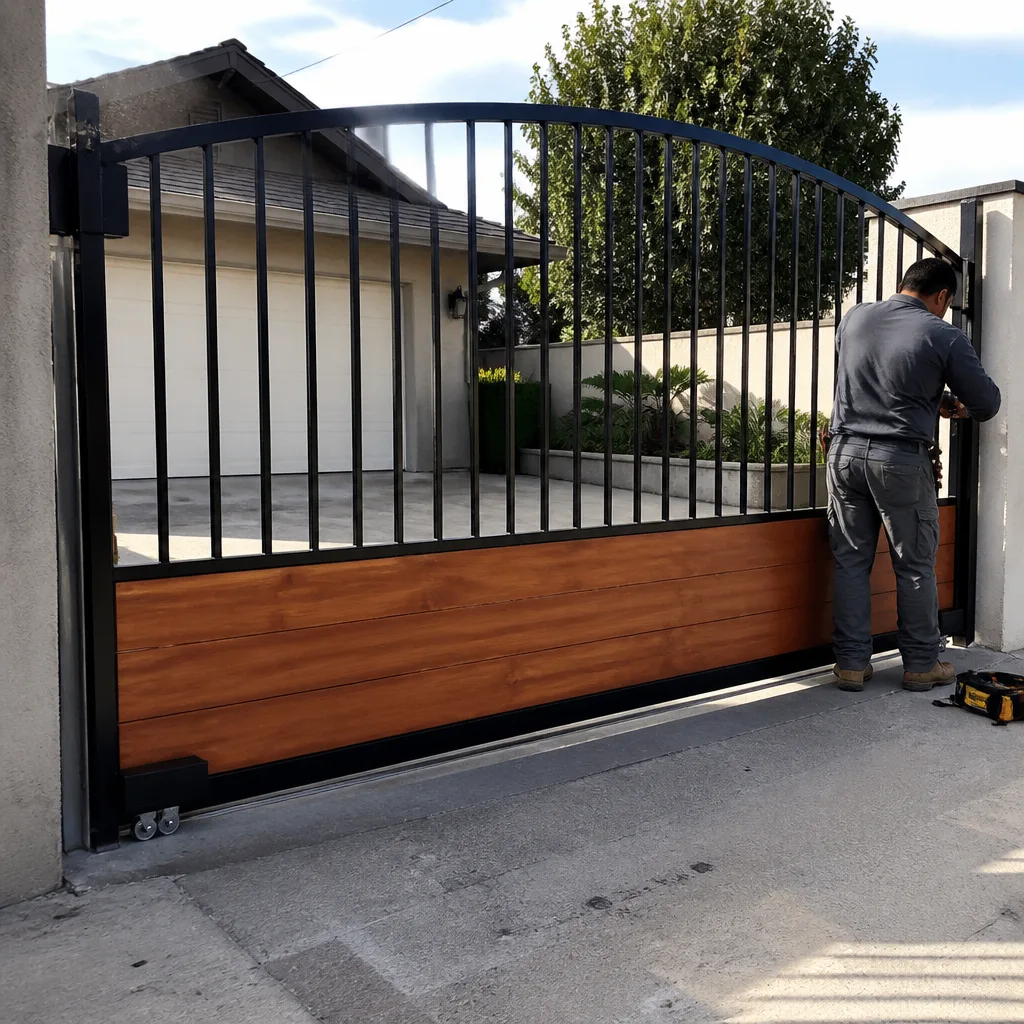 After
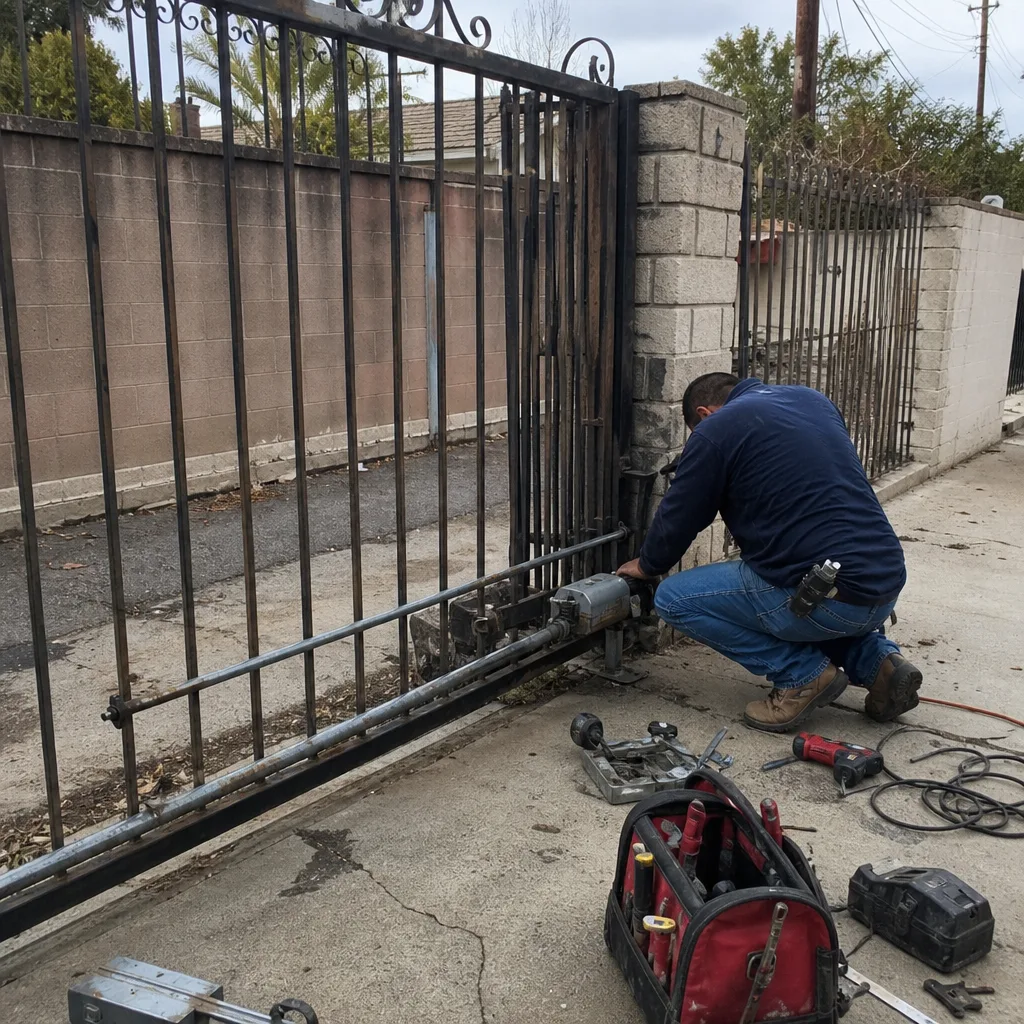 Before
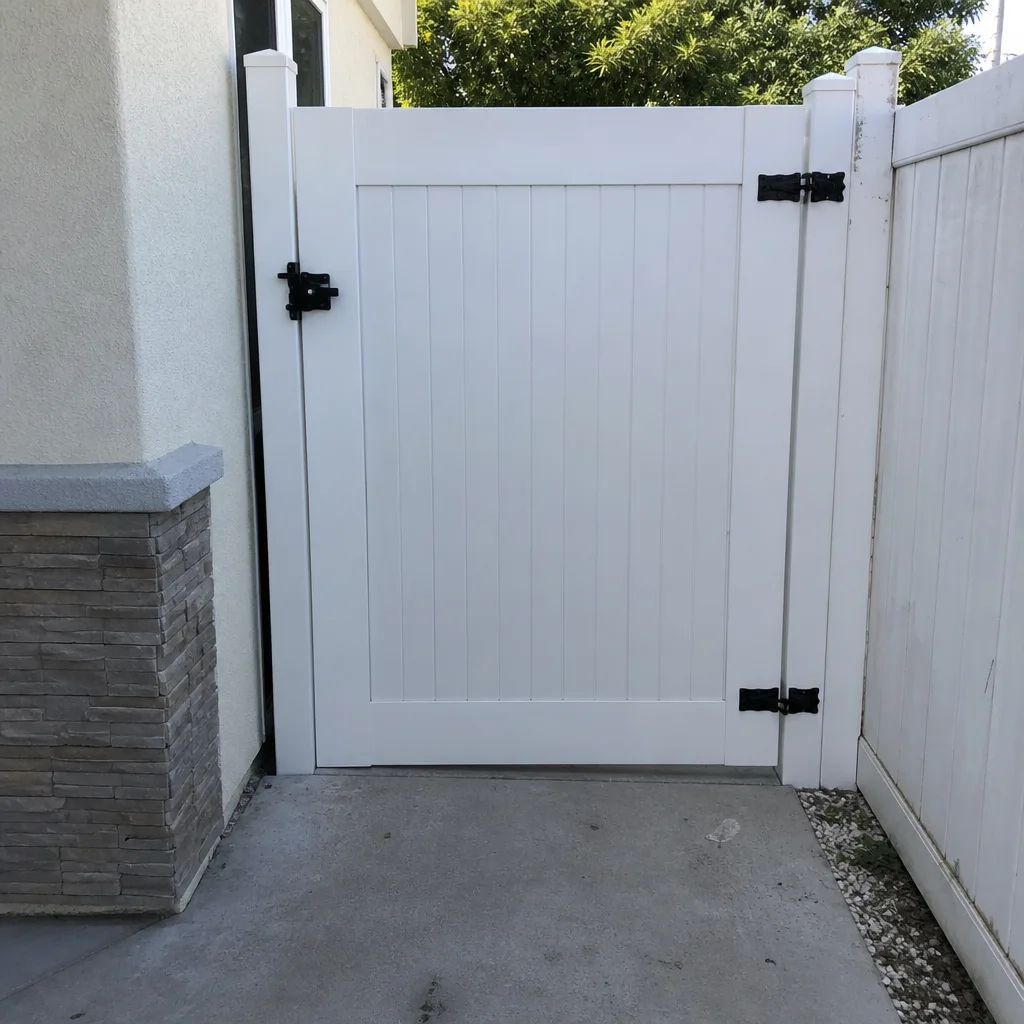 After
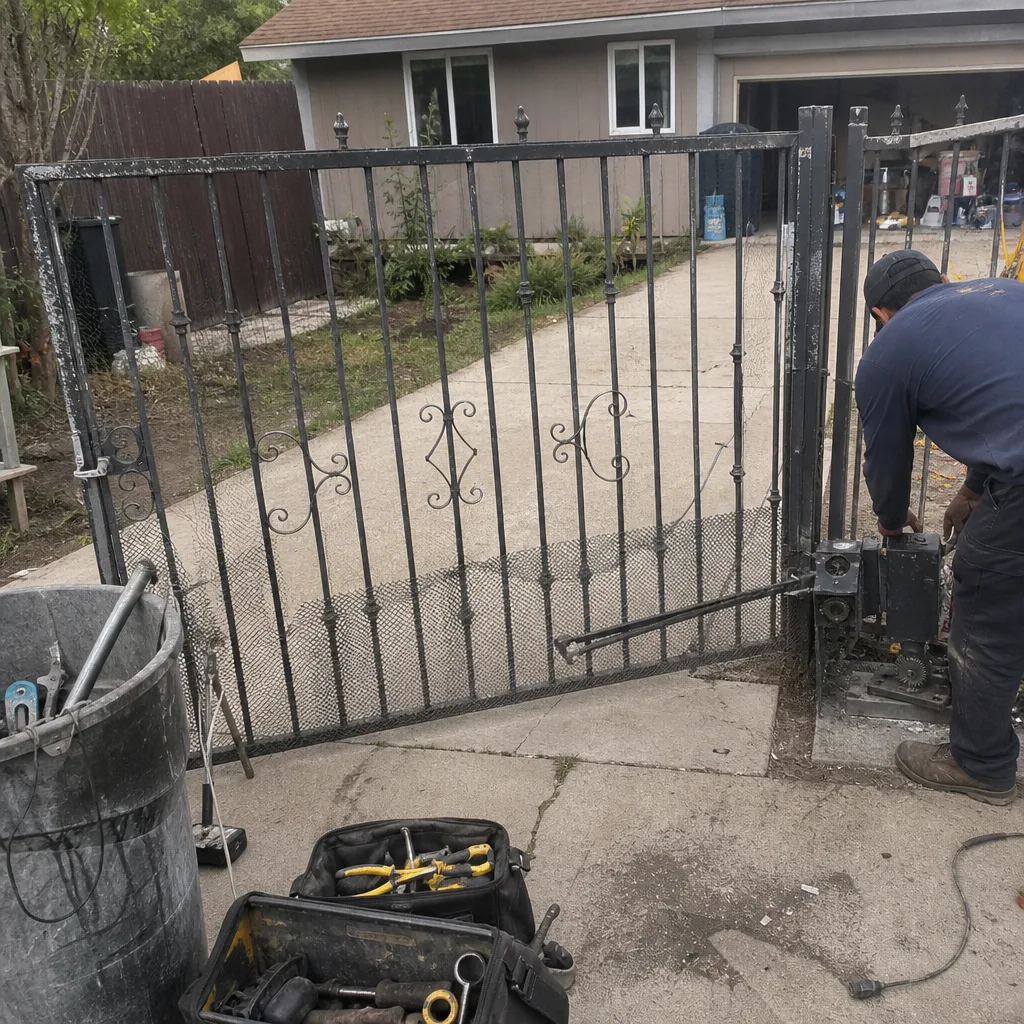 Before
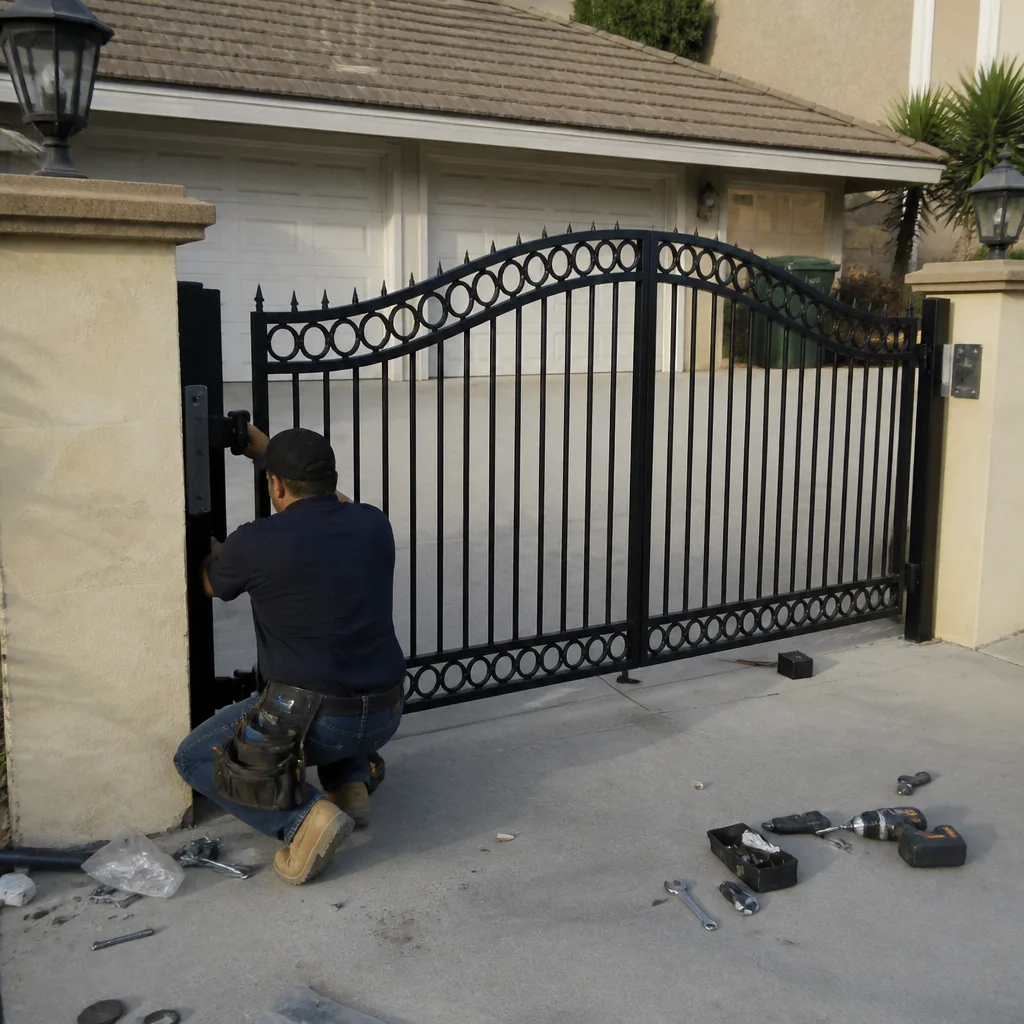 After
Gate Repair Warning Signs: A Northridge Homeowner’s Reference Guide
Most gate failures in Northridge don’t happen suddenly. They announce themselves weeks or months in advance, often in a language homeowners don’t know how to read. A slight drag on the track, a motor that hums a half-second longer than it used to, a hinge that creaks in a register it never hit before - these are not quirks. They are the gate telling you something is wearing out, and the cost of ignoring that message is almost always higher than the cost of answering it early. This guide will teach you to read the signs, understand what they mean, and know when a repair is a Saturday project versus when it needs a professional’s hands and tools. We’ve spent over 42 years fixing gates across Northridge, and we’ve learned that the homeowners who call early spend less, wait less, and keep their gates longer.
Quick Answer
The most common warning signs of a failing gate in Northridge are: visible sagging or leaning, grinding or screeching noises during operation, slow or jerky movement, a motor that runs but doesn’t move the gate, and rust or corrosion at hinges and welds. If you notice any of these, address them within two to four weeks - early intervention typically turns a $200 hinge repair into a $1,500 motor replacement. For a professional assessment, Ironworks Gate Co. offers free estimates in Northridge at (925) 966-4150.
Table of Contents
- Sagging or Leaning: The Structural Warning
- Noises That Mean Something: Grinding, Screeching, and Humming
- Slow or Jerky Movement: What the Motor Is Telling You
- Rust and Corrosion: The Silent Enemy in Southern California
- Remote and Keypad Failures: When the Problem Isn’t the Gate
- Power Fluctuations and Battery Drain
- Track and Wheel Wear: What to Look For
- Common Mistakes to Avoid
Sagging or Leaning: The Structural Warning
A gate that sags or leans is the single most common problem we see in Northridge, and it almost never fixes itself. Gravity is relentless, and a 400-pound steel gate has a lot of mass working against its hinges every single day. When a gate starts to drag on the ground, scrape against the post, or leave a visible gap at the top latch, the hinges are failing or the post itself is shifting in its footing. In neighborhoods like Sherwood Forest and Northridge West, where many homes were built in the 1960s and 1970s, the original gate posts were sometimes set in concrete that has since cracked or settled. That settling shows up as a gate that closes fine in January but binds in August, when the Northridge heat expands the metal just enough to change the geometry.
Here’s what to look for:
- Visible gap at the latch side: The gate no longer meets the catch squarely. This usually means the top hinge has worn or the post has leaned.
- Drag marks on the driveway: A curved scrape in the concrete or asphalt is a clear sign the gate is hanging lower than it should.
- Loose hinge bolts: If you can wiggle the gate and see movement at the hinge plate, the hardware is working loose.
- Cracked welds: Look at the junction where the gate frame meets the hinge plate. Hairline cracks there are structural, not cosmetic.
What does a sagging gate mean for the motor? It means extra load. Every time the opener pushes a gate that’s binding or dragging, it works harder than it was designed to. That heat and strain shortens the motor’s life significantly. In our experience, a sagging gate that gets ignored for six months will often take the opener down with it. A hinge repair that might have cost a few hundred dollars becomes a motor replacement that costs four or five times that. The lesson from 42 years of Northridge gate work: fix the sag first, and the motor lives longer. Victor Salinas has walked enough Northridge driveways to know that a gate hanging true is a gate that lasts, and that’s the standard we build to on every hinge job we touch.
Noises That Mean Something: Grinding, Screeching, and Humming
Gates should move quietly. Not silently - metal on metal makes some sound - but quietly. When a gate starts making a noise you can hear from inside the house, that noise is a diagnostic tool. Different sounds point to different problems, and learning to distinguish them can save you hundreds of dollars. In Northridge, where many homeowners keep their gates for twenty years or more, these sounds develop slowly. You might not notice them at first because they creep in by degrees. But once you know what to listen for, the sounds tell you exactly where the problem is.
The Grind: Track and Roller Problems
A grinding, gritty sound usually means the track or the rollers are the issue. Dirt, sand, and decomposed granite build up in the track over time. When a steel wheel rolls over grit, it grinds. If the sound continues after the track is cleaned, the wheels themselves are likely worn - their bearings fail and the wheel stops rolling smoothly, instead sliding and grinding along the track. This is common in Northridge neighborhoods with older concrete driveways, where years of surface wear leave loose sand that finds its way into every moving part.
The Screech: Hinge and Bearing Wear
A high-pitched screech or squeal is almost always a hinge or a bearing that has lost its lubrication or is failing entirely. Metal on dry metal squeals. If lubricating the hinge doesn’t quiet it, the hinge pin or the bearing is worn beyond saving. We’ve seen gates in Northridge where the hinge pins were so worn they’d been reduced by a third of their original diameter. That’s not a lubrication problem - that’s a replacement.
The Hum: Motor Strain
A motor that hums louder than it used to, or hums without moving the gate at all, is under strain. The most common cause is a gate that’s binding somewhere - a bad wheel, a dragging corner, a hinge that’s seized. The motor is working, but it’s working against resistance it wasn’t built for. In some cases, the capacitor in the motor is failing and can’t deliver the starting torque. Either way, a humming motor that won’t move the gate is a call-us-today situation, because continued attempts will burn out the motor entirely. We service LiftMaster, BFT, Linear, and Viking openers among others, so whatever is on your driveway, we can diagnose it accurately on the first visit.
Slow or Jerky Movement: What the Motor Is Telling You
Electric gate motors in Northridge are built to operate at a consistent speed. When that speed changes - when the gate starts moving slower than it used to, or jerks and stutters its way across the track - the motor is communicating a problem. Here are the most common causes we find:
- Binding in the track or hinges: The most frequent culprit. The motor can’t push smoothly because something is resisting, so it labors. The fix is often mechanical (wheel, hinge, or track adjustment), not electrical.
- Low battery charge or failing power supply: Many Northridge gate openers run on DC power with a backup battery. If the battery is old, the gate moves slower on battery power than it does on AC, and the transition between the two can cause jerky movement.
- Worn drive belt or chain: A stretched belt slips. A worn chain skips. Both produce uneven, jerky motion that gets worse over time.
- Failing capacitor or control board: When the electronics that deliver power to the motor start to go, the motor doesn’t get consistent current, and the gate moves in fits and starts.
The important thing to understand is this: slow movement is a symptom, not a disease. Treat the symptom and the disease gets worse. A homeowner who sprays lubricant on a jerky gate is treating the symptom. A homeowner who calls us gets the underlying cause fixed - and the gate moves like it should. We complete most single-gate repair jobs in one visit, with the price confirmed before any work begins. No surprises on the bill, ever.
Rust and Corrosion: The Silent Enemy in Southern California
Northridge homeowners sometimes assume rust isn’t a problem here. We don’t get snow, we don’t salt our roads, and the summers are dry. But rust does happen, and it happens for a reason specific to this climate: the marine layer. On summer mornings, moist air rolls in from the coast and settles over the Valley. If your gate has bare metal exposed - a chip in the powder coating, a scratch, a worn weld - that moisture gets in and oxidation starts. It works slowly, but it works steadily, and over a decade or more it can compromise the structural integrity of a gate.
Here’s what to look for on a Northridge gate:
- Bubbling paint or powder coat: Rust forming underneath lifts the coating. If you see bubbles, the corrosion is already underway.
- Orange staining at weld joints: Welds are the most common rust points because the heat of welding changes the metal’s composition. Check every weld point on the gate frame.
- Flaking metal at the bottom rail: The bottom rail catches water from the driveway. It’s almost always the first place to rust through.
- Rust on the track or wheels: Surface rust here causes friction, which accelerates wear on everything else.
- Dead remote batteries: The simplest fix. Replace the batteries before calling anyone. If the gate still doesn’t respond, the remote itself may need reprogramming or replacement.
- Keypad malfunction: Keypads wear out. Buttons stop making contact, the housing cracks from sun exposure (a real factor in Northridge summers), and the internal wiring corrodes. A keypad that works intermittently is a keypad on its way out.
- Interference: In Northridge, where homes are close together and every neighbor has their own gate opener, radio interference is real. An opener on a similar frequency can occasionally trigger or block a neighbor’s gate. Changing the frequency or moving to a rolling-code system solves it.
- Safety sensor misalignment: Most modern gate systems have photo-eye sensors that prevent the gate from closing on a car or person. If the sensors get knocked out of alignment, the gate refuses to close - not because the motor is bad, but because the safety system is doing its job. This is a design feature, not a defect, but it requires diagnosis to distinguish from a real mechanical failure.
- The gate opens but won’t close on battery: The battery can deliver enough power for one direction but not the other. This points to a battery that’s lost capacity.
- The gate defaults to open after a power blip: Some systems are programmed to fail-open. If your gate fails open when the power flickers, the programming or the battery backup needs attention.
- The gate resets its open/close limits unexpectedly: Power fluctuations can scramble the control board’s memory. If your gate forgets where its limits are, the electronics are being stressed.
- Frequent breaker trips on the gate circuit: This indicates either a short somewhere in the system or a motor drawing more current than the circuit is rated for. Both need professional diagnosis.
- Look at the track visually: Stand at one end and sight down the length. It should be straight and level. Any visible bend, bow, or dip is a problem.
- Check for debris: Leaves, dirt, small stones, and even the occasional toy have all been wedged into Northridge gate tracks. Clear obvious debris, but note any accumulation patterns that suggest the track is lower on one side.
- Examine the wheels: If you can see them, check for flat spots, chips, or visible wobble. A wheel that’s worn flat doesn’t roll properly - it scrapes.
- Listen while the gate moves: A rhythmic thump or bump as the gate travels usually means a flat-spotted wheel or a dented section of track.
- Feel for side-to-side play: With the gate stopped, try to move the gate panel side to side (not along the track). More than a quarter-inch of movement usually means the guide wheels or the track brackets are worn.
- Ignoring a squeak because the gate still works. A squeak is a friction point. Friction generates heat and wear. The gate may work today, but every cycle is doing incremental damage. Address squeaks within a month of first hearing them.
- Lubricating without cleaning first. Spraying lubricant over dirt and grit turns the lubricant into a grinding paste that accelerates wear. Clean the part, then lubricate it. Or better, let us do it properly.
- Using WD-40 on hinges and bearings. WD-40 is a water displacer and light-duty penetrant, not a proper lubricant for load-bearing gate components. It washes out quickly and leaves metal unprotected. Use a proper lithium or silicone-based lubricant designed for gate hardware.
- Forcing a gate that’s stuck. If a gate stops mid-travel and won’t move, don’t push it manually or repeatedly press the remote. Find the obstruction or the mechanical issue first. Forcing it can bend the track, strip gears, or damage the motor.
- Replacing the motor without fixing the mechanical problem. We see this too often in Northridge: a handyman swaps in a new opener without addressing the binding hinge or worn wheel that killed the old one. The new motor fails within a couple of years, and the homeowner pays twice.
- Adjusting the opener’s force settings to overcome resistance. The force setting exists as a safety feature. Crank it up to push through a binding gate and you remove the safety margin that prevents the gate from crushing whatever’s in its path. This is genuinely dangerous, especially on a property with kids or pets.
- Assuming a gate that won’t open is a motor problem. It’s usually something simpler - a bad battery, a misaligned sensor, a keypad issue. Call a professional who can diagnose accurately before spending money on parts you don’t need.
The good news is that rust, caught early, is fixable. A proper grinding, treatment, and repainting or re-powder-coating stops the oxidation and restores the metal. Caught late, rust means replacing sections of the gate or even the whole structure. Our welding shop handles rust repair on steel and iron gates across Northridge, and we’ve seen too many gates scrapped because a small rust spot was ignored for five years. A gate is an investment in your home. It deserves the same care you’d give a car or a roof.
Remote and Keypad Failures: When the Problem Isn’t the Gate
Sometimes the gate itself is fine, and the problem is in the control system. Northridge homeowners often assume a gate that won’t open is a motor problem, when in fact the motor is ready and waiting for a signal that never arrives. Understanding the difference saves diagnostic time and money.
The most common control-side failures we see:
We’re trained and certified on nine major opener brands - including BFT, Linear, and Ghost Controls - so when a Northridge homeowner calls with a control problem, we can identify the exact system and fix it in one visit. No guesswork, no trial-and-error at your expense.
Power Fluctuations and Battery Drain
Northridge sits in Southern California Edison territory, and our homeowners know the drill with power: rolling brownouts in summer, occasional outages from Santa Ana winds, and the occasional transformer issue in older neighborhoods. Gate openers with backup batteries handle these outages gracefully - until the battery itself starts to fail. A backup battery is rated for a certain number of charge cycles, and in the Northridge heat, those ratings can be optimistic.
Signs of a failing backup battery or power supply problem:
The practical advice for Northridge homeowners: if your gate opener is more than eight years old and you’ve never had the battery checked, schedule it. A battery replacement is a small expense compared to what happens when the battery fails completely during an outage and the gate won’t move at all. You’re locked out, or worse, locked in. We check batteries as part of our $89 Seasonal Tune-Up, which includes a full safety inspection and adjustments on every moving part.
Track and Wheel Wear: What to Look For
Sliding gates in Northridge run on a track, and the track is the foundation that everything else depends on. When the track is clean, level, and properly installed, the gate glides and the motor barely works. When the track is bent, clogged, or misaligned, every other component suffers. The wheels - typically steel or nylon rollers - absorb the daily load and wear down over years of operation.
Here’s a homeowner-level inspection you can do in five minutes:
Track and wheel wear is one of those issues that compounds quickly. A slightly worn wheel puts extra load on the next wheel down the line, which then wears faster, and before long the whole assembly is out of tolerance. Catching it at the single-wheel stage keeps the repair simple. Let it go and you’re looking at a track section replacement or a full wheel set. For Northridge homeowners who want to stay ahead of this, our $89 Seasonal Tune-Up includes a full track assessment and adjustment.
Common Mistakes to Avoid
When to Call a Professional
Any of the following situations warrants a professional call: visible structural damage (cracked welds, bent track, sagging hinges), electrical symptoms you can’t identify (burning smell, repeated breaker trips, motor hums but doesn’t move), a gate that’s stuck open or closed and you can’t safely move it, or any repair involving the gate’s safety systems (photo eyes, force settings, auto-reverse). High-tension components like gate springs and torsion assemblies store dangerous energy and should never be serviced by a homeowner. A spring under load that releases unexpectedly can cause serious injury. If you’re dealing with a spring, a snapped cable, or a heavy gate that’s come off its track, leave it alone and call someone who does this work every day. Ironworks Gate Co. offers free estimates in Northridge - call (925) 966-4150 and we’ll assess the situation, give you a written price, and get the job done right the first time.
Frequently Asked Questions
Gate repair costs in Northridge typically range from $150 to $850 for most common fixes - hinge replacements run $150 to $400, wheel and track repairs run $200 to $500, and control board or motor capacitor replacements run $250 to $700. Full motor replacement runs $900 to $2,500 depending on the opener brand and gate weight. Every price we quote is confirmed in writing before work starts. Call (925) 966-4150 for an exact quote on your gate - estimates are free.
A gate that opens but won’t close usually points to a misaligned photo-eye sensor, a failing safety edge, or a programming issue in the control board. In Northridge, we also see this after power surges that scramble the board’s settings. The safety systems are doing their job when they prevent closing - the fix is aligning or replacing the sensor, not bypassing it.
We complete most gate repairs in a single visit, and in many cases we can schedule that visit the same day or next day depending on our Northridge dispatch schedule and the parts required. Emergency callouts for stuck-open gates are prioritized. Call (925) 966-4150 and a live person will answer - 24 hours a day, 7 days a week.
We’re trained and certified on nine major brands, including BFT, Linear, Viking, and Ghost Controls, plus LiftMaster, FAAC, Elite, DoorKing, and Mighty Mule. Whatever opener is on your Northridge driveway, we can diagnose and service it. No need to find a different company for a different brand.
With proper maintenance, a quality gate opener in Northridge should last 10 to 15 years. Our climate is relatively kind to gate equipment - no freezing winters, no road salt - but the summer heat takes a toll on batteries and electronics. An opener that’s properly serviced every year or two will outlast one that’s ignored by several years. That’s why we offer an $89 Seasonal Tune-Up that keeps your system running right in every season.
No. Most sagging gates in Northridge can be repaired with hinge replacement, post reinforcement, or frame straightening. We weld and fabricate in-house, so we can often restore a sagging gate to proper alignment without replacing the entire structure. That said, if the frame itself is rusted through in multiple places, replacement may be the better long-term value. We’ll give you an honest assessment and a written price either way.
The Bottom Line
Gates in Northridge talk, but only if you know how to listen. A squeak, a sag, a slow creep - these are not random annoyances. They are early warnings, and the homeowner who heeds them saves money. The homeowner who waits buys a motor replacement instead of a hinge fix. The homeowner who lubes without cleaning grinds the bearings faster. The homeowner who forces a stuck gate turns a wheel problem into a track problem. After 42 years in this business, we’ve seen every version of these stories play out on Northridge driveways. The pattern is always the same: early attention is cheaper than late repair. We’re here when you need us - a live person answers the phone, the price is set before we start, and every job is protected by our 90-Day Done Right Promise. If your gate is trying to tell you something, listen. Then call Ironworks Gate Co. at (925) 966-4150 and let us read the signs with you.
Written by Victor Salinas, Owner at Ironworks Gate Co., serving Northridge since 2013.