
Last updated August 25, 2026
Free on-site gate assessment - hinges, posts, and your LiftMaster or Nice gate operator checked before anything is quoted
The assessment is free and the quote is the invoice.
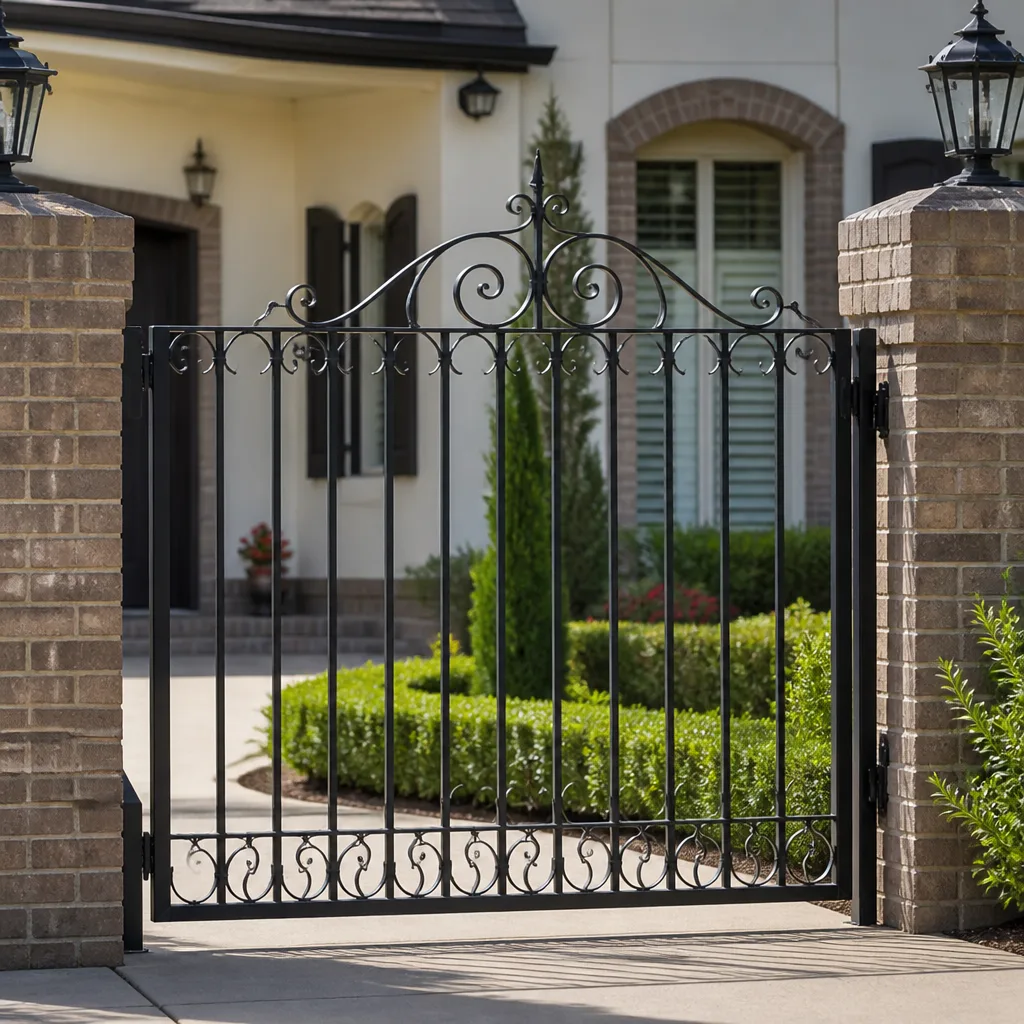
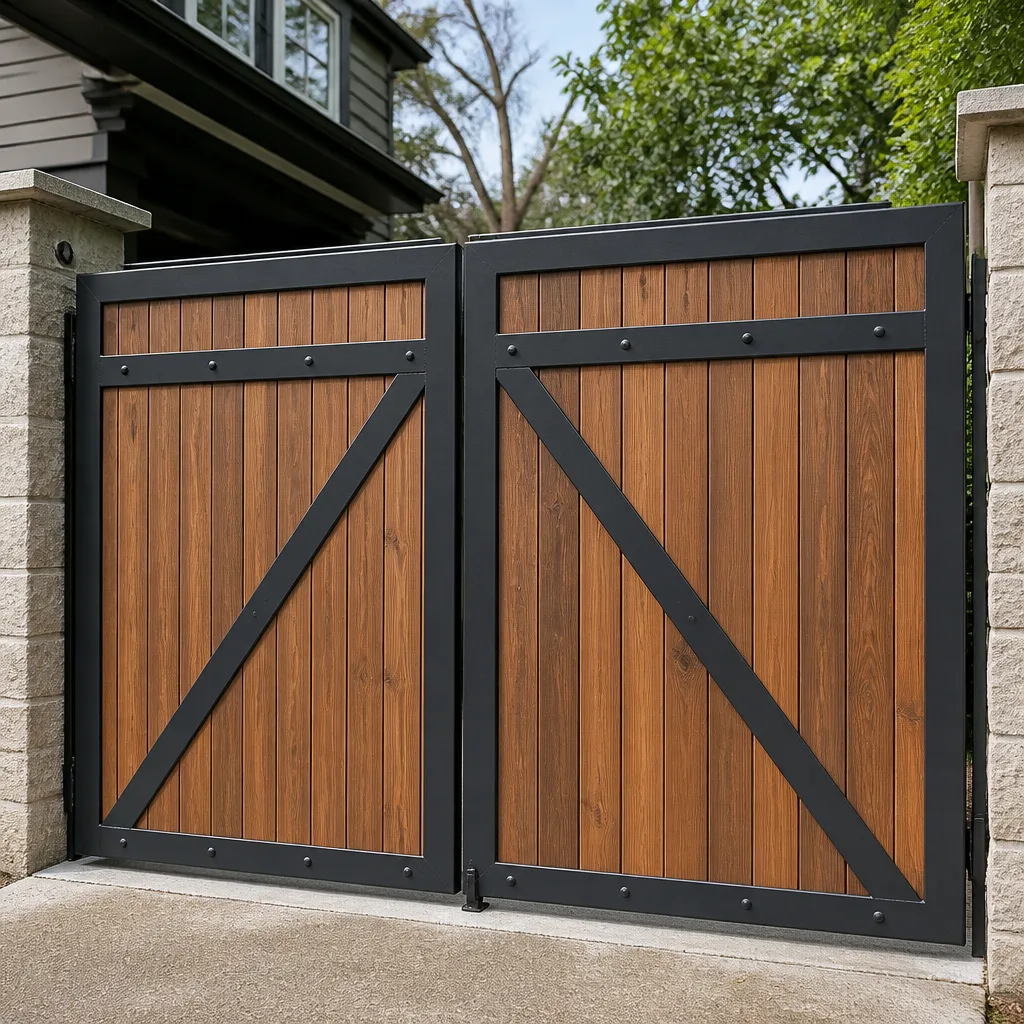
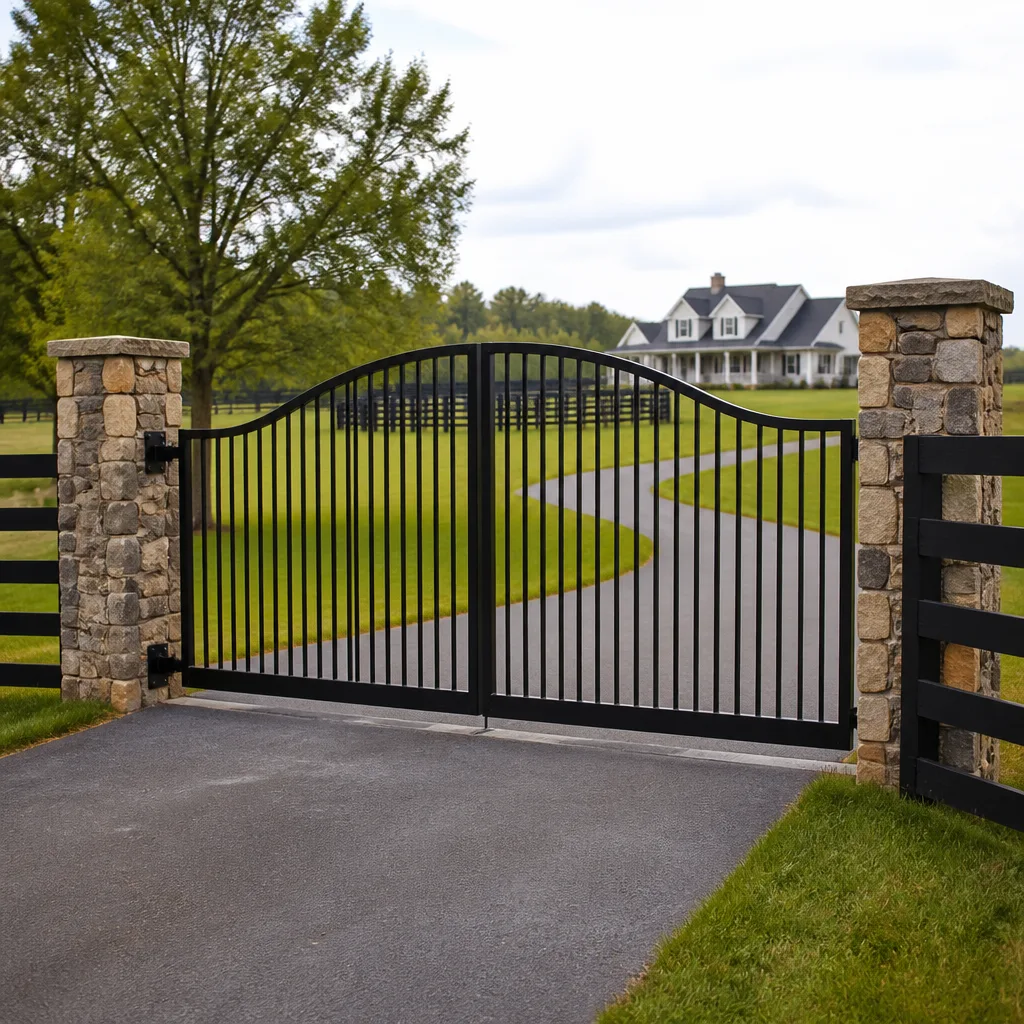
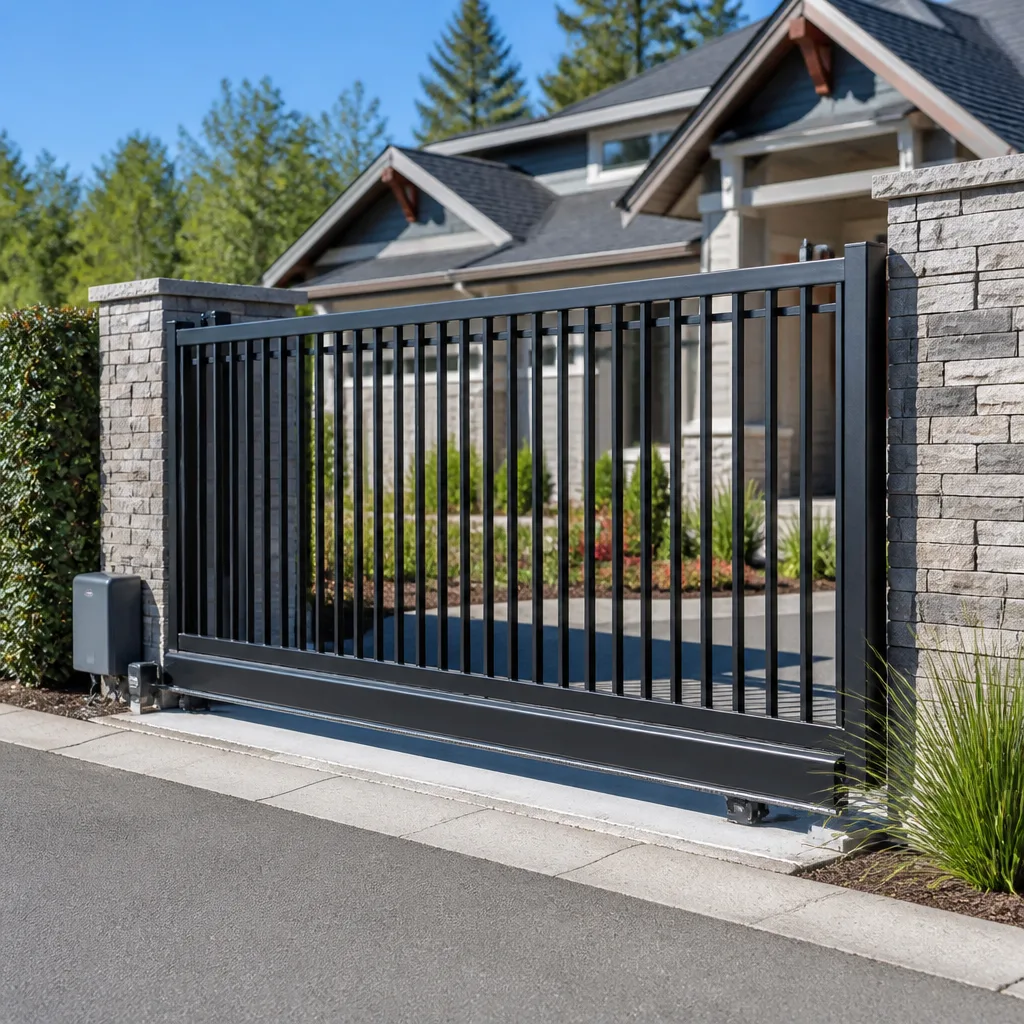
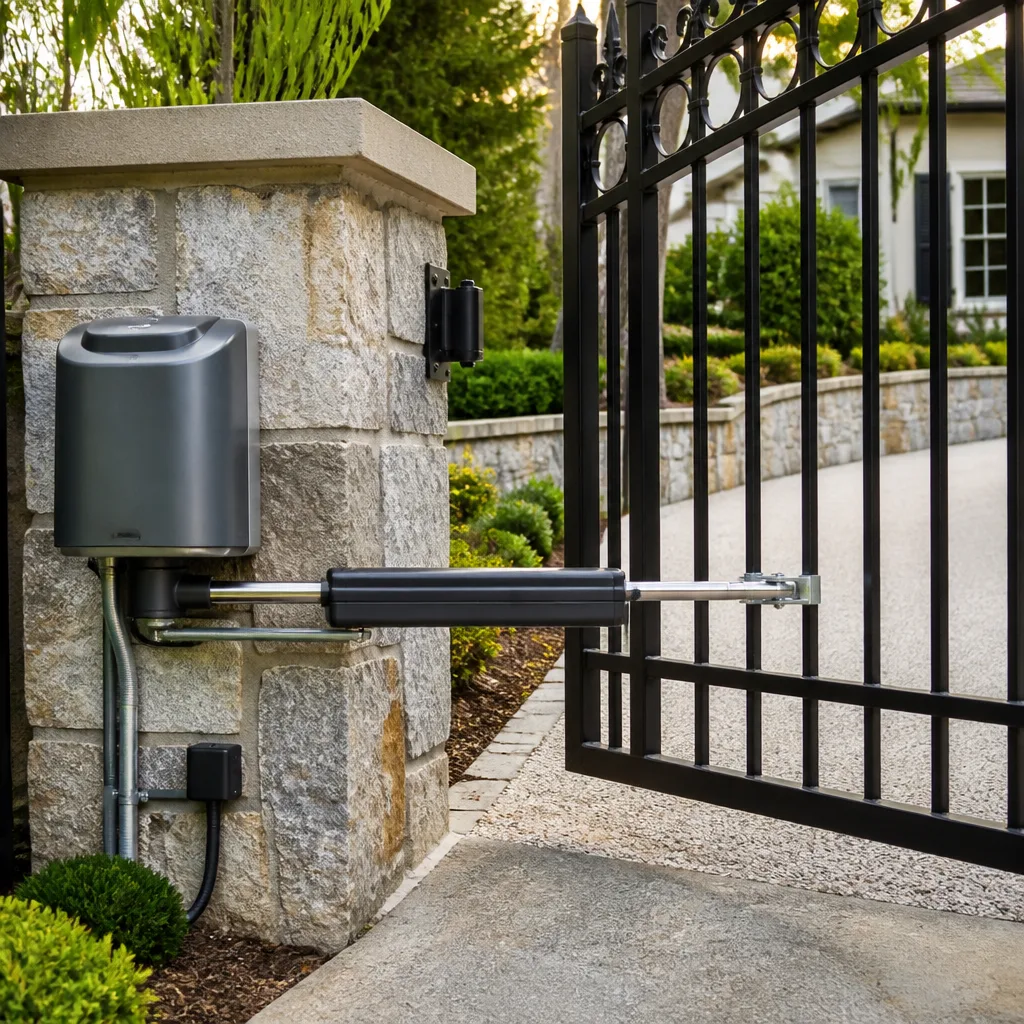
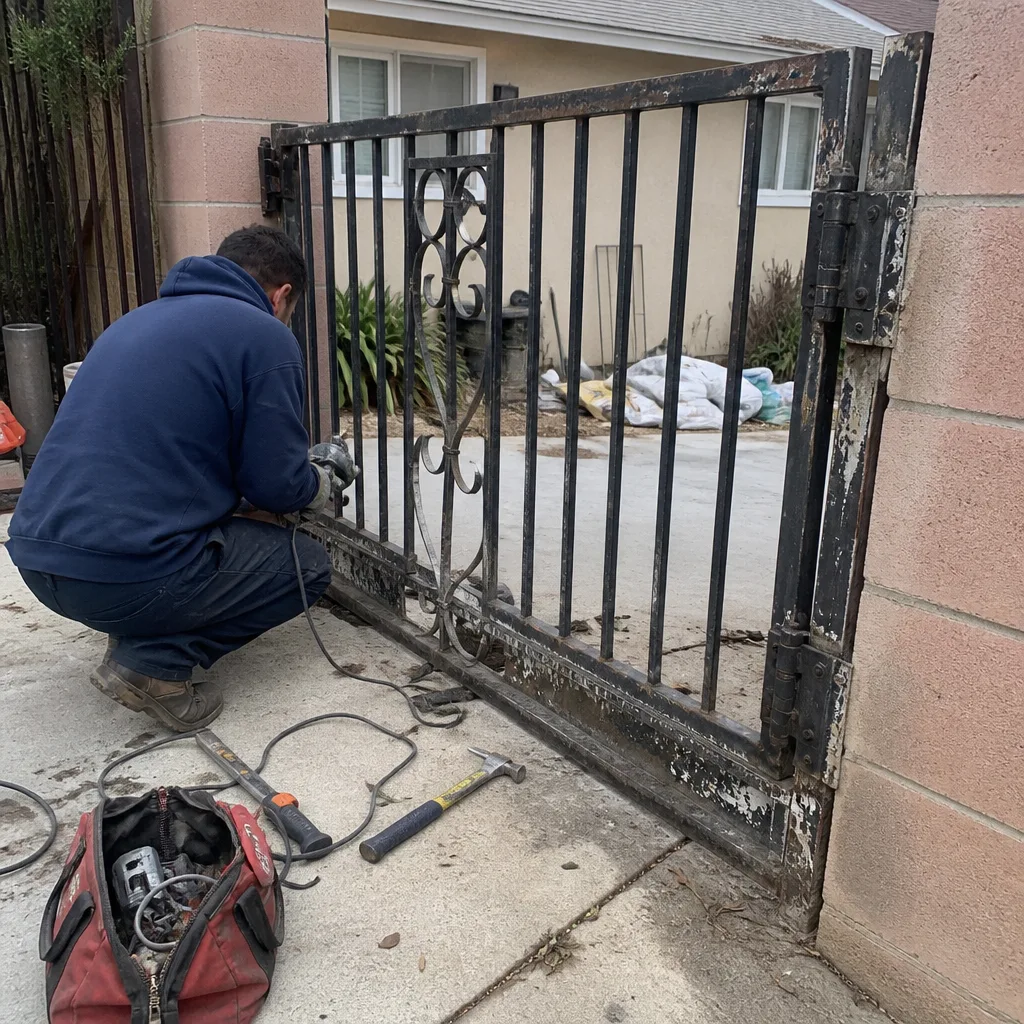 Before
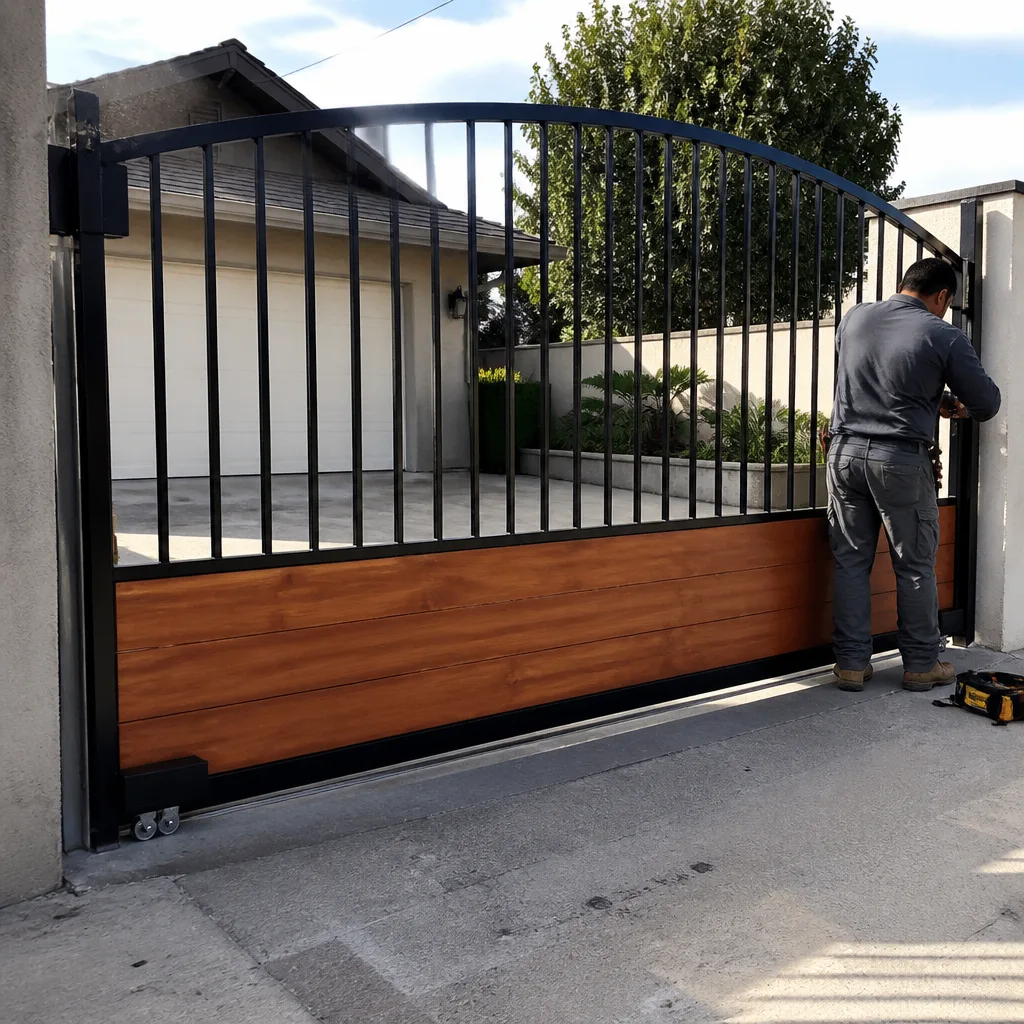 After
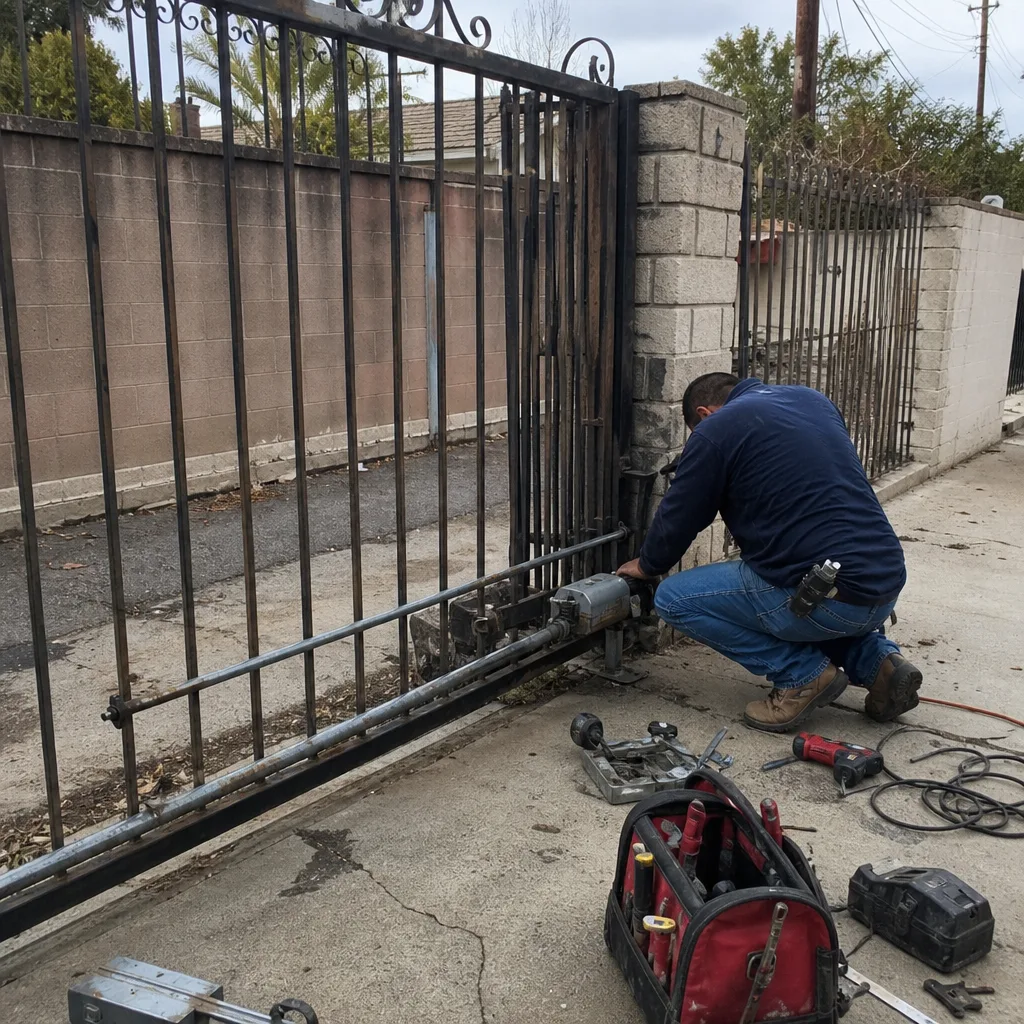 Before
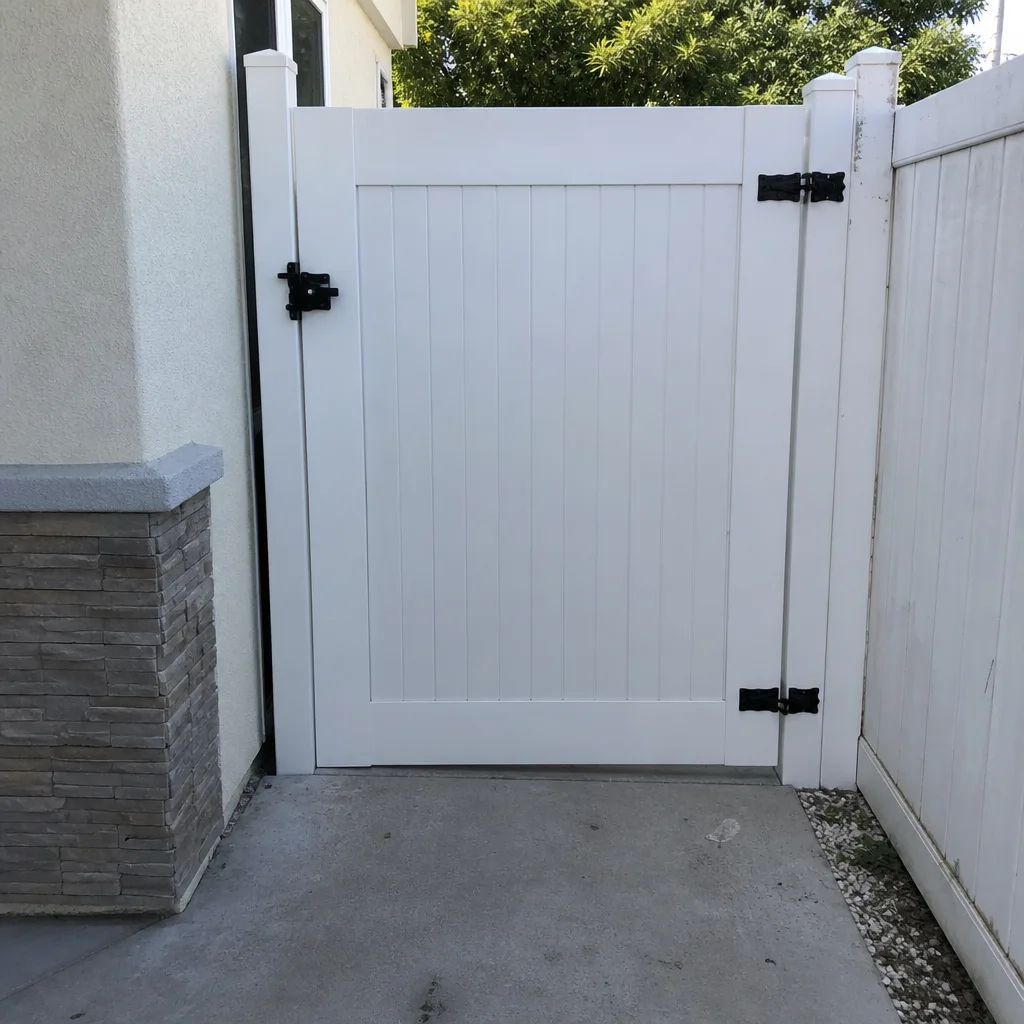 After
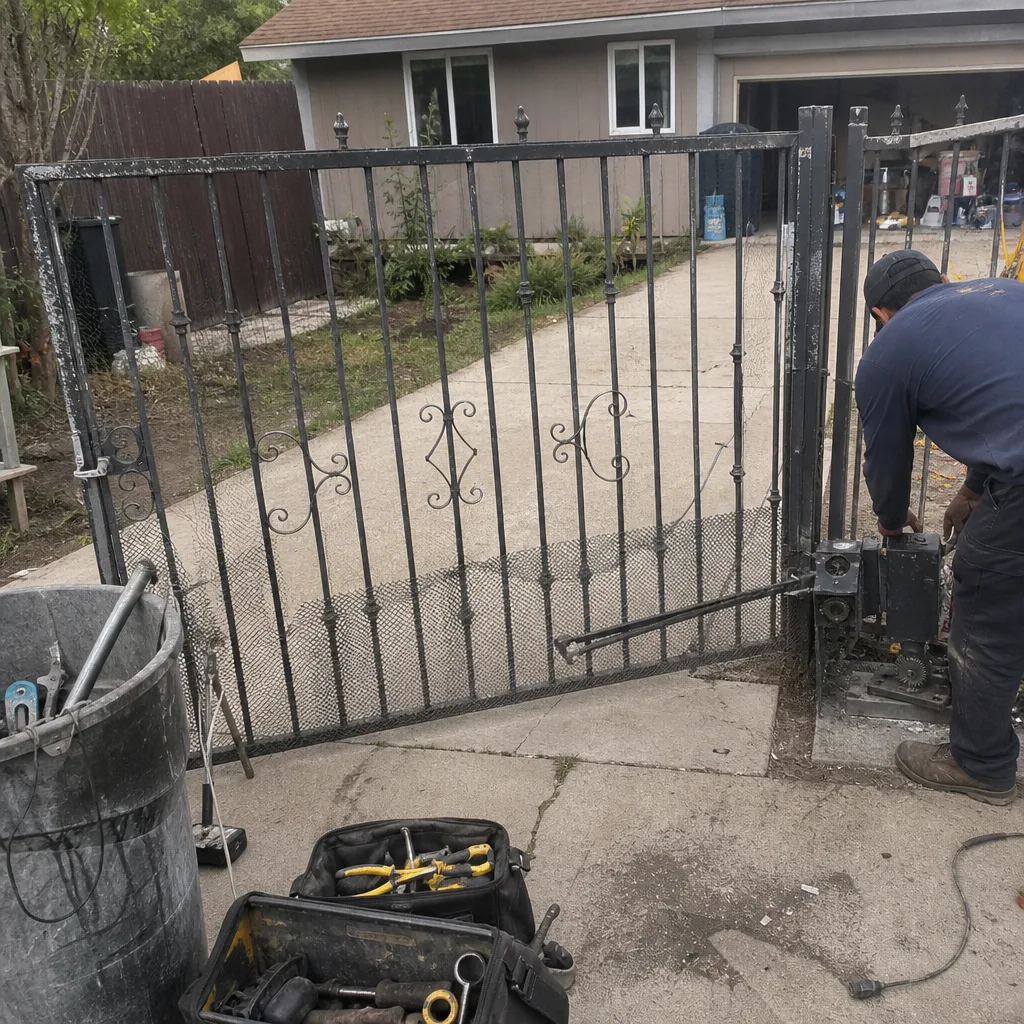 Before
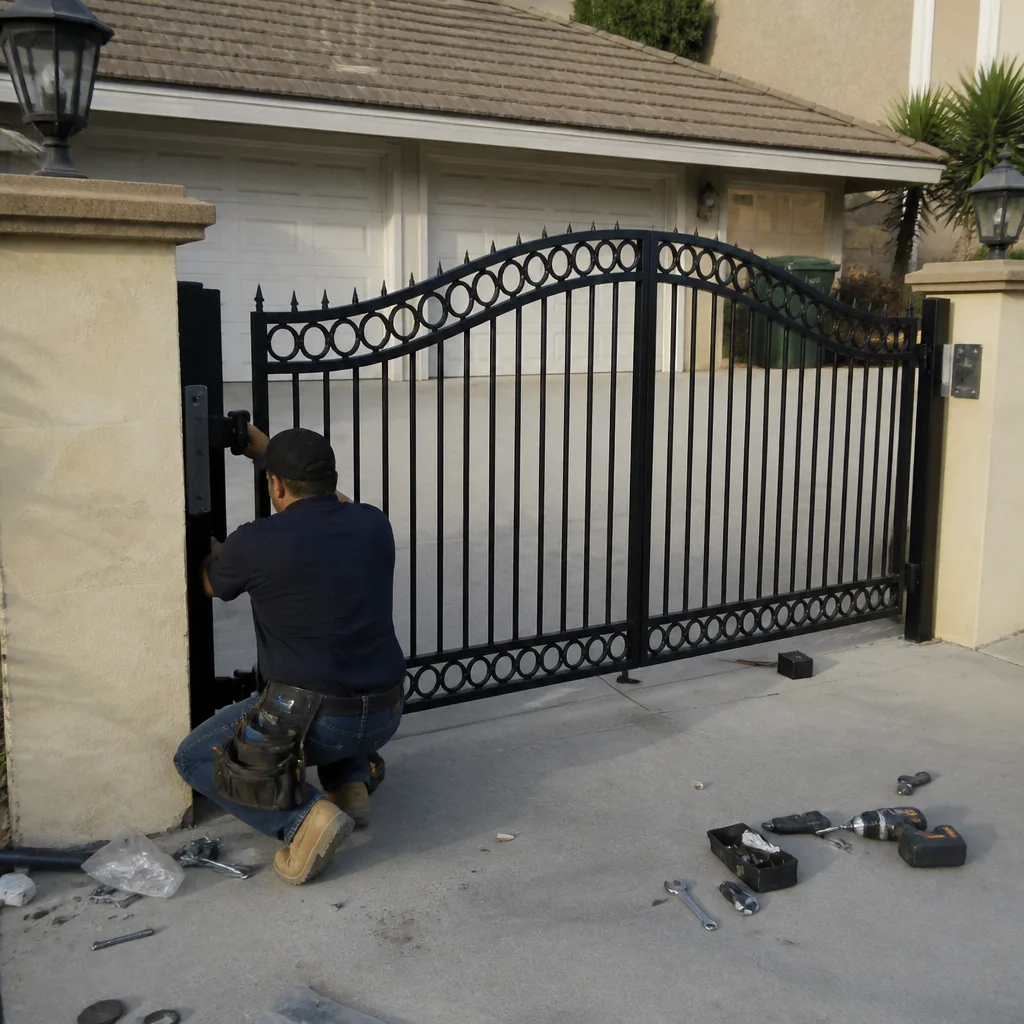 After
Gate Repair Permits, Codes & Inspections in CA: What You Need to Know
Most homeowners in California assume a gate is a gate: hang it, wire it, close the book. Then the permit question comes up, or a city inspector flags a gate that swings the wrong way, or an insurance adjuster asks about code compliance after a claim. The truth is that gate work in this state sits at the intersection of three separate sets of rules: building codes, fire codes, and municipal ordinances that vary block by block. In Northridge and across Los Angeles County, we’ve seen straightforward repairs turn into stalled projects because a permit was skipped or a set of ANSI standards was ignored. This guide lays out exactly what applies, when it applies, and how to avoid the most expensive mistakes.
Quick Answer
Most gate repairs in California do not require a permit, but any gate modification involving new footings, structural posts, electrical work, or changes to swing direction or opening clearance may trigger city review. Automatic gates must comply with UL 325 safety standards, and any gate serving more than one single-family home must meet fire department access requirements. In short: repair a hinge, no permit. Move a post or run new power, pull a permit.
Table of Contents
- When Gate Permits Are Actually Required in California
- California Building Codes That Touch Gate Work
- Fire Code and Emergency Access: What the Marshal Looks For
- UL 325 and Automatic Gate Safety: The Non-Negotiable Standard
- Electrical Codes for Gate Openers and Access Control
- HOA and City Rules in Northridge and the San Fernando Valley
- Inspections: What Happens When the City Comes Out
- How to Tell a Repair From an Installation (And Why It Matters)
When Gate Permits Are Actually Required in California
California does not have a single statewide gate permit. The California Building Standards Code (Title 24) sets the floor, but enforcement lives at the city and county level. In Northridge, which falls under the City of Los Angeles Department of Building and Safety (LADBS), the general rule is this: work that repairs an existing gate in place, using the existing footings and posts and not altering electrical or structural load paths, does not require a permit. Work that changes what the gate is typically does.
Specific triggers for a permit include:
- Setting new gate posts in concrete, or enlarging or relocating existing footings
- Installing a new gate where none existed before
- Changing the swing direction of a gate (in-swing to out-swing, or vice versa)
- Adding, replacing, or re-feeding power to a gate operator
- Replacing a driveway gate with a wider opening that changes sightlines or setback behavior
- Any work on a gate that fronts a public right-of-way or a shared driveway serving two or more parcels
One rule of thumb we use at Ironworks Gate Co. home offices: if you are unbolting something and putting a new version of the same thing back, it’s a repair. If you are pouring concrete, pulling wire, or redrawing the property line in any way, it’s a permit question. When in doubt, a five-minute call to LADBS clears it up faster than an inspector’s correction notice later.
California Building Codes That Touch Gate Work
Chapter 15 of the California Building Code and the 2022 California Residential Code govern gates the way they govern any other exterior structure: as loads, as paths of travel, and as hazards. The sections that matter most for gate owners are about wind load, egress, and mechanical safety. In the San Fernando Valley, where dry Santa Ana winds can flatten a poorly anchored gate in a single afternoon, wind resistance is not theoretical. A 14-foot steel driveway gate acting as a sail in 60 mph winds exerts thousands of pounds of force at the hinges and the post bases.
The code issues we see most often on existing gates in Northridge:
- Setbacks and easements: Gates built forward of the required front-yard setback or over a public utility easement are illegal even if they have stood for decades. Repairs do not grandfather them.
- Post depth and footing mass: LADBS generally expects gate posts to be set in concrete at a depth and width dictated by the gate weight and height. A 7-foot gate needs more than a 2-foot hole.
- Structural attachment to the house or pilaster: Gate hinges bolted into a stucco column with wedge anchors may hold for years, but the moment an inspector sees it, the correction order follows.
- Self-closing hardware on pool gates: California’s pool barrier rules (Title 24, Part 2.5) apply to gates at swimming pools. If a gate serves a pool area, it must self-close and self-latch, and no repair may disable that feature.
Most of what we repair in Northridge falls into the pre-existing category: gates that were built correctly once and need their hinges, rollers, or operators rebuilt. Those repairs do not reopen the building code question. But the moment a repair crosses into structural alteration, the code applies retroactively and the whole gate must be brought current, not just the part that failed.
Fire Code and Emergency Access: What the Marshal Looks For
In Los Angeles County, the fire code is enforced more aggressively than the building code when it comes to gates. Fire department access requirements exist for one reason: an engine company has to get through your gate in under four minutes. A gate that requires a proprietary remote, an app, or a keypad code to open from the fire side is a gate that delays a response by minutes in a county where brush fires and structure fires season every year.
Los Angeles Fire Department (LAFD) and the County Fire Marshal enforce these rules differently depending on where the gate sits:
- Single-family driveway gates: Generally must allow fire department access via a Knox key switch, a standard padlock-accessible chain arrangement, or an emergency disconnect that LAFD can operate. A Knox switch is a small key vault that fire crews open with a master key. In Northridge, we’ve seen fire inspectors cite gates that relied solely on a battery backup and a keypad.
- Estate gates and private-road gates: Any gate serving multiple homes, an HOA, or a private road must be pre-approved for access control gear by the local fire authority. This means Knox switches, a manual release on the operator that works from outside the gate, and a fail-safe mode that opens on power loss if the road is the only emergency route.
- Commercial and multifamily gates: Strictest tier. Periodic testing, documented inspections, and no obstructions within the gate’s arc of travel.
A useful distinction: fail-safe means the gate opens when power fails; fail-secure means it locks. Fire codes push hard toward fail-safe on access-controlled gates where emergency ingress matters. A gate that locks shut during a power outage on a hillside street in the Valley is a serious life-safety problem, not just an inconvenience.
UL 325 and Automatic Gate Safety: The Non-Negotiable Standard
If your gate has a motor, UL 325 applies. This is the national safety standard for gate operators and door operators, and it is incorporated into California law by reference. UL 325 governs entrapment protection: the sensors, edges, and force settings that stop a moving gate before it crushes a person, a pet, or a child on a bicycle. It is the one standard where skirting the rules has life-or-death consequences, and it is the standard inspectors know best.
The core UL 325 requirements for automatic driveway gates:
- Two independent entrapment protection devices on every gate operator. This usually means a monitored photo-eye pair and a reversing edge, or two separate pairs of photo-eyes, depending on the gate type and the operator class.
- External entrapment protection for the gate’s travel path: photo-eyes at the open and close directions, wired so a beam break stops and reverses the gate.
- Maximum force limits: the operator must reverse on contact with an obstruction, not simply stall against it.
- Warning signage: at minimum two signs, one on each side of the gate, alerting pedestrians to keep clear of the moving gate.
- Manual release: every operator must have an external manual release that works without tools, so a person can open the gate by hand in an emergency or a power failure.
Here is the part homeowners in Northridge often don’t know: UL 325 compliance is not something you sort out after the gate goes in. It is designed into the gate. A swing gate that opens toward public access must have operators with different safety provisions from a gate that swings away. A slide gate needs guards for the protruding rack and pinch points at the track. This is exactly why we train on nine opener brands, because a Viking operator’s safety loop wiring differs from a Ghost Controls photo-eye configuration, and the wrong wiring defeats the protection entirely.
Electrical Codes for Gate Openers and Access Control
California Electrical Code (CEC) governs the wiring that powers gate operators, keypads, video intercoms, and loop detectors. The two articles gate owners hear about most are Article 300, which covers wiring methods and requires proper burial depth for low-voltage and line-voltage circuits, and Article 110.3(B), which simply says equipment must be installed per the manufacturer’s listing.
In plain terms, these are the electrical issues we fix most in Northridge:
- UF cable run above ground or at a shallow depth: The CEC requires 24-inch burial depth for direct-burial line-voltage circuits, and even low-voltage landscape-style wire has minimums when it feeds a gate operator. Wire stapled to a stucco wall or lying across a driveway violates code the moment it is energized.
- Extension cords as permanent power: We see this regularly on older Northridge properties. An extension cord run from a garage outlet to a gate operator is a code violation and a fire hazard. The fix is a dedicated circuit or a properly rated, properly buried branch circuit.
- Missing GFCI protection: Outlets serving gate operators in damp or outdoor locations must have GFCI protection. A tripping GFCI causing a dead gate is a maintenance issue; removing the GFCI to stop the trips is a code violation.
- Improper splices in the ground or in conduit bodies without listed waterproof connectors: The failure shows up as a dead opener after the first heavy rain, and the repair means digging up the splice anyway.
- Power sharing across a garage door opener circuit: Gate operators pull surges at start. Sharing a circuit with a garage door opener or other motor load causes nuisance trips and violates the spirit of the dedicated-circuit expectation for any permanently installed motor appliance.
For gate access control wiring, the same rules apply but the voltages are lower. Low-voltage cable still requires outdoor-rated jacket and proper securing. A keypad wire threaded through a gap in a concrete block wall with no conduit will fail from UV and abrasion within a few Valley summers.
HOA and City Rules in Northridge and the San Fernando Valley
Northridge sits inside the City of Los Angeles, which means LADBS rules apply. But many neighborhoods in the Valley also have HOA overlays that restrict gate appearance, height, color, and materials. These rules are contractual, not statutory, but they can stop a project just as dead as a failed inspection. In Porter Ranch and the newer north Valley master-planned communities, exterior modifications including driveway gates often require architectural committee pre-approval. In older Northridge tracts built in the 1950s and 1960s, HOA restrictions are rarer but setback and easement problems are more common because those lots predate modern access standards.
City-level rules that matter in Northridge specifically:
- Front yard fence and gate height limits: In most R-1 zones in Los Angeles, fences and gates in the required front yard are limited to 3.5 feet in height, and 6 feet elsewhere on the property. A 7-foot driveway gate in the front setback is already over the limit unless it was legally approved or grandfathered.
- Corner-lot visibility: The City enforces a 3-foot clear vision triangle at intersections and driveway approaches. A gate, pillar, or hedge that obstructs the triangle is a code violation and a liability issue.
- Sound ordinances: Some hoa and city rules govern opener motor noise in close-set tracts. A rattling chain-drive opener at 6 a.m. in a Northridge cul-de-sac generates calls to the city’s noise enforcement. Belt or screw driven openers with soft start/stop are the quieter fit for those lots.
- Parkway and apron restrictions: The parkway, the strip of land between sidewalk and curb, is city property. Gates and pillars that encroach on it need an encroachment permit, and LADBS has been stricter about this in recent years.
When we install or significantly modify a gate in Northridge, we suggest a quick review of the HOA’s architectural guidelines alongside the city permit path. We have seen too many gates purchased and fabricated before the HOA’s material restriction was discovered, leaving the homeowner with a beautiful gate that can never legally be hung.
Inspections: What Happens When the City Comes Out
If a permit is pulled for gate work, the inspection process is usually simple but specific. Los Angeles Department of Building and Safety inspectors look at the work in stages, and the order matters. A typical gate project with structural and electrical scope involves these inspections:
- Footing and rough electrical inspection: After post holes are dug and forms are set, but before concrete is poured. The inspector checks depth, width, rebar, and the presence of conduit and grounding. Burying anything before this inspection means you will be asked to expose it.
- Framing and structural inspection: After posts are set and the gate frame is in place, checking attachment points, welds, and clearance.
- Electrical final: After the operator and access control are installed, the inspector verifies the circuit, the disconnect, the GFCI, the UL 325 entrapment devices, the signage, and the manual release.
- Final inspection: The complete job, gate swinging, operator cycling, sensors functioning, and the gate’s arc clear of obstruction.
Most simple repairs in Northridge skip this entirely because they are below the permit threshold. A hinge replacement, a new operator installed on an existing bracket, a photo-eye swap, a keypad replacement: none of these need a building permit. But the moment we set a new post, pull new line-voltage wire, or alter the operator’s mounting to move the gate’s path, we tell the homeowner to expect the city’s involvement and we sequence the work so no inspection requires destructive demo.
A point worth making plainly: the permit is protection. It documents that the work met code, which matters when you sell the house, when your insurance company asks questions after a storm, and when a tenant or visitor is injured by the gate. Unpermitted work is not a deal where you saved a fee; it is a liability you financed.
How to Tell a Repair From an Installation (And Why It Matters)
The dollar difference between a repair and an installation is not the cost of the permit. It is the cost of what happens when you skip one. Here is a practical framework we use with homeowners in Northridge to determine what category the work falls into:
- Is anything being poured, anchored, or dug in a new location? If yes, permit likely required. Replacing a failed hinge on the existing post is a repair. Cutting out and re-setting a leaning post is a structural alteration.
- Is the gate’s path or swing direction changing? If yes, permit required. The gate’s clearance over the sidewalk, its relationship to the property line, and its entrapment zones all change when the swing direction changes.
- Is new line-voltage electrical work being performed? If yes, permit required. Replacing an operator with a like-for-like unit that plugs into the existing outlet is a repair. Running a new circuit from the main panel to the gate is an installation.
- Is the gate’s size, height, or material changing? If yes, plan check may apply. A heavier gate on existing posts may overload the footings, and the city wants that calculated, not guessed.
- Does the gate serve more than one household? If yes, fire department review applies even for repairs that do not otherwise trigger LADBS permits. A shared driveway gate’s operator replacement in Northridge is exactly the kind of job where the fire marshal’s requirements can catch a homeowner by surprise.
When a homeowner calls us and says “it is just a repair,” our first job is to confirm that it is actually a repair. The distinction protects the homeowner from a correction notice, and it protects the gate’s future saleability. This is also why we carry the Done Right Promise: if a repair we made is not right, we come back and make it right, every time, on every job. No paperwork, no arguing.
Common Mistakes to Avoid
- Skipping the permit on a new post because the old post “was fine for 30 years.” The old post was fine under the old gate. A newer, heavier gate will load that footing differently, and the inspector will want it verified. In Northridge’s expansive clay soils, post movement is common enough that undersized footings show up within two wet winters.
- Replacing an old operator with a more powerful one without checking the existing circuit. A 1/2 HP operator on a dedicated circuit is one thing. A 1 HP operator on a circuit shared with a garage door opener is another. The breaker trips, the gate fails, and the homeowner thinks the opener is defective.
- Buying a “UL listed” operator and assuming that makes the installation compliant. UL listing covers the component. UL 325 compliance covers the installation: the photo-eyes, the edges, the signage, the force settings. A compliant gate needs both. We have corrected installations where every component was listed and every wiring choice was wrong.
- Installing a gate so it swings over a public sidewalk. California code prohibits gates from swinging outward over a public way in most residential zones. A gate that sweeps across a Northridge sidewalk is a lawsuit waiting on its first close call with a pedestrian.
- Forgetting that pool gates carry their own codes. A gate that separates a backyard pool from the rest of the property must self-close and self-latch, and it cannot be propped open. When we replace a pool-adjacent gate in Northridge, we always confirm the closer and latch meet Title 24 Part 2.5, whether or not the city is involved.
- Using household low-voltage wire for a gate opener power run. The gate opener manual may say 16 AWG, but the buried run, the distance, and the amperage all change the math. Undersized wire causes voltage drop at the opener, which burns out boards and leaves the gate dead on cold mornings.
- Not testing the manual release after installation. The city checks it. The fire department checks it. And a homeowner who has never opened their gate by hand will not know if it fails until a fire engine is waiting at the curb. Every gate we commission in Northridge is tested manually at least twice before we leave.
When to Call a Professional
A homeowner with a socket set and patience can replace a picket. A homeowner should not be setting a gate post, wiring an operator, or adjusting entrapment protection. The stakes are specific: a falling gate weighs hundreds of pounds; a miswired operator can reverse onto a child instead of away from one; and a line-voltage mistake can kill. If you are dealing with a leaning post, a gate that stalls mid-travel, a keypad that sparks, or an opener that trips a breaker, that is the signal to call a licensed gate specialist. The team at Ironworks Gate Co. have served Northridge and the surrounding Valley, and we handle these issues every week. Call (925) 966-4150 for a free estimate; we quote the job before any work starts, and every job is backed by the Done Right Promise.
Frequently Asked Questions
No, in most California cities, replacing an existing gate opener with a similar operator on the existing bracket and circuit does not require a permit. The replacement is treated as a like-for-like repair. However, the new operator must be installed with UL 325 entrapment protection intact, so the job should include verifying the photo-eyes, edge, force settings, and signage. If the replacement involves new line-voltage electrical work or moving the operator, a permit is required. Call (925) 966-4150 and we will tell you in five minutes whether your specific replacement in Northridge needs a permit.
Gate-related permits at LADBS typically run from $150 to $600 depending on scope, with plan check fees separate when structural or electrical plans are required. The cost is driven by the project valuation and the number of inspections. Simple permits for post replacement or electrical work sit at the lower end; gates involving new footings, fire review, or encroachment sit higher. This is a fraction of the cost of correcting unpermitted work later, which can include double permit fees and the cost of exposing covered work for inspection.
In most cases no. Gates, pillars, and fences on the property line are treated as boundary structures, and any new construction on a property line triggers setback and planning review. In Northridge, where many homes sit on older lots with existing nonconforming setbacks, we advise homeowners to keep new gates inside their property line unless a survey and LADBS review confirm otherwise. A gate installed on the line that later interferes with a neighbor’s use or a city easement becomes a standing dispute and a correction item at resale.
UL 325 requires every automatic gate operator to have two independent forms of entrapment protection, typically photo-eyes and a reversing edge, along with force-limited motor controls, manual release access, and warning signage on both sides of the gate. The standard also classifies operators by location class, so a gate near a sidewalk or driveway approach carries stricter protection requirements than a gate deep on a rural property. Compliance is about the installed system, not just the listed components. Most gate opener brands we service, including BFT, Linear, and Viking, publish the exact UL 325 wiring and configuration required for each installation class.
Yes, and more than most homeowners expect. Insurance claims involving gates, whether a vehicle strike, a storm failure, or an entrapment injury, are routinely investigated for code compliance. An insurer that finds unpermitted structural work or a disabled entrapment device may deny the claim or subrogate it. On the liability side, an injury caused by a gate that lacked UL 325 protection exposes the homeowner to civil claims that the insurer can refuse to defend. The permit and the inspection record are the homeowner’s evidence that the gate was built and maintained to code.
Within the City of Los Angeles, the Los Angeles Department of Building and Safety (LADBS) performs structural and electrical inspections for permitted gate work. Where fire access is involved, the Los Angeles Fire Department reviews operator and access control equipment, particularly Knox switches and fail-safe operation. In HOA-governed neighborhoods, the HOA may also require its own architectural inspection. Most gate repairs in Northridge never involve an inspector because they fall below the permit threshold, but when a permit is pulled, the inspection sequence is straightforward and we coordinate it for the homeowner.
The Bottom Line
California gate work lives inside a simple set of rules once you understand them: repairs don’t need permits, structural and electrical changes do, automatic gates must meet UL 325, and fire access trumps convenience. The expensive mistakes happen when a homeowner treats a structural repair like a bolt-on fix, or wires an operator like a garage door opener, or assumes a listed component makes a compliant system. In Northridge, with its aging housing stock, expanding clay soils, and LAFD’s strict access rules, the margin between a good gate and a liability is knowable and controllable. If your gate needs attention, call (925) 966-4150. We’ll tell you plainly whether it’s a repair or a permit question, and we’ll quote the job before a single bolt is turned.
Written by the team at Ironworks Gate Co.