
Quick Summary
Automatic gates often experience limit switch drift due to operational vibration, thermal expansion, and gearbox wear, causing panels to stop short or crash into physical stops. Technical specialists at Ironworks Gate Co. demonstrate that systematic diagnostics and targeted recalibration of mechanical, magnetic, or digital limit mechanisms can effectively restore travel accuracy without costly operator replacements. Readers will understand the root mechanical and electrical causes of travel errors and learn when to schedule a professional on-site inspection and limit switch recalibration.
Gate Limit Switch Drift Explained: Fix Stopping Issues Fast
When an automated driveway gate stops short of the latch post or hits the physical curb stop, the system may be suffering from limit switch drift. According to Ironworks Gate Co., gate limit switch drift is a positioning error where the physical switch, sensor, or internal actuator fails to trigger at the intended end of travel. This can leave property owners dealing with gates that stop short, push past safe boundaries, or strain their motors against fixed stops.[2]
Accurate limit settings keep hardware from unnecessary strain and help keep the gate moving predictably within its designated safety zone. While limits control where the gate stops, they are not safety devices on their own. Where an entrapment risk exists, applicable gate operators require independent entrapment-protection measures under ANSI/CAN/UL 325, such as monitored photo eyes and reversing edges. The U.S. Consumer Product Safety Commission (CPSC) documented 32 deaths associated with automated gates between 1985 and 2000, with 20 involving children. A 2025 UL Standards and Engagement report found that incidents, fatalities, and entrapments declined by more than 50 percent as a share of garage-door injuries after improvements in technology and safety requirements; this does not directly establish the same result for vehicular gates.[1] See also Gate Repair Cost & Pricing in Northridge – Call Now-10% Off – On-Site in 60 Minutes – Free Estimate.
Gate Limit Switch Drift: Fast Diagnostic Guide
If your gate is stopping in the wrong spot, use this diagnostic breakdown to help evaluate what may be happening at the gate operator:
- Incomplete Travel (Stopping Short): The gate halts before reaching the full open or closed position. This can be caused by a shifted limit nut, an obstructed travel carriage, or resistance from stiff rollers and tight hinges.
- Over-Travel (Banging Stops): The gate travels past its resting point, bottoming out against the physical gate stop or binding the drive arm. This may point to loose limit switch brackets, missing magnetic targets, or damaged drive components.
- Inconsistent Stopping Positions: The gate stops at different points throughout the day. This symptom may indicate thermal expansion in the gate framing or internal gearbox wear rather than an electrical switch failure.
Why Gate Travel Limits Shift Over Time
Need gate limit switch drift explained?
We’re available now - call for a fast, free estimate.
Limit drift can be caused by a combination of thermal dynamics, vibration, and mechanical backlash inside the operator.
Thermal-Mechanical Backlash vs. Switch Failure
In regions that experience significant temperature swings, metal gates can expand and contract. A steel sliding gate can change in length as ambient temperatures fluctuate. Furthermore, as an operator ages, components inside the gearbox can develop mechanical play (backlash). When property owners repeatedly adjust mechanical limit nuts to address a stopping gap, it may mask mechanical gear play and thermal variation. Over time, gear wear can cause the stopping point to vary depending on temperature and operating conditions.
Operational Vibration and Loose Hardware
Every time a swing or slide gate starts and stops, torque transfers through the chassis. Over repeated cycles, vibration can loosen limit switch mounting plates, locking clips, or magnetic collars clamped to the drive assembly. Once these parts shift, even small movements can translate to noticeable drift at the edge of the gate panel.[5]
Environmental Contamination
As noted by Ironworks Gate Co., outdoor operators are exposed to dust, moisture, insects, and drying grease. In mechanical switches, grease mixed with grit can cause the spring-loaded actuator arm to stick. In optical or magnetic assemblies, dirt accumulation or corrosion across wiring terminals can introduce electrical resistance or signal interference.
Comparing Limit Switch Technologies: General Troubleshooting Framework
Gate operators can use several methods to track travel boundaries. The following is a general troubleshooting framework, with specific behaviors depending on the operator model.
| Technology Type | Common Gate Types | Primary Cause of Drift | Adjustment Method |
|---|---|---|---|
| Mechanical Microswitches | Slide gates (Chain), Overhead, Heavy Swing operators (depending on the operator model) | Vibration loosening limit nuts, worn actuator arms, or gearbox backlash (depending on the operator model) | Depressing the retaining plate and rotating threaded limit nuts or cams manually (depending on the operator model) |
| Magnetic Sensors (Reed/Hall-Effect) | Linear swing actuators, modern rack-and-pinion slide gates (depending on the operator model) | Physical shifting of the magnet brackets along the track or arm (depending on the operator model) | Loosening the bracket set screw and sliding the magnet to the new position (depending on the operator model) |
| Digital Encoders / Optical Boards | Modern DC gate operators, high-traffic commercial systems (depending on the operator model) | Loss of board memory, pulse count errors, loose drive belts, or optical disc dust (depending on the operator model) | Setting the board into learn mode and programming open/close limits via buttons (depending on the operator model) |
What Field Testing Tells Us About Limit Reliability
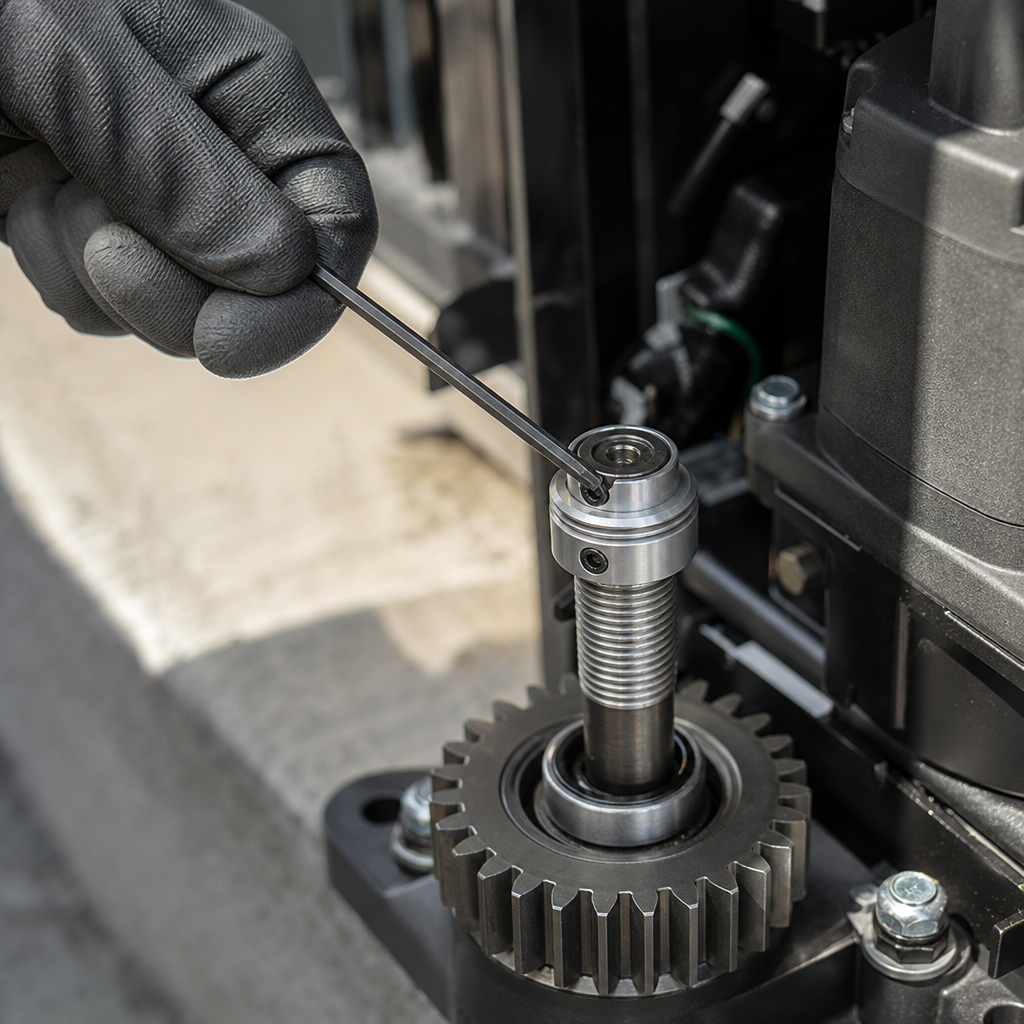
Limit switches are moving parts subjected to high mechanical repetition. In an operational study conducted at Universiti Tun Hussein Onn Malaysia (2025), the report documented limit-switch failures during test phases at 240 and 1,000 cycles, but did not establish a universal failure rate or comparative cycle sensitivity.[4]
How to Safely Recalibrate Gate Limits
Need gate limit switch drift explained?
We’re available now - call for a fast, free estimate.
If your limit hardware is sound but out of position, follow these steps to reset your stopping points:
- Turn Off High-Voltage Power: Always disconnect main power to the operator before placing hands near drive chains, limit shafts, or internal electronics.
- Inspect the Drive Train First: Check the chain tension on slide gates or the mounting brackets on swing arms. Adjusting limits on a sagging gate or loose chain may not fix the underlying problem.
- Make Small Adjustments:
- For mechanical limit nuts: Press down the spring-loaded retention plate and spin the open or close nut a few notches in the direction indicated on the chassis label.
- For magnetic limits: Loosen the clamping screw on the magnet holder and move it in small increments along the track.
- For digital limits: Follow the manufacturer procedure on the control board to put the unit in limit-learn mode, jogging the gate to the stop positions.
- Lock Down All Hardware: Ensure limit locking plates snap completely back into the nut grooves, and tighten all set screws on magnetic collars.
- Restore Power and Test: Run the gate through complete open-and-close cycles according to the operator’s manual to verify that it stops cleanly at the target mark every time.
When to Adjust vs. When to Replace Limit Components
Not every stopping issue can be solved with an adjustment. As Ironworks Gate Co. advises, knowing when to adjust and when to replace hardware saves time and protects the operator.
When to Adjust
- The limit nut backed off because the retaining bracket was not seated properly.
- The magnetic limit bracket was bumped or shifted along the mounting path.
- The gate stops consistently in the exact same wrong spot on every cycle.
When to Replace
- Cracked microswitch housing: If the internal contact spring has lost tension, the switch may trigger intermittently.
- Stripped limit shaft threads: If the threaded limit shaft wobbles or has stripped threading, the nuts may slip under load.
- Internal gearbox wear: If you can push the closed gate panel back and forth by hand without the motor turning, the gears may be worn out and require operator repair or replacement.
- Damaged wiring harnesses: Corroded or damaged sensor wires that cause voltage drops should generally be replaced.
Frequently Asked Questions
What causes an automatic gate limit switch to drift over time?
Common causes can include loosened mounting brackets from operating vibration, mechanical wear in the operator gearbox, slipping limit components, and thermal expansion of the gate frame during weather changes.
Can temperature changes shift my gate travel limits?
Yes. Metal expansion during temperature changes can alter the physical reach of the gate. When combined with mechanical play inside operator gears, this may cause the gate to stop short or travel too far depending on conditions.
Why does my gate reverse immediately after hitting the close limit?
One possible cause is that the limit switch is set too far forward, which can cause the gate to hit the physical ground stop or post before the limit switch triggers, leading the control board to interpret the resistance as an obstruction. Check the operator manual and the entrapment-protection system to diagnose the issue.
Are limit switches a replacement for safety photo eyes?
No. Limit switches only tell the motor where to stop during a normal run. Where an entrapment risk exists, applicable gate operators require independent entrapment-protection measures under ANSI/CAN/UL 325, such as optical sensors or safety edges, to protect people and vehicles from injury or damage.[3]
Need gate limit switch drift explained?
We’re available now - call for a fast, free estimate.
Sources
- www.cpsc.gov › s3fs-public › Residential-Garage-DoorBVS GDO Revisions – CPSC – cpsc.gov (2023)
- New Safety Standard for Automatic Security Gates Helps Prevent … – cpsc.gov (2001)
- 16 CFR Part 1211 - Safety Standard for Automatic Residential … – ecfr.gov (2017)
- Repeated LRT failures may signal system-level reliability issues: Expert – thesun.my (2025)
- The Basics of Limit Switches – dl.icdst.org
Related reading: Gate Repair Pricing Northridge – 10% Off & Free Estimate – On-Site in 60 Minutes
Related reading: Best Heavy Duty Swing Gate Opener – 10% Off & Free Estimate – Same-Day Service
Frequently Asked Questions
How do I know if gate drift is caused by worn gears rather than a simple limit switch adjustment?
If you can manually push a closed gate panel several inches back and forth without motor resistance, internal gearbox backlash is likely the cause rather than a displaced switch. In these cases, adjusting the limit nuts will only temporarily mask mechanical play, making a professional diagnostic inspection by Ironworks Gate Co. essential to determine whether gear servicing or recalibration is needed.
How often should automatic gate limit switches be inspected and recalibrated?
Heavy-use commercial and residential gates should have their travel limits and drive hardware checked at least once or twice per year during routine maintenance. Technicians at Ironworks Gate Co. inspect for loose brackets, chain slack, and thermal movement to correct minor drift before the gate strains its motor or impacts physical stops.
What should I do if a digital gate operator repeatedly loses its programmed limits?
Persistent limit drift or memory loss in digital operators often points to optical disc contamination, loose pulse count belts, or voltage drops rather than a standard mechanical shift. You can schedule an on-site inspection with Ironworks Gate Co. to diagnose the control board circuitry and perform a professional recalibration instead of replacing the entire operator.
About the author
 |
David Caldwell David is a technical writer specializing in home services and automated access systems. With over a decade of experience covering residential and commercial property maintenance, he translates complex gate repair concepts and pricing structures into clear, actionable advice. He holds a B.A. in Communications from California State University, Northridge. |
Gate not opening, off track, or opener dead?
We’re available now - call for a fast, free estimate.
Call Now - Free Estimate