
Quick Summary
When investigating why is my electric gate not closing, the issue typically traces back to triggered entrapment sensors, track debris, misaligned travel limits, or internal electrical faults. While basic troubleshooting like wiping photoelectric lenses and clearing track obstructions can resolve minor problems, Ironworks Gate Co. stresses that control board failures and mechanical motor faults require licensed professional repairs to maintain safety standards. After reading this guide, you will be able to perform safe preliminary checks on your system and determine when to contact Ironworks Gate Co. for 24/7 same-day repairs or a free on-site diagnostic inspection.
Why Is My Electric Gate Not Closing – Quick Diagnostic Fixes
WARNING: Powered gates can cause serious or fatal injuries and should not be used if safety devices are missing, faulty, or bypassed.[3]
When an automated driveway gate stays open, the issue is often related to a safety feature, mechanical resistance, or a system setting: the operator refuses to close because an obstruction sensor, mechanical bind, limit fault, or electrical issue indicates that the opening is unsafe.[4]
Safety standards and guidance require multiple entrapment-prevention measures, including obstruction sensing and secondary devices such as photoelectric eyes or pressure-sensitive edges. Historical U.S. figures from the U.S. Consumer Product Safety Commission (CPSC) highlighted the risks of gate-related injuries and entrapment fatalities on older systems that lacked automated reversing devices. Understanding these basic safety components, as noted by the specialists at Ironworks Gate Co., makes it easier to conduct general safety checks or determine when to consult the manufacturer manual and contact a qualified gate technician.[1]
Troubleshooting a Gate Stuck Open: General Safety Checks
Before attempting any checks, consult your operator’s manufacturer manual. General visual inspections can help determine whether the issue is related to an obstruction, mechanical resistance, or an electrical fault.
Safety Reminders and Basic Inspection Tools
Always keep people, pets, and vehicles away from the gate path during testing. Never bypass or defeat safety devices to force an operator to close. For basic visual checks, use:
- Clean microfiber cloth and a soft bristle brush
- Small level
- Manufacturer manual for your specific operator model
Quick Summary: Common Supported Causes When an Electric Gate Stays Open
- Obstruction Detection: Objects in the path or an activated pressure-sensitive edge.
- Blocked or Misaligned Photoelectric Beams: Dirt, debris, or misaligned sensor housings.
- Mechanical Resistance: Debris in tracks or binding hinges triggering force-limiting mechanisms.
- Improperly Adjusted Limits: Travel limits that are out of adjustment.
- Electrical or Motor Faults: Wiring issues, control board problems, or motor component failures.
Step 1: Inspect Photoelectric Sensors and Pressure-Sensitive Edges
External photoelectric sensors and pressure-sensitive edges serve as entrapment-prevention devices. If an optical path is blocked or misaligned, or if an edge sensor is compressed, the gate will stop or reverse.[2]
Cleaning Lenses and Clearing Debris
Debris, dirt, and cobwebs can block photoelectric sensors. Use a clean cloth to gently wipe the sensor lenses. Clear away any vegetation or physical obstructions in the optical path between the sensors.
Checking Alignment
Refer to your model-specific manual to verify the alignment procedure and diagnostic indicator behavior for your sensors. If sensors are misaligned, adjust them according to the manufacturer instructions. If the sensors fail to clear or remain non-operational, stop use and contact a qualified gate technician, such as the team at Ironworks Gate Co.
Step 2: Clear Physical Obstructions and Check for Mechanical Resistance
Gate operators incorporate force-limiting mechanisms. If physical resistance exceeds safety thresholds, the operator will stop or reverse movement.
Inspecting Sliding Gate Tracks and Rollers
For sliding gates, inspect the ground track and guide rollers. Clear away packed gravel, dirt, and debris that could cause mechanical resistance and trip the force-limiting system.
Checking Swing Gate Hinges and Hardware
For swing gates, inspect hinges and mounting hardware for signs of binding or physical drag. Ensure all mechanical components move freely according to the manufacturer’s maintenance guidelines.
Step 3: Check Travel Limit Settings
Need why is my electric gate not closing?
We’re available now - call for a fast, free estimate.
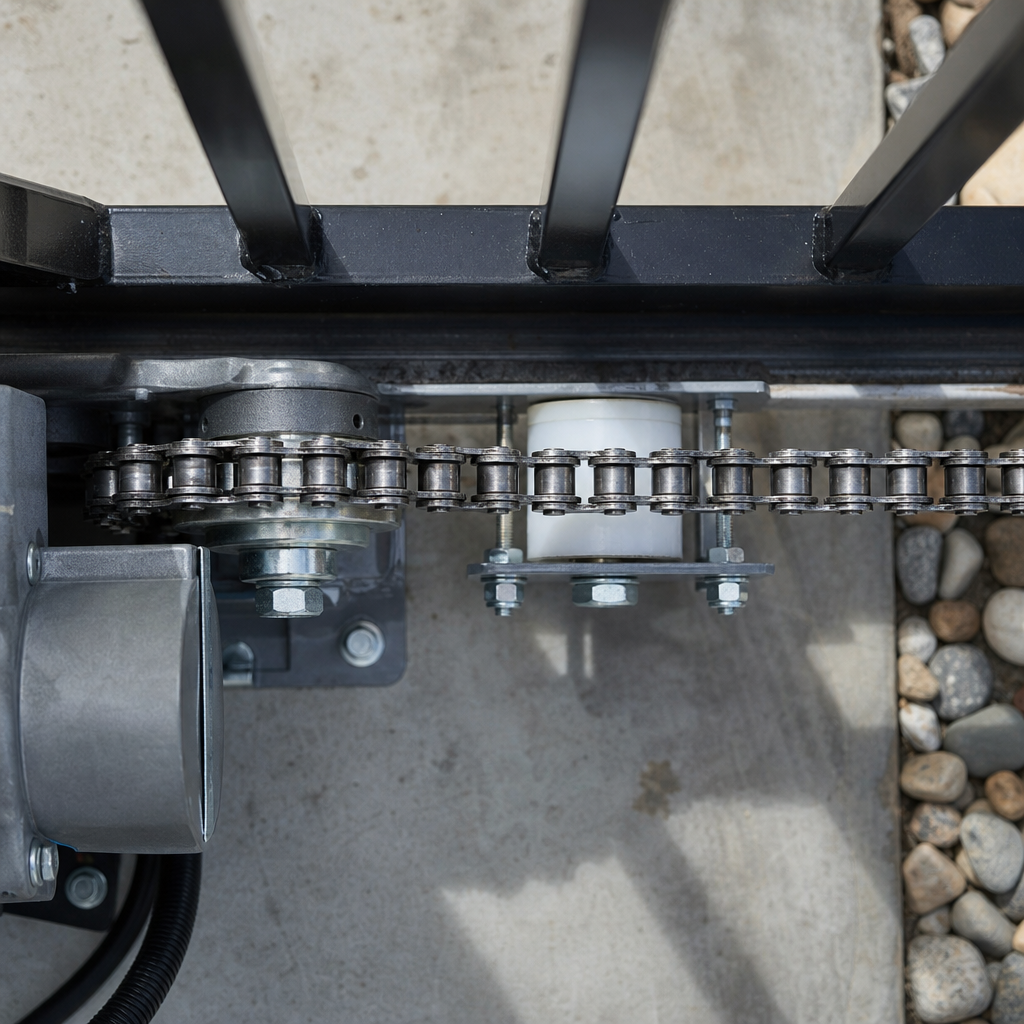
Limit mechanisms signal the operator where the gate begins and ends its travel stroke. Over time, physical wear or vibration may cause limits to drift out of position.
Adjusting Travel Limits
Travel limit adjustment must follow the model-specific manual. Always follow manufacturer safety instructions when adjusting limit switches, cams, or collars. According to Ironworks Gate Co., obstruction and safety tests must be performed after every adjustment to ensure the gate stops and reverses properly.
Step 4: Electrical Components and Control Boards
When mechanical components and external sensors are clear, the issue may involve electrical wiring, power supplies, or control board electronics.
Do not attempt detailed electrical disassembly or wiring modifications. Stop use and contact a qualified gate technician when electrical components, control boards, wiring, or internal mechanisms require inspection.
Step 5: Testing with the Manual Disconnect
A manual disconnect allows the gate to be disengaged from the drive mechanism for safety and testing purposes.
Manual Movement Safety Check
- Follow the manufacturer manual to safely disengage the operator.
- Once safely disconnected from the operator, verify that the gate moves freely by hand along its full path.
The gate should move freely by hand only after it has been safely disconnected from the operator. Never operate a gate that binds, and never bypass or defeat safety devices. If the gate binds, drags, or requires excessive force to move, stop use and consult a qualified gate technician like Ironworks Gate Co.
Step 6: When to Call a Qualified Gate Technician
General visual checks, clearing debris, and following basic manual guidelines are appropriate for homeowners, but complex repairs carry significant safety risks.
Contact a Qualified Gate Technician When:
- Electrical Faults: Control board failures, damaged wiring, or power faults requiring electrical testing.
- Internal Motor or Gearbox Failures: Mechanical grinding, hydraulic leaks, or internal motor component faults.
- Structural or Hardware Repairs: Damaged posts, structural hinges, or heavily misaligned tracks.
- Safety Device Malfunctions: Unresolved photoelectric sensor, safety loop, or pressure-sensitive edge failures.
Frequently Asked Questions About Gates That Won’t Close
Why does my electric gate start closing and then immediately reverse?
This is typically an automatic safety response triggered by an obstruction, a blocked or misaligned photoelectric beam, a compressed pressure-sensitive edge, or excessive mechanical resistance triggering the force-limiting mechanism.
What causes an electric gate opener motor to hum or click without moving?
Clicking or humming can indicate an electrical fault, a tripped safety device, a motor fault, or severe mechanical binding. Stop use and refer to your manufacturer manual or contact a qualified gate technician for diagnosis.
Can weather conditions affect gate operation?
Yes. Temperature extremes, debris, or moisture can cause mechanical resistance in hinges and tracks or affect sensor operation. Refer to your manufacturer manual or advice from Ironworks Gate Co. for seasonal maintenance recommendations.
How do I adjust gate limit switches?
Limit adjustments vary by make and model and must strictly follow the model-specific manual. Always perform required obstruction and safety tests after every adjustment.
When is it safe to perform general checks versus calling a technician?
Clearing debris from tracks, wiping sensor lenses, and checking for physical obstructions are safe general checks. If issues involve electrical components, control boards, wiring, internal mechanisms, or persistent safety device faults, stop use and contact a qualified gate technician.
Need why is my electric gate not closing?
We’re available now - call for a fast, free estimate.
Sources
- New Safety Standard for Automatic Security Gates Helps Prevent … – cpsc.gov (2000)
- Risks to pedestrians from crushing zones on electrically … – hse.gov.uk (2002)
- Powered perimeter gates – hse.gov.uk (2010)
- Surveys reveal top design flaws negating safety of a swing gate – gate-safe.org (2023)
Related reading: Liftmaster Gate Repair Northridge – 10% Off & Free Estimate – On-Site in 60 Minutes
Related reading: Gate Loop Detector Contractors Northridge | 10% Off & Free Estimate | Same-Day Service
Related reading: Faac Gate Motor Repair Northridge – Call Now-10% Off – On-Site in 60 Minutes – Free Estimate
Frequently Asked Questions
How do I know if my electric gate control board has failed?
A failed control board often shows unlit LED diagnostic indicators, displays persistent error codes, or fails to send voltage to the motor despite active remote signals. Because testing internal circuits involves electrical hazards, contact Ironworks Gate Co. for a safe diagnostic inspection and professional board replacement.
Can direct sunlight prevent an electric gate from closing?
Yes, intense or low-angle sunlight can blind the receiving photoelectric eye, tricking the system into detecting a constant obstruction and keeping the gate open. You can fit protective sensor hoods or contact Ironworks Gate Co. to realign your sensors and install glare-resistant safety hardware.
What should I do if my electric gate is stuck open and the manual release is jammed?
Never force a seized manual disconnect key or forcefully push the gate, as this can crack the operator gearbox or bend internal drive arms. Contact the licensed technicians at Ironworks Gate Co. for 24/7 same-day emergency service to safely disengage the operator and complete necessary mechanical repairs.
About the author
 |
David Caldwell David is a technical writer specializing in home services and automated access systems. With over a decade of experience covering residential and commercial property maintenance, he translates complex gate repair concepts and pricing structures into clear, actionable advice. He holds a B.A. in Communications from California State University, Northridge. |
Gate not opening, off track, or opener dead?
We’re available now - call for a fast, free estimate.
Call Now - Free Estimate