
Quick Summary
Electric gate problems ranging from power disruptions and dirty photo-eyes to mechanical track resistance can cause immediate access failures and safety hazards. Instead of resorting to expensive full-system replacements, seasoned technicians at Ironworks Gate Co. diagnose the true root causes of gate binding and electrical faults to deliver repair-first solutions. After reviewing these safe troubleshooting steps, property owners can perform basic checks or contact Ironworks Gate Co. for a free on-site inspection and 24/7 same-day service.
Electric Gate Problems: Troubleshooting, General Guidance, and Safety Risks
When an automatic driveway gate refuses to open or stops halfway across the drive, the disruption is immediate. Beyond the inconvenience of being locked in or out of your property, a malfunctioning gate can create a security concern. Understanding how these systems operate helps you perform safe, basic checks while recognizing when mechanical or electrical faults require a professional specialist.[2]
Automated gate systems combine electrical power, logic boards, and heavy moving panels. Safety data from sources like the U.S. Consumer Product Safety Commission (CPSC) indicates that automatic gates account for thousands of emergency room visits over time, primarily involving entrapment, impact, crushing, and falling gates. However, available federal statistics concern injuries and fatalities rather than a comprehensive national census of routine malfunctions. Safety audits cited by specialists at Ironworks Gate Co. consistently show that missing safety devices and structural alignment issues are recurring contributors to automated-gate hazards.[1]
Safety Warning: Never bypass safety devices, attempt to force a malfunctioning gate, or work on energized wiring. If you observe structural damage, gate binding, failed safety equipment, or unusual sounds, disconnect power and consult a qualified technician.
General Troubleshooting for Common Electric Gate Problems
The following basic checks provide general guidance for troubleshooting non-responsive or malfunctioning gates. Never open motor housings or probe energized electrical components without proper qualification.
- Check the power supply and breaker: Verify that the main circuit breaker or power switch feeding the gate operator has not tripped.
- Inspect the operator status: Check the operator to confirm whether it is receiving power and if indicator lights show normal status or an obstruction fault.
- Check remote and keypad batteries: Ensure transmitter remotes and wireless keypads have fresh batteries and are within functional range.
- Inspect photo-eye sensors: Ensure safety sensors are clean and properly aligned. Remove dirt, spiderwebs, leaves, or water residue from the lenses.
- Check for visible obstructions: Inspect tracks, ground clearance, and the gate swing or slide path for physical debris, rocks, or obstructions.
- Use manual release procedures: If safe to do so, turn off power and engage the manual release mechanism to determine if the gate binds or moves freely by hand.
Quick Comparison: Electric Gate Issues and General Checks
Use this general guide to evaluate common gate issues and identify whether a situation requires basic maintenance or professional service.
| Observed Symptom | Possible Cause | First-Line Check | Professional Service |
|---|---|---|---|
| Motor hums or clicks, but gate stays still | Mechanical binding or internal drive component fault | Perform manual release check to evaluate binding | Drive mechanism repair or component replacement |
| Gate opens fully, then refuses to close | Misaligned, dirty, or obstructed photo-eye sensors | Clean sensor lenses and check sensor alignment indicators | Safety sensor replacement or control board inspection |
| Gate starts moving, then stops or reverses halfway | Physical track obstruction or mechanical resistance | Clear visible track debris and inspect path of travel | Hinge alignment, roller replacement, or force calibration |
| Gate is completely unresponsive; no lights or sounds | Tripped breaker, power loss, or blown control fuse | Check the main electrical breaker and power supply | Electrical diagnostics and control board service |
| Remote will not activate gate, but keypad works | Depleted remote battery or signal interference | Replace remote battery and test in close proximity | Receiver inspection or antenna repair |
1. Unresponsive Gate Operator and Power Disruptions
Need electric gate problems?
We’re available now - call for a fast, free estimate.
If a gate operator shows no signs of activity, the issue may stem from interrupted power delivery. Start by checking the electrical panel to verify that the circuit breaker has not tripped. Inspect whether any external switches or reset buttons near the operator enclosure need resetting. Control boxes may also contain low-voltage fuses designed to protect internal circuitry during power disturbances.[5]
When electrical power is unavailable, gate systems typically include a manual release procedure to allow safe operation:
- Locate the operator mechanical release or cam lock.
- Use the manufacturer-supplied release key or tool to disengage the drive mechanism.
- Slowly move the gate into the desired position by hand, securing it to prevent movement from wind or slope.
2. Safety Photo-Eye Sensor Obstruction and Misalignment
If a gate opens normally but stops or reverses when attempting to close, the safety photo-eyes are a likely factor. Safety guidance emphasizes the use of protective devices and preventing entrapment across automated gate openings, though specific regulatory requirements depend on applicable standards.
These sensors project an optical beam across the opening. If an object interrupts or scatters the beam, the operator prevents closing to protect individuals and property.
- Optical Misalignment: Accidental contact from maintenance equipment, vehicles, or pets can shift sensor brackets out of alignment. Most sensors feature indicator LEDs to show whether the beam is aligned or interrupted.
- Sunlight Interference: Direct, low-angle sunlight hitting the receiver lens can interfere with optical reception, registering as an obstruction. Adding an extended sun visor can help reduce glare.
- Dirt and Lens Contamination: Dust, spiderwebs, moisture, and mineral deposits can cloud optical lenses. Gently wipe lenses with a clean microfiber cloth and check enclosure seals.
3. Gate Stopping or Reversing Halfway
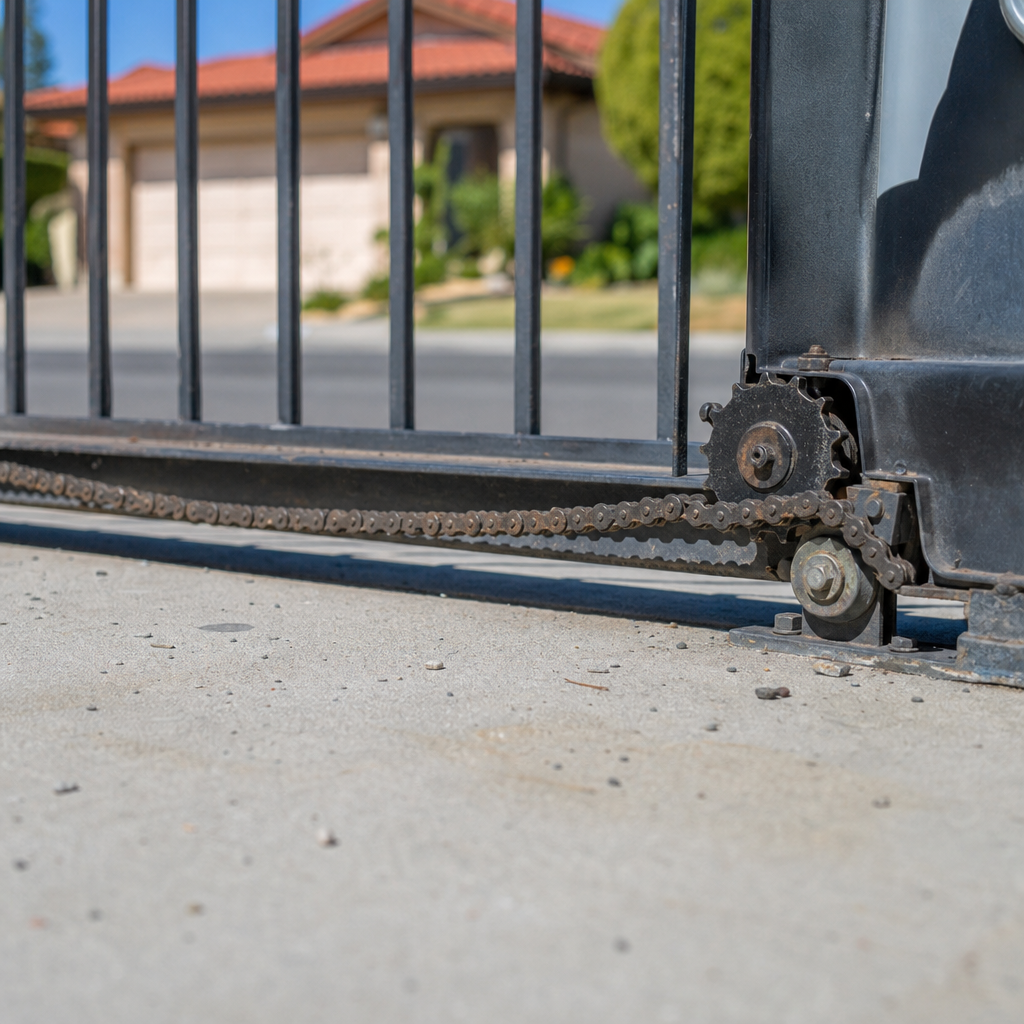
When an automated gate begins moving and suddenly halts or reverses direction, property owners may suspect motor failure. However, operators are designed with force-sensing limits that detect mechanical resistance.
If the gate encounters physical resistance, the electric motor requires more current to operate. When the control system detects current exceeding safe operating parameters, it stops or reverses the gate to prevent crushing or entrapment.[3]
Common factors triggering these resistance limits include:
- Hinge and Bearing Drag: Heavy swing gates exert significant load on hinge posts. If hinges bind or dry out, the increased friction can trigger operator force limits.
- Track Debris and Resistance: Dirt, stones, or physical obstructions in the track of a sliding gate create resistance against the rollers.
- Hardware Degradation: Aging components or failing capacitors can reduce operational efficiency under standard physical loads.
Rather than simply increasing operator force settings, which can introduce severe safety hazards, technicians at Ironworks Gate Co. recommend having the root mechanical binding or electrical issue professionally diagnosed and resolved.
4. Structural Gate Movement, Hinges, and Track Obstructions
Automated gate hardware is subject to environmental wear and physical stress. While structural movement is sometimes cited as an unverified possibility for recurrent gate issues, physical misalignments do occur over time.
Hinge Wear and Post Alignment
Heavy swing gates require robust hinges. If hinges corrode or posts shift, the gate panel can sag, dragging along the driveway or failing to align with the catch post.
Sliding Gate Tracks and Derailment Risks
Sliding gates operate on guide tracks. Ground settling or shifting concrete footings can create uneven track sections. Derailed or falling gates pose a severe impact and crushing hazard. Keeping tracks clean of debris and maintaining solid foundations are essential safety practices.[4]
5. Drive Chains, Rollers, and Hardware Wear
Need electric gate problems?
We’re available now - call for a fast, free estimate.
The mechanical connection between the motor and gate panel experiences ongoing wear during operation.
- Chain Tension: On chain-driven systems, chains may loosen over time. Excessive slack can lead to uneven movement or slipping, though chains must not be overtightened.
- Seized Rollers: Sliding gate rollers can wear or seize if bearing seals fail, leading to friction and increased strain on the operator.
- Guide Rollers: Top guide rollers maintain gate stability. Worn or misaligned guide rollers can cause binding and tilt the gate panel.
6. Remote Controls and Keypad Issues
If a gate operates from manual switches or primary controls but does not respond to wireless devices, check the access control peripherals.
Wireless Remotes and Keypads
Replace depleted batteries in remotes or keypads before assuming an electrical fault. Inspect the external receiver antenna on the operator housing to ensure it is undamaged and unobstructed. Signal range can also be influenced by physical obstacles and local radio frequency interference.
7. Control Board and Enclosure Maintenance
Electronic control units are housed in outdoor enclosures subject to weather and temperature variations.
Inspect enclosures periodically to verify that door seals and gaskets are intact, preventing excess moisture and debris accumulation. For any wiring faults, internal board issues, or electrical replacements, contact a certified technician from Ironworks Gate Co.
Frequently Asked Questions
Why is my electric gate not opening or closing?
Common reasons include tripped circuit breakers, depleted batteries in remote controls, dirty or misaligned photo-eye safety sensors, or physical obstructions along the track or swing path. Start with basic visual checks of power and sensor alignment before consulting a professional for mechanical or electrical faults.
How do you troubleshoot an electric driveway gate?
Begin with basic safety and power checks: confirm the breaker is on, verify remote batteries, inspect sensor cleanliness, and check the gate path for physical obstructions. If safe, disconnect power and use the manual release mechanism to check whether the gate binds mechanically when moved by hand.
What causes electric gate safety sensors to malfunction?
Safety sensors can fail due to physical misalignment from bumps, intense sunlight glare blinding the receiver, dirt and spiderwebs on the lens, or moisture accumulation inside enclosures.
How do you manually open an electric gate during a power outage?
Use the manufacturer-supplied manual release key or tool. Insert the key into the release mechanism on the operator housing to disengage the drive, then slowly move the gate open by hand and secure it safely.
Why does my automatic gate keep reversing or stopping halfway?
Operators monitor motor resistance and reverse or stop travel when resistance exceeds preset safety thresholds. Worn hinges, track debris, or roller friction can increase mechanical drag and trigger the operator’s safety mechanism.
Need electric gate problems?
We’re available now - call for a fast, free estimate.
Sources
- [PDF] 2024-11-20-COPF-CODD-Hummingbird-Alliance-Meeting-Log.pdf – cpsc.gov (2024)
- New Safety Standard for Automatic Security Gates Helps … – cpsc.gov (2000)
- Gate Safe Audit Reveal Alarming Numbers of Unsafe Automated … – gate-safe.org (2010)
- Help and Advice for Industry Professionals involved … – gate-safe.org (2008)
- Gate Safe Rolls Out Focus on Gate Safety by Design – Gate Safe – news.gate-safe.org
Related reading: Gate Post Repair | Call Now-10% Off | On-Site in 60 Minutes | Free Estimate
Related reading: Slide Gate Repair – Call Now-10% Off – On-Site in 60 Minutes – Free Estimate
Related reading: Sagging Gate Repair | Call Now-10% Off | On-Site in 60 Minutes | Free Estimate
Frequently Asked Questions
What is the average cost to fix common electric gate problems?
Typical electric gate repairs range from $150 to $600 for standard issues like sensor realignment, track clearing, or hinge adjustments, while complex motor or logic board repairs may cost more. Ironworks Gate Co. provides upfront pricing and free on-site inspections, focusing on repair-first solutions rather than pushing expensive full-system replacements.
Why should you avoid increasing the motor force limits if a gate stops halfway?
Increasing operator force settings overrides the system's built-in anti-crushing safety features, creating a severe entrapment hazard for vehicles and pedestrians. It also forces the motor to fight mechanical resistance, accelerating motor burnout instead of resolving the underlying hinge drag or track obstruction.
What should I do if my electric gate is stuck closed and the manual release will not work?
If the manual release key fails to disengage the drive mechanism or the lock is seized, avoid forcing the gate open, as this can bend hinges and crack mounting brackets. Turn off the main electrical breaker to prevent unexpected motor activation and call the 24/7 dispatch line at Ironworks Gate Co. for same-day emergency repair.
About the author
 |
David Caldwell David is a technical writer specializing in home services and automated access systems. With over a decade of experience covering residential and commercial property maintenance, he translates complex gate repair concepts and pricing structures into clear, actionable advice. He holds a B.A. in Communications from California State University, Northridge. |
Gate not opening, off track, or opener dead?
We’re available now - call for a fast, free estimate.
Call Now - Free Estimate