
Last updated August 25, 2026
Free on-site gate assessment - hinges, posts, and your LiftMaster or Nice gate operator checked before anything is quoted
The assessment is free and the quote is the invoice.
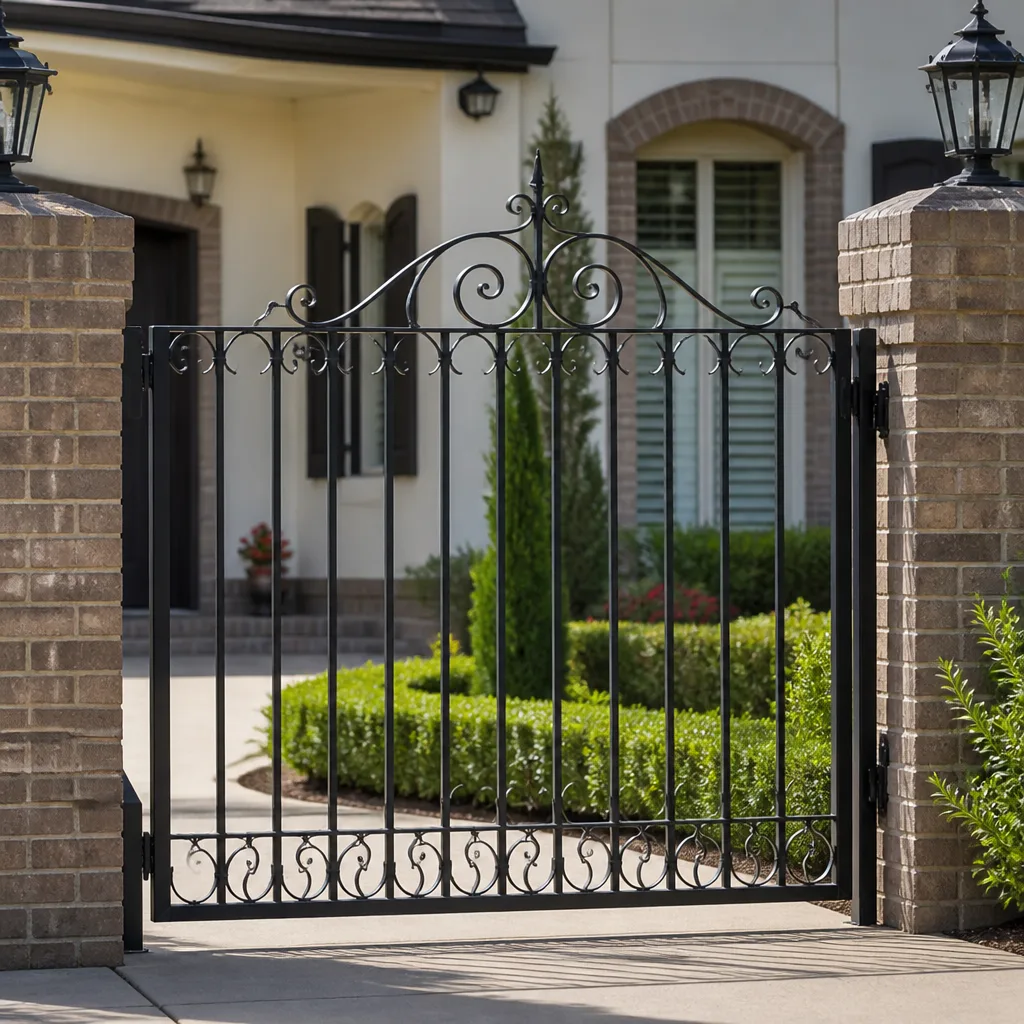
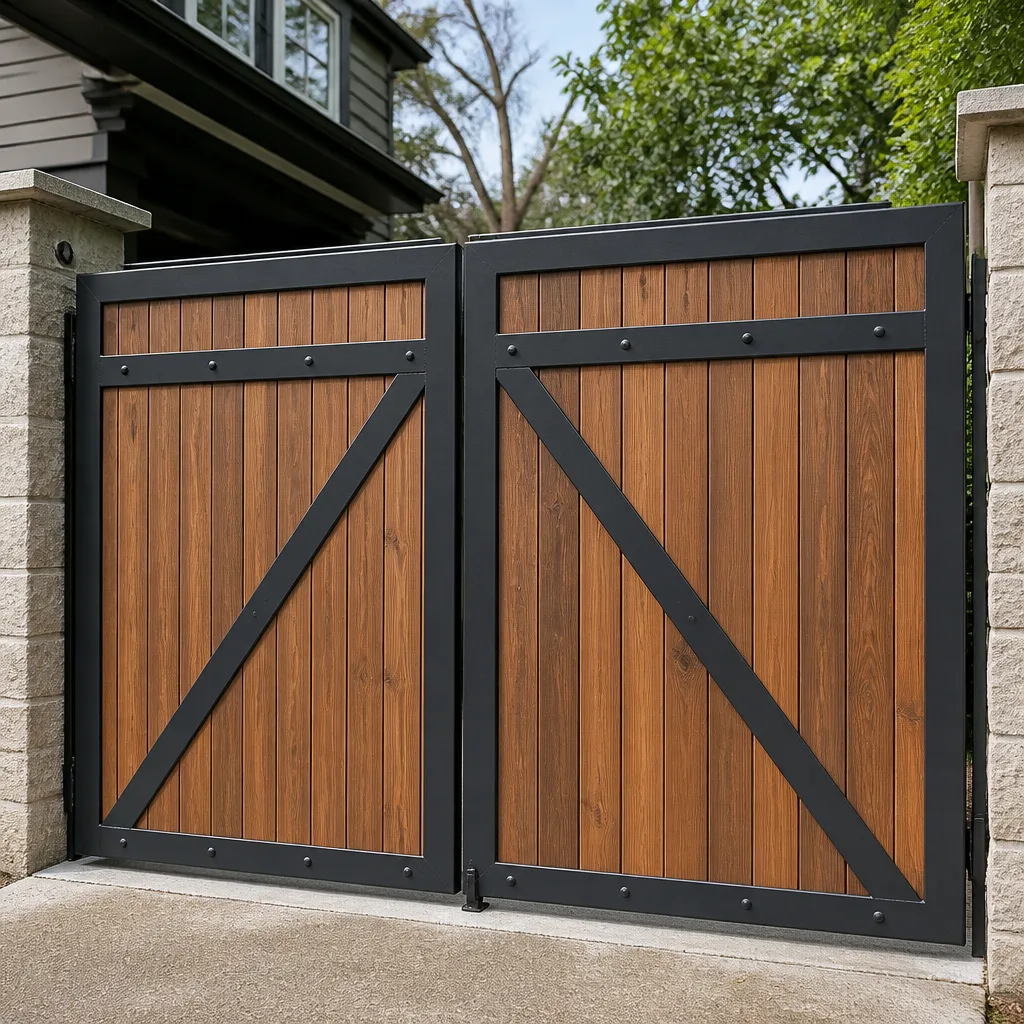
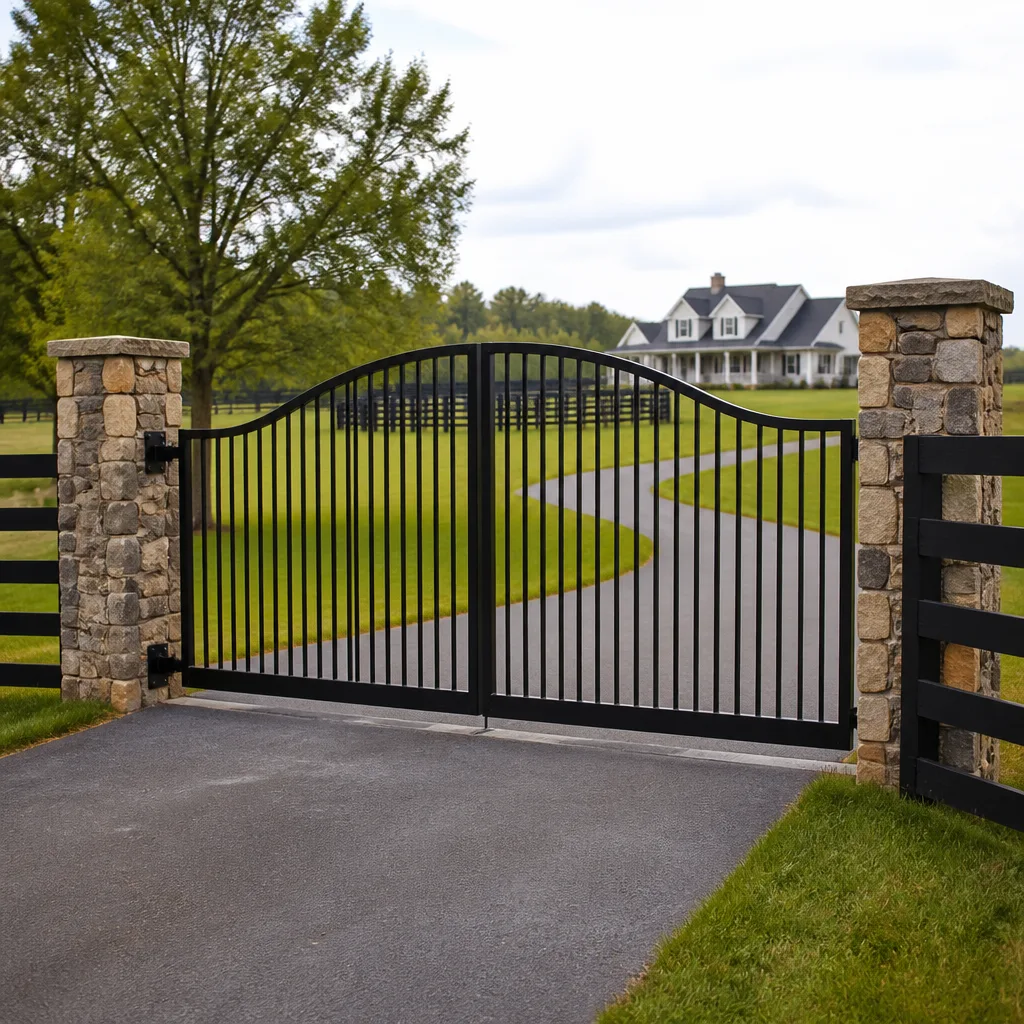
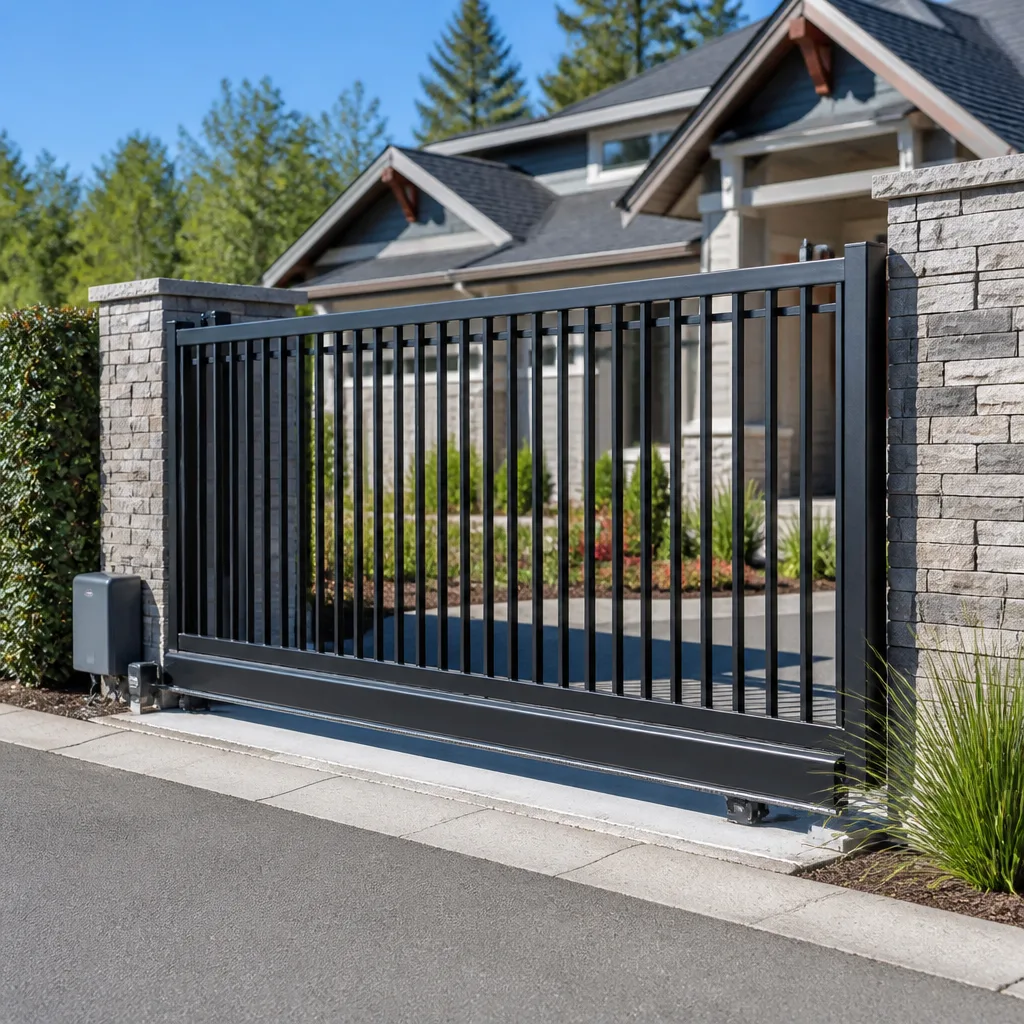
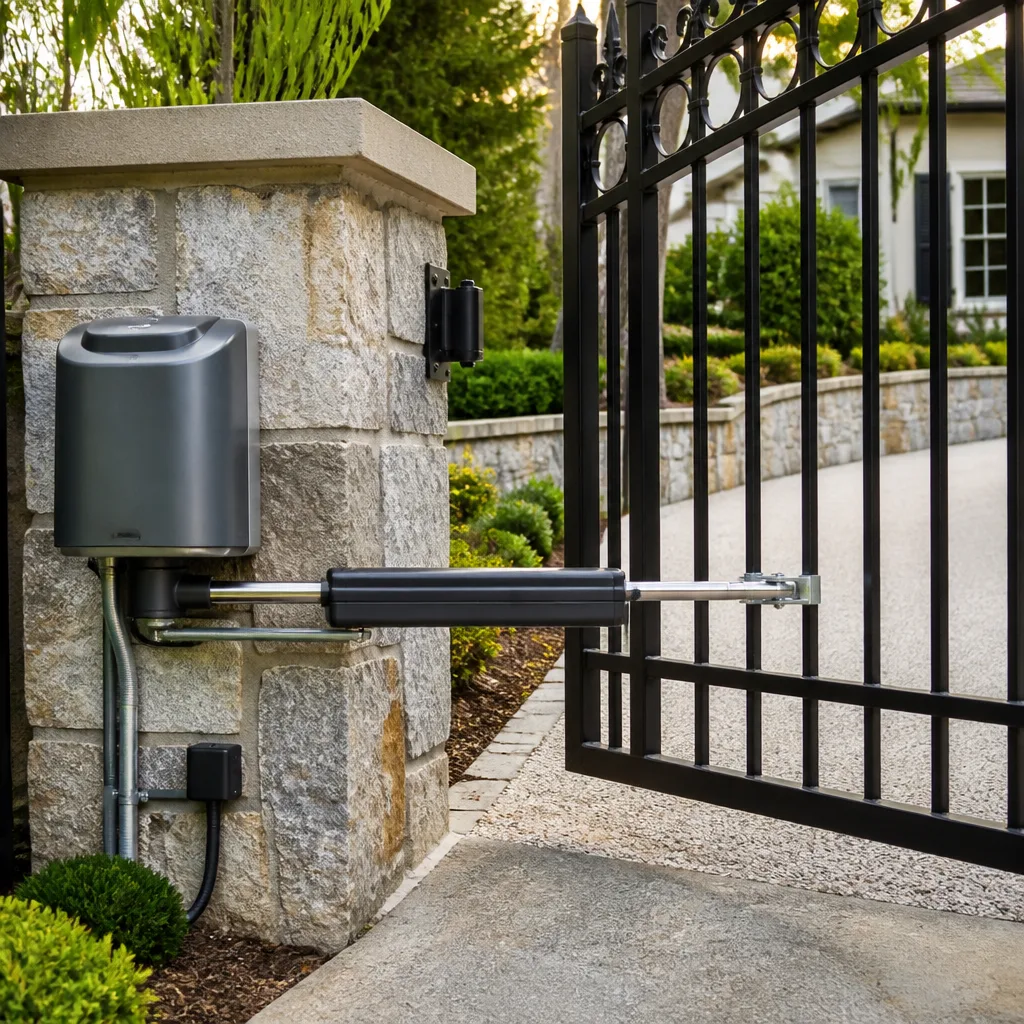
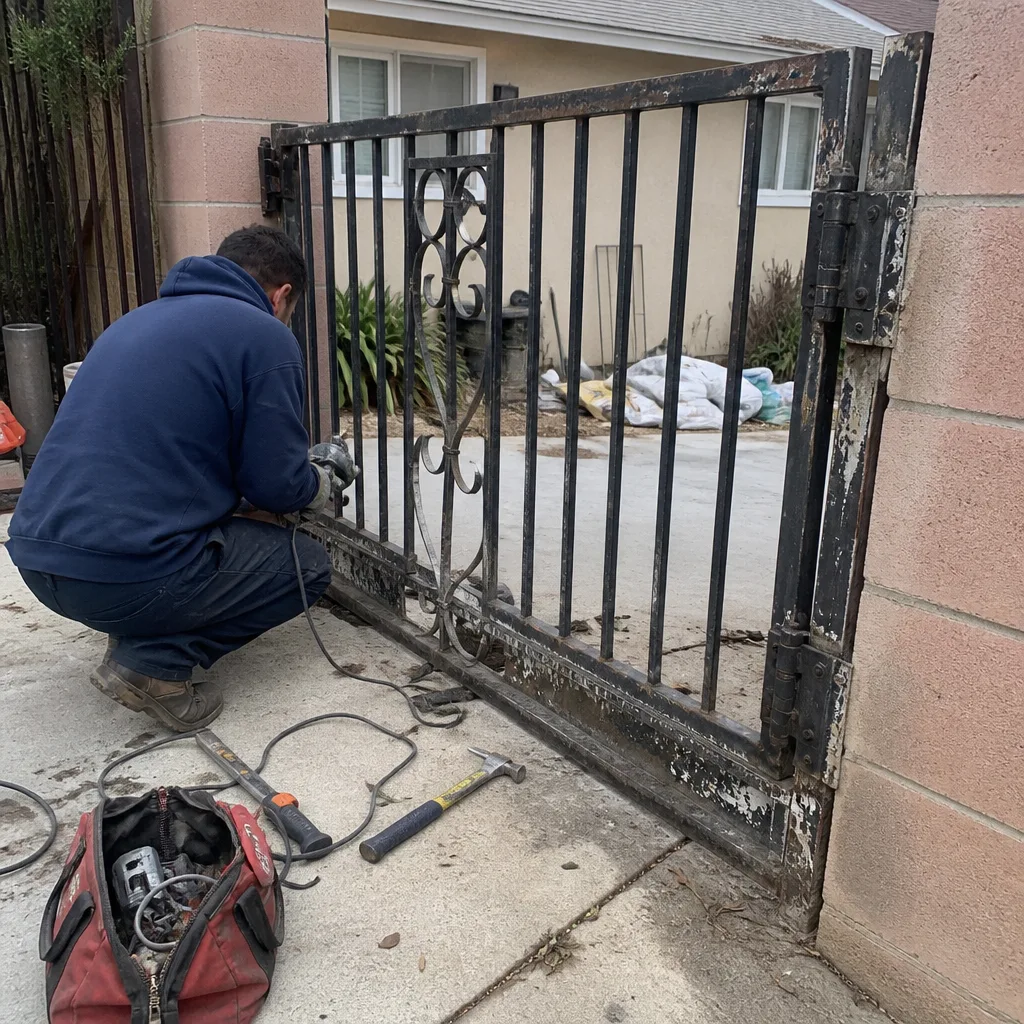 Before
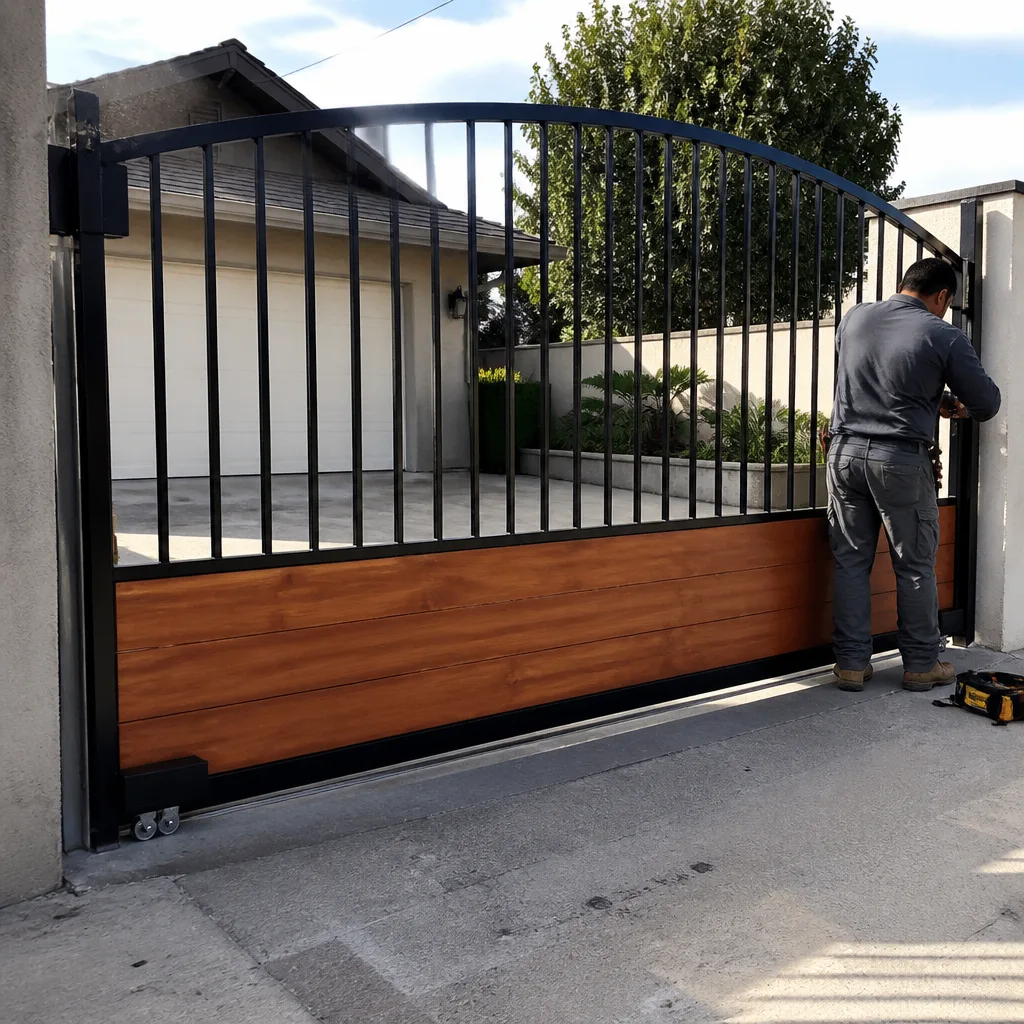 After
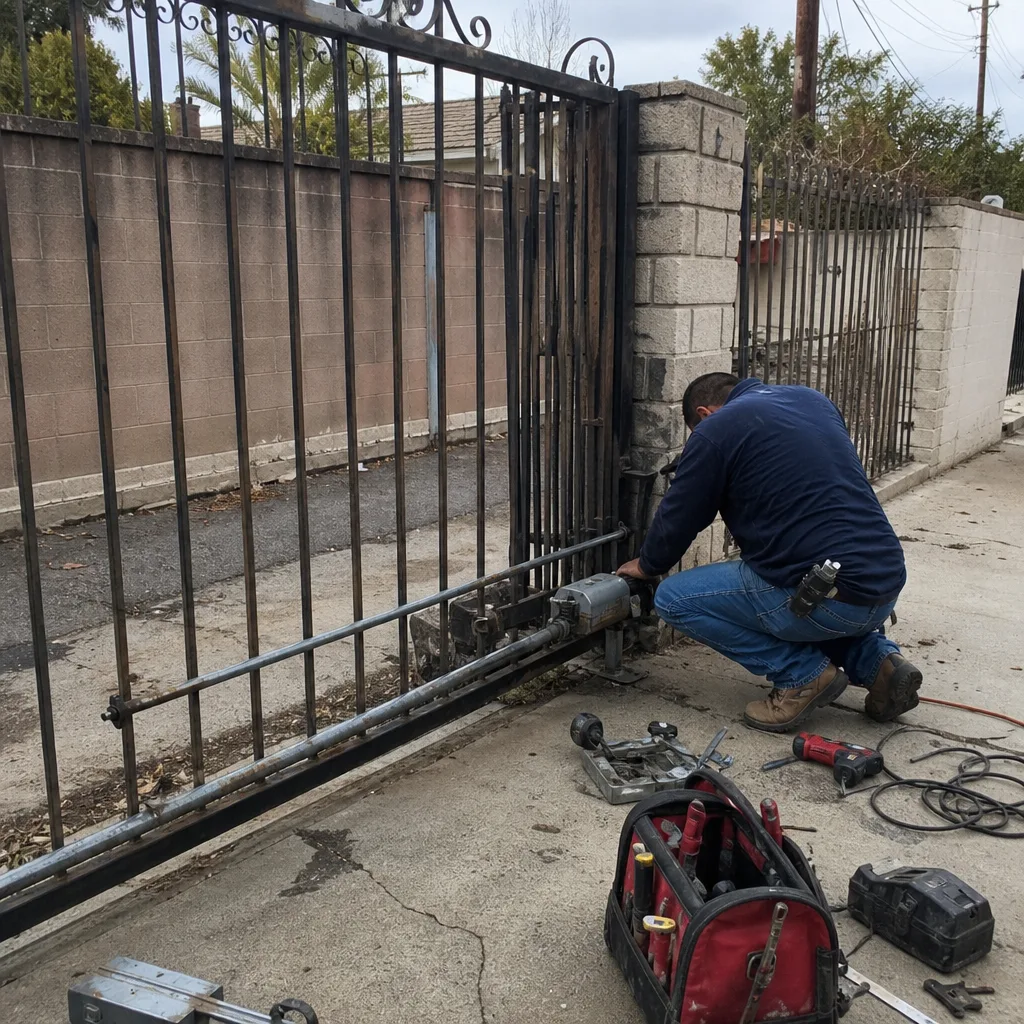 Before
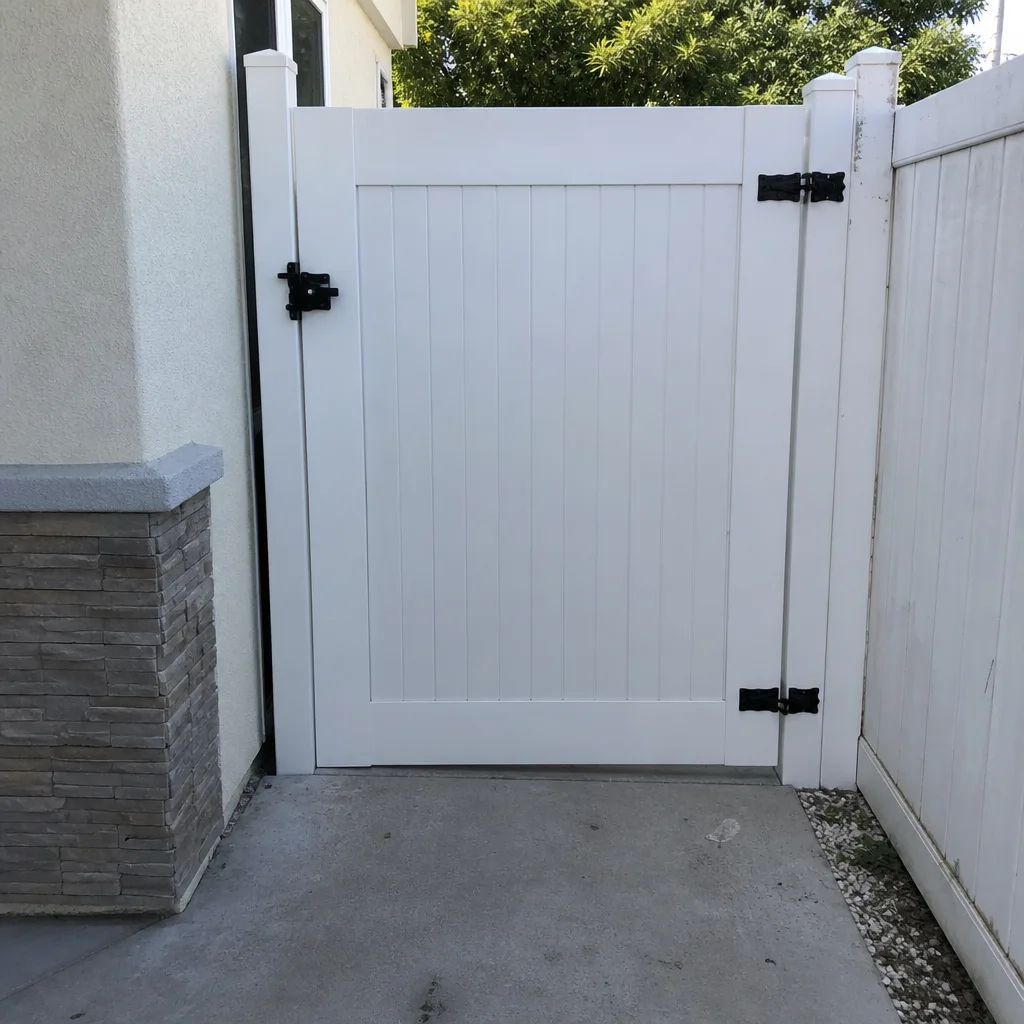 After
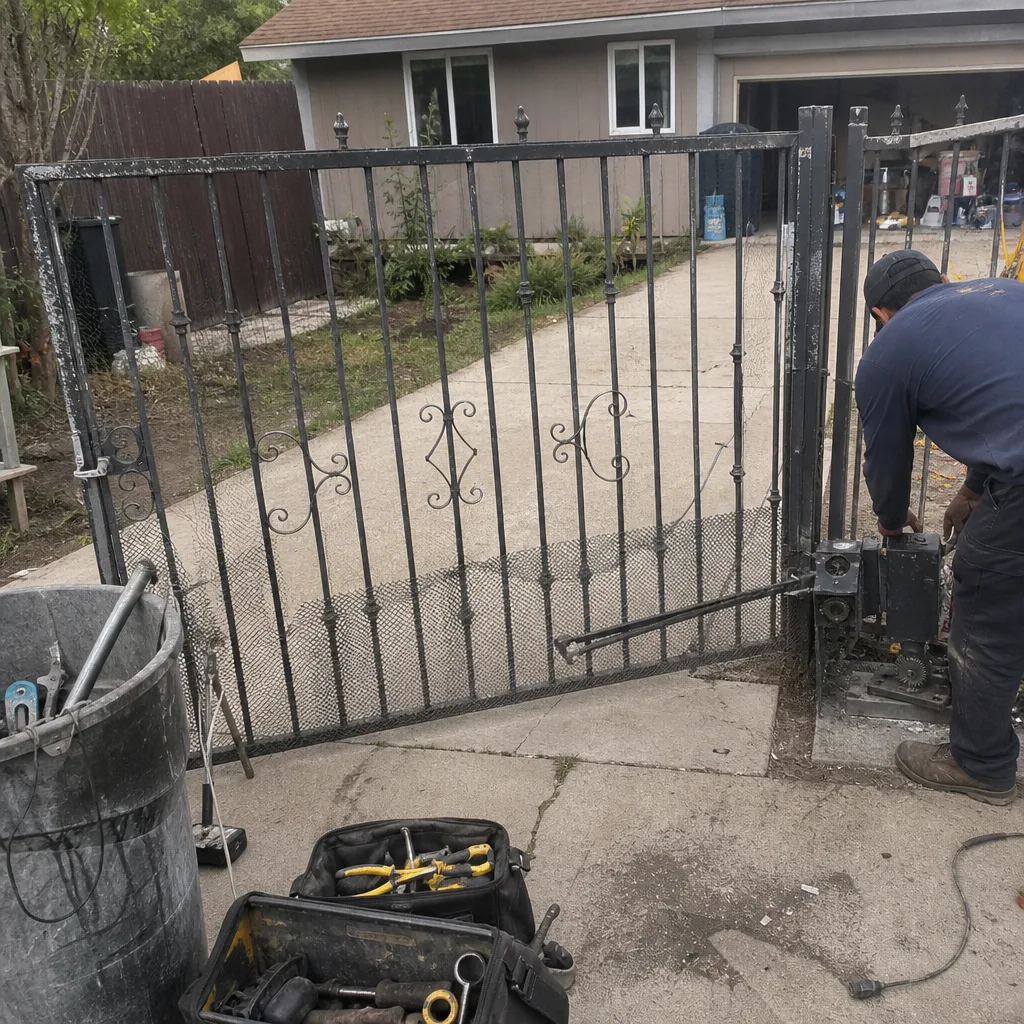 Before
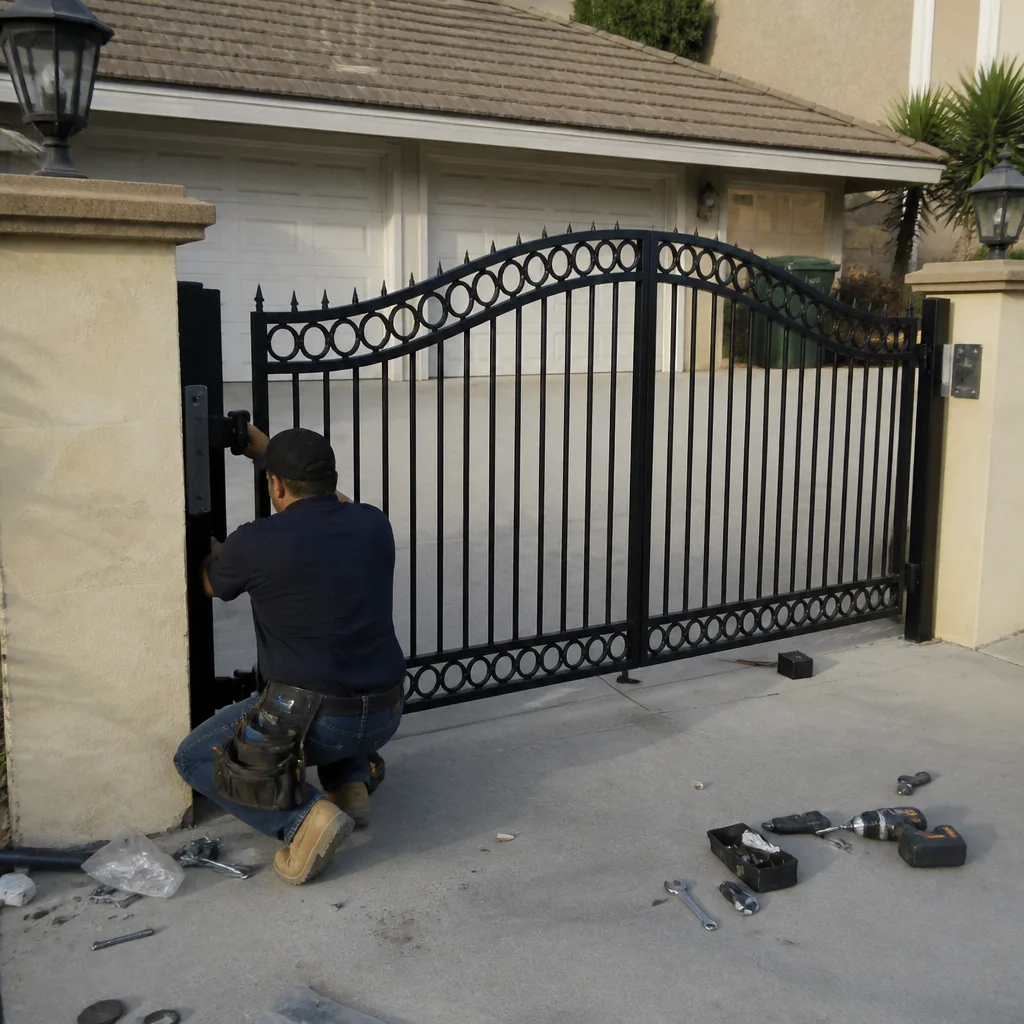 After
Seasonal Gate Repair Care for Northridge: Year-Round Homeowner’s Guide
A gate that fails in Northridge rarely fails overnight. In our 42 years of working on driveway and estate gates across the San Fernando Valley, we’ve learned that the breakdown a homeowner calls us about in August usually started the previous December, when rain found a hairline crack in a weld or a cold snap stiffened a gear that was already wearing thin. This guide walks you through what your gate needs each season, what to look for before problems become emergencies, and when a repair is actually a replacement in disguise.
Quick Answer
Seasonal gate repair care in Northridge comes down to four tasks each year: lubricate hinges and chains every spring and fall, inspect welds and powder coating before and after the rainy season, test the opener’s force settings and safety edges in summer when heat affects electronics, and clear the track and drain channels when Santa Ana winds blow debris through the neighborhood. A gate that gets this level of attention will typically outlast one that is ignored by five to seven years before major components fail.
Table of Contents
- How the Northridge Climate Works Against Your Gate
- Spring Maintenance: What to Do When the Rain Stops
- Summer Heat and Gate Automation: What Fails and Why
- Fall Preparation: Getting Ready for Rain and Wind
- Winter Care: What Northridge Winters Actually Demand
- Gate Materials in Northridge: Steel, Iron, Aluminum, and Wood
- A Seasonal Tune-Up Checklist You Can Follow
- Common Mistakes to Avoid
- When to Call a Professional
- Frequently Asked Questions
How the Northridge Climate Works Against Your Gate
Northridge sits in a part of the San Fernando Valley that gets genuine seasonal swings: summer temperatures that regularly pass 100 degrees, winter nights that can dip into the high 30s, and a wet season that delivers most of its rain between December and March. That combination, dry heat followed by damp cold followed by more dry heat, is harder on a gate than either extreme would be alone.
The heat is the bigger culprit than most homeowners realize. Expansion and contraction works on every weld, every hinge pin, every bolt. A steel gate that bakes in 105-degree afternoon sun will expand enough to change the gap between the gate leaf and the post. Over twenty or thirty summers, that cycling creates metal fatigue in predictable places: the top hinge, the point where the opener arm bolts to the gate, and any weld that was slightly underfilled when the gate was built. Homeowners in Porter Ranch and Granada Hills, where lots tend to be larger and gates sit fully exposed from noon until sunset, see this pattern more than homes in shaded pockets of Northridge proper.
The winter rains add a second problem. When water gets into a tiny crack in powder coating or paint, it sits against bare steel and starts the rust cycle. Then summer comes and bakes the moisture out, leaving behind oxidation that flakes and spreads under the coating. After a few cycles, what started as a cosmetic blemish becomes a structural weakness. This is why a Northridge gate needs a different maintenance rhythm than a gate in, say, coastal Santa Monica or foggy Daly City, where the weather is more consistent year-round.
We’ve also found that the wind matters more than most people think. Santa Ana winds in October and November drive dust, leaves, and fine grit into every moving part of a gate system. That grit accelerates wear on chain drives, dulls the edges of wheels in the track, and clogs the drain holes that let water escape from the gate post. In our experience, Northridge gates that are left uncleaned through two or three Santa Ana seasons will show track wear that gates in calmer parts of the Valley simply don’t experience.
Spring Maintenance: What to Do When the Rain Stops
Spring in Northridge is the right time to inspect and repair because the rain has stopped but the worst heat has not yet arrived. The ground is still soft enough to show signs of settling, and any rust that formed over the winter is visible before it has a chance to spread.
Here is the spring routine we recommend, and it’s what our technicians work through on a seasonal tune-up:
- Wash the gate thoroughly. Use a car wash soap and a soft brush, not a pressure washer. A pressure washer can force water past seals on the gate opener and into hinge pin bores, where it causes rust from the inside. Rinse and let the gate dry completely.
- Walk the full length of the gate and look at every weld. A failing weld shows a hairline crack, often with a faint line of rust bleeding from it. Pay attention to the hinge side of the gate leaf and anywhere the opener arm attaches.
- Check the post bases for standing water or soft ground. After a wet Northridge winter, gate posts can settle. If the gate now drags slightly or the gap at the latch side has changed, the post has moved and needs attention before the gate self-destructs from the misalignment.
- Lubricate hinges, wheels, and the chain if you have a chain drive. Use a lithium-based grease for hinges and pins, not WD-40. WD-40 is a solvent and will wash out the grease that was already there.
- Test the opener’s safety features. Open the gate and place a roll of paper towels in the path. The gate should stop and reverse when it contacts the obstruction. If it doesn’t, the force setting is too high or the safety edge is worn, and that’s a repair call.
- Inspect the battery backup. Most Northridge gate systems have a 12-volt battery that keeps the gate working during power outages. Pull the battery and check for swelling or corrosion on the terminals. A battery older than three years is due for replacement.
One thing specific to Northridge: if your home is in a neighborhood with mature eucalyptus trees, those trees drop oily leaves that stick to gate tracks and chain drives. The oil in eucalyptus leaves bonds with dust and forms a paste that grinds at metal surfaces. Gates in these neighborhoods need track cleaning twice as often as gates in areas with fewer trees.
Summer Heat and Gate Automation: What Fails and Why
Every summer we get calls from Northridge homeowners whose gate worked fine in May and suddenly stopped closing in July. The gate isn’t being stubborn. Heat affects the electronics and the mechanical parts in specific, predictable ways, and understanding them will help you spot a developing problem before it becomes a locked gate at the worst possible time.
The most common heat-related failures we see are:
- Capacitor failures in gate opener motors. Capacitors are small cylindrical components that give the motor its starting jolt. Heat degrades the dielectric material inside them. A gate that hums but won’t start on a hot afternoon, then works again the next morning, is showing classic capacitor failure.
- Solar panel output dropping on swing gates. Many Northridge homes run solar-powered openers on gates that are far from the house. Solar panels actually lose efficiency as they get hotter, and a panel that provides barely enough power in March may not keep the battery charged through July and August.
- Grease thinning and running out of hinges. The grease that protects hinge pins thins in 100-degree heat and drips out. Once the grease is gone, the pin rides metal-on-metal and wears quickly. A hinge that squeaks in the morning but quiets down by noon is running dry and needs grease.
- Warping in wood gates. Wood expands in humidity and shrinks in the dry heat. A Northridge wood gate that was built tight in winter will shrink and sit loose in summer, then swell again when the first rains come. Repeated cycling opens hairline cracks at joints and lets water into the core.
There’s a simple test for heat-related electronics issues. Next July or August, at about 3 PM on a hot day, check whether your gate responds to the remote the same way it does at 8 AM. If the gate is sluggish, stops midway, or needs two clicks on the remote in the afternoon but works fine in the cool of the morning, the heat is affecting your opener and you should have it checked before it fails completely. A capacitor that fails outright takes the motor control board with it in about a third of the cases we see, and that turns a $180 repair into a $900 control board replacement.
For homes with Viking or BFT openers, heat sensitivity tends to show up as intermittent limit switch behavior: the gate opens fully but closes only partway, or it reverses for no reason. Those systems are sensitive to the thermal expansion in the limit switch cams. A half-turn adjustment usually corrects it, but the adjustment has to be done right or you’ll get the opposite problem in winter.
Fall Preparation: Getting Ready for Rain and Wind
In Northridge, October and November bring the Santa Anas, and December brings the rain. The fall maintenance window is short but critical, and it’s the most commonly skipped season. Homeowners tend to think about their gate when it’s already broken, and fall is the season when a gate that’s on the edge gets pushed over it.
The wind work comes first. Before the Santa Anas kick up, clear the area around the gate track and the gate path. Walk the track and pull out any leaves, especially palm fronds, which are abrasive and will score the track surface. Check that the gate wheels are still seated properly in the track and haven’t jumped a groove from the last windstorm. A gate that wobbles slightly when you push it by hand has a wheel alignment issue that will only get worse when 40-mile-per-hour gusts hit it repeatedly.
Then the water work. Here’s the sequence we recommend before the first significant rain of the season:
- Inspect the powder coating or paint on the gate and posts. Any chip, scratch, or bare metal spot is an open door for winter moisture. Clean the spot with mineral spirits, rough it lightly with sandpaper, and touch it up with a matching outdoor metal paint. Do this before the rain, not after.
- Clear the drain holes at the base of the gate posts. These holes let water out. If they’re clogged with dirt, water pools inside the post and rusts it from the inside.
- Check the concrete around the post bases for cracks. Water that gets into a hairline crack in the concrete footer will sit against the buried portion of the gate post all winter. A small crack now becomes a big crack by March as the water expands and contracts with temperature.
- Verify that the gate closes fully and latches. Gates that don’t fully close bounce in the wind, and the bouncing puts stress on every hinge and weld. If your gate doesn’t close completely under its own power, the limit switch needs adjustment before the winter storms arrive.
- Run the gate several times while it’s dry. Listen for any grinding, squeaking, or hesitation. Fixing a minor noise in October costs a fraction of fixing a seized bearing in January when you need the gate to work and the rain is coming sideways.
If your gate is on a slope, which is common in the hillside neighborhoods around Northridge, fall is when you want to pay attention to the opener’s workload. A gate on a slope has to work harder as the temperature drops because the grease thickens and the motor’s starting torque drops slightly. A system that was marginal in August may stall in December. If the gate is moving noticeably slower as the weather cools, have the system checked now rather than waiting for a cold, rainy evening when you actually need to use it.
Winter Care: What Northridge Winters Actually Demand
Northridge winters don’t freeze, but they present their own challenges, and the biggest one is moisture. Between December and March, we get enough rain to soak the ground around the gate posts, and that changes both the soil and the way the gate sits. A gate that fits perfectly in October can bind in February because the post shifted a quarter-inch in saturated soil.
Winter is also when gates see their heaviest use. The days are shorter, so the gate opens and closes in the dark more often. Holiday visitors, delivery trucks, and the general comings and goings of the season mean more cycles per day than any other time of year. A gate opener that’s barely hanging on will fail in December or January because that’s when it’s working hardest.
Specific winter checks for Northridge homes:
- Watch for sagging after heavy rain. If your gate catches or drags after a storm, the post has settled and the gate is now out of square. The fix is remounting or shimming the post, not grinding the gate to fit.
- Listen for changes in the opener’s sound. A deeper, slower sound in winter is normal because the motor is working against thicker grease. A whining or grinding sound is not normal and suggests a bearing is wearing out or a gear is losing teeth.
- Check the weatherproofing on the opener housing. The plastic or metal box that houses the motor and control board has gaskets that dry out and crack in the summer. A cracked gasket lets rain drip into the electronics in winter. If water gets on the control board, it’s usually a full replacement, not a repair.
- Keep the safety sensors clean. Winter mud splashes up from car tires and coats the photo-eye sensors at the base of the gate. A dirty sensor will make the gate stop and reverse as if something were blocking the path.
Northridge homes with Linear or Ghost Controls openers sometimes see a specific winter issue: the remote range shrinks on cold, damp mornings. This is usually not the remote. Moisture condenses on the antenna wire or the receiver board inside the opener housing, and the signal quality drops. If a gate that worked from the end of the driveway in August only works from twenty feet away in January, it’s moisture, not a weak battery. The fix is properly sealing the housing and, in some cases, moving the antenna wire outside the box.
One last thing about winter: if your gate is struck by a car, which happens more often in wet weather when drivers misjudge stopping distance, do not keep using it. A bent gate can run for a week and then snap a hinge or destroy the opener gearbox. Take the gate out of service or switch the opener to manual and call a professional. In our experience, a gate that’s been hit once and run anyway is the most predictable damage escalation we see.
Gate Materials in Northridge: Steel, Iron, Aluminum, and Wood
The material your gate is made from determines what kind of seasonal care it needs, and getting this wrong wastes time and money. Our team at Ironworks Gate Co. home has worked on every common gate material in the Northridge market, and each one ages differently.
Wrought iron and mild steel are the most common materials for Northridge driveway gates. They’re strong and repairable, and they rust. The rust starts at the welds and at any scratch in the coating, and it spreads under the powder coat where you can’t see it. These gates need touch-up every fall and a full repaint every five to eight years in our climate. A steel gate that’s ignored will still be standing in twenty years, but it will be ugly and eventually the rust will eat through the tubing at the weld points.
Aluminum gates don’t rust, but they do oxide-pit, especially in areas where the irrigation overspray hits them. The minerals in Northridge tap water accelerate pitting. Aluminum gates also fatigue sooner than steel because the material is softer, and the stress points are the same: top hinge, opener attachment, and any welded joint. Aluminum gates are lighter and easier on openers, and they’re a good choice for wide double gates where a steel leaf would be too heavy for a mid-size opener.
Wood gates are a different animal entirely. They’re common on older Northridge ranches and on homes that want a certain look, but they demand the most attention. Wood swells in the winter rain and shrinks in the summer heat, and the resulting cracks let in moisture that rots the gate from the inside. A wood gate in Northridge needs sealing twice a year and hinge re-tightening every fall as the wood contracts. A wood gate that’s heavily rotted at the hinge mortises usually can’t be saved and should be rebuilt in steel or aluminum.
Chain link gates on the side of the house or the RV access are the most neglected gates in Northridge. They’re low-value gates, which means they get no maintenance until the strap hinge tears off the post. Chain link gates need very little care: tighten the tension bands once a year, replace the post caps when they crack, and keep the track clear if it’s a rolling gate. A chain link gate that’s maintained will last twenty years with nothing more than the occasional hinge replacement.
A Seasonal Tune-Up Checklist You Can Follow
If you’d rather do the basics yourself and call us when something’s beyond a homeowner’s scope, here’s the complete seasonal checklist we use as the foundation of our $89 Seasonal Tune-Up. Work through it twice a year, once in March and once in October, and you’ll catch most problems while they’re still cheap to fix.
Spring checklist (March through May):
- Wash the gate and posts with soap and water; let dry completely.
- Inspect every weld for cracks and rust bleeding.
- Check post bases for settling and standing water.
- Lubricate hinges, wheels, and chain with lithium grease.
- Test the safety reverse with an obstruction.
- Check and clean the photo-eye sensors.
- Test the battery backup; replace if older than three years.
- Run the gate five full cycles and listen for changes in sound.
Fall checklist (October through November):
- Clear the track and gate path of leaves and debris.
- Touch up chips and scratches in the paint or powder coat.
- Clear the drain holes at the post bases.
- Check concrete footers for cracks and seal if needed.
- Verify that the gate closes fully and latches.
- Adjust the opener’s limit switches if the gate is stopping short.
- Test the manual release and verify the gate swings freely by hand.
- Check the opener housing gaskets and seal if cracked.
A homeowner with basic tools can handle about eighty percent of this list. The remaining twenty percent, electrical checks, limit-switch adjustments, and any weld repair, is work for someone who does this every day. The difference between a gate that’s tuned and a gate that’s jury-rigged is about three years of service life, and that’s a meaningful number when a new gate installation runs into the thousands.
Northridge homeowners who want this done without climbing a ladder can schedule our seasonal tune-up for $89. The job takes about ninety minutes, and we’ll tell you honestly whether anything needs repair while we’re there. A tune-up that finds a loose hinge now saves a $600 repair in six months.
Common Mistakes to Avoid
Over four decades in this business, we’ve seen the same mistakes repeated by well-intentioned homeowners who were trying to save money or just didn’t know better. Here are the ones that cost the most, and they’re all avoidable.
- Using WD-40 on hinges and chains. WD-40 is a solvent, not a lubricant. It cleans out the grease that was protecting the metal and leaves the surface dry. Dry metal wears fast. Use lithium grease, and apply it twice a year.
- Pressure washing the gate. A pressure washer forces water into hinge pin bores, past opener seals, and inside the hollow tubing of the gate itself. That water rusts from the inside out, and by the time you see the damage, the gate is compromised.
- Ignoring a gate that’s slightly out of alignment. A gate that drags or catches by a quarter-inch is putting extra load on the opener motor every single cycle. That load wears out gears and burns out motors. The longer you wait, the more expensive the eventual fix.
- Over-greasing the track on a rolling gate. Tracks should be clean and dry, not greased. Grease on a track collects dust and grit and turns into an abrasive slurry that wears the wheels and the track surface.
- Buying a replacement opener based on price alone. The cheapest opener on the shelf may not have the duty cycle for a 600-pound Northridge estate gate. An undersized opener works fine for the first year and then the motor burns out because it’s running past its rated duty cycle every day.
- Waiting until the gate stops working to call. By the time a gate fails completely, the damage has usually spread from one component to several. The gate that made a strange noise for two months and then died would have been a $250 fix in month one. It’s a $1,400 repair now.
When to Call a Professional
Some gate work is genuinely dangerous and should never be attempted by a homeowner, no matter how handy. High-tension springs on cantilever gates, heavy gate leaves that need to be lifted off their hinges, and any electrical work inside the opener housing all carry real risk. A gate leaf that falls on a person can cause catastrophic injury, and an opener with a charged capacitor can deliver a shock even when it’s unplugged. We never recommend that a homeowner work on these components, and we say this as people who do this work every day.
Call a professional if your gate has been hit by a car, if a weld has cracked through, if the opener makes a grinding noise or won’t respond, if the gate is visibly sagging or dragging, or if the safety reverse isn’t working. These are not homeowner-level problems, and trying to fix them without the proper equipment makes the eventual repair more expensive, not less. Ironworks Gate Co. offers free estimates in Northridge – call (925) 966-4150 and we’ll tell you straight what the repair requires and what it will cost, before any work starts.
Frequently Asked Questions
Most gate repairs in Northridge run between $180 and $850, depending on what’s failed. A hinge replacement is typically $180 to $300, a limit switch adjustment or sensor replacement is $150 to $250, an opener motor replacement is $500 to $900, and a full opener replacement with installation is $1,200 to $2,800 depending on the brand and the gate’s weight. We quote every job before we start, and the price doesn’t change unless we find something you approve first. Call (925) 966-4150 for a specific quote on your gate.
Twice a year is right for most Northridge gates: once in the spring after the rain stops, and once in the fall before the Santa Anas and the winter rain arrive. Homes in windy corridors or with heavy eucalyptus debris may need quarterly track cleanings. If the gate is your primary security barrier and it’s never serviced, schedule a full inspection now and then settle into the twice-yearly rhythm.
If your gate system fails completely, most openers have a manual release lever that lets you open and close the gate by hand. That keeps you from being trapped, but the gate is no longer automated and isn’t securing the property. Our Northridge repair team answers the phone 24 hours a day, seven days a week, and we prioritize storm-damage calls because a broken gate during the rainy season means a house and driveway that aren’t secure. Call (925) 966-4150 and a live person will answer, day or night.
Yes. Our technicians are trained and equipped on nine major gate-automation brands, including BFT, Linear, Viking, and Ghost Controls, as well as LiftMaster, FAAC, DoorKing, Elite, and Mighty Mule. Whatever is bolted to your driveway post, we can diagnose it and fix it on the first visit in most cases. If you have an obscure or imported opener we’re not familiar with, we’ll tell you that upfront rather than guessing.
Gate repair that doesn’t change the structure or the footprint typically doesn’t require a permit in Northridge. Installing a new gate, especially an automated one with a new concrete footer or electrical run, may require permits through the Los Angeles Department of Building and Safety, and we handle that process for our installation customers. If you’re unsure whether your project needs a permit, call us and we’ll walk you through it.
The tune-up includes a full inspection of the gate, hinges, welds, track, wheels, and opener; lubrication of all moving parts; limit switch adjustment if needed; safety sensor cleaning and testing; and a written summary of anything we found that needs attention. The tune-up price is $89, and if we find a repair you want done, you’ll get a quote before any work starts. Call (925) 966-4150 to schedule a tune-up, and ask about our senior and veteran discount if it applies to you.
The Bottom Line
A Northridge gate that gets thirty minutes of attention twice a year will outlast a neglected gate by years, not months. The climate here, hot and dry in summer, wet and cool in winter, with the Santa Anas in between, is a slow-motion assault on metal, wood, and electronics alike. The spring tune-up and the fall preparation are the two non-negotiable appointments, and everything else flows from those. If you do nothing else, keep the hinges greased, keep the safety sensors clean, and call a professional the moment something sounds or feels different. Gates give warning before they fail, and the homeowners who listen are the ones who never get locked out.
Written by the team at Ironworks Gate Co.