
Last updated August 25, 2026
Free on-site gate assessment - hinges, posts, and your LiftMaster or Nice gate operator checked before anything is quoted
The assessment is free and the quote is the invoice.
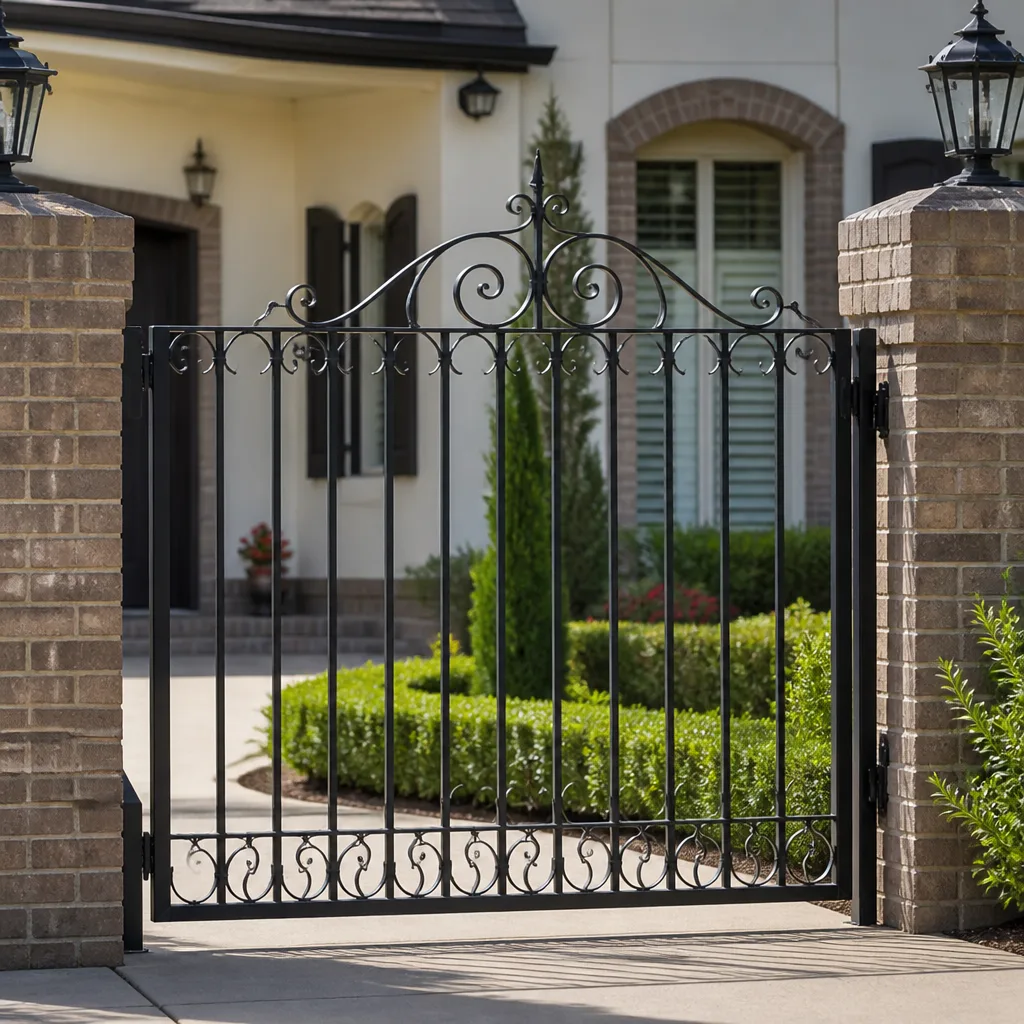
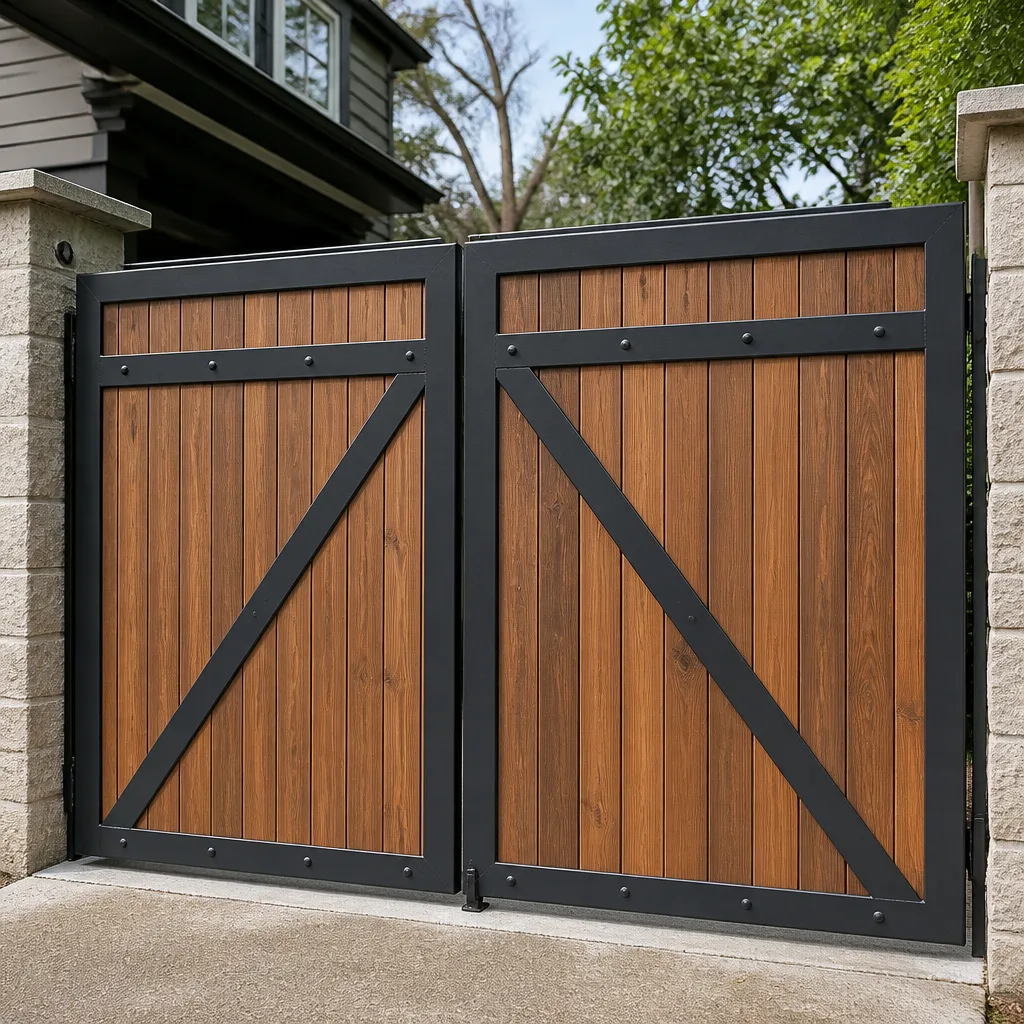
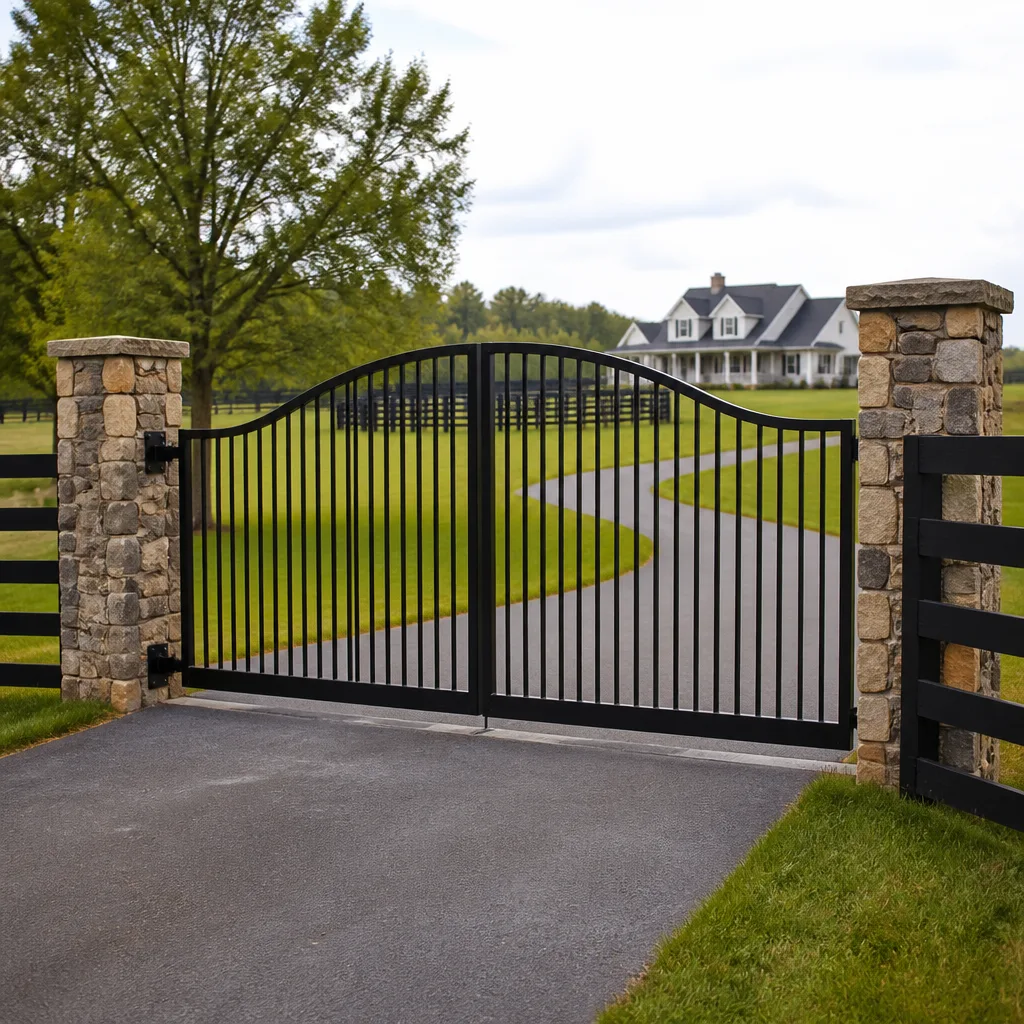
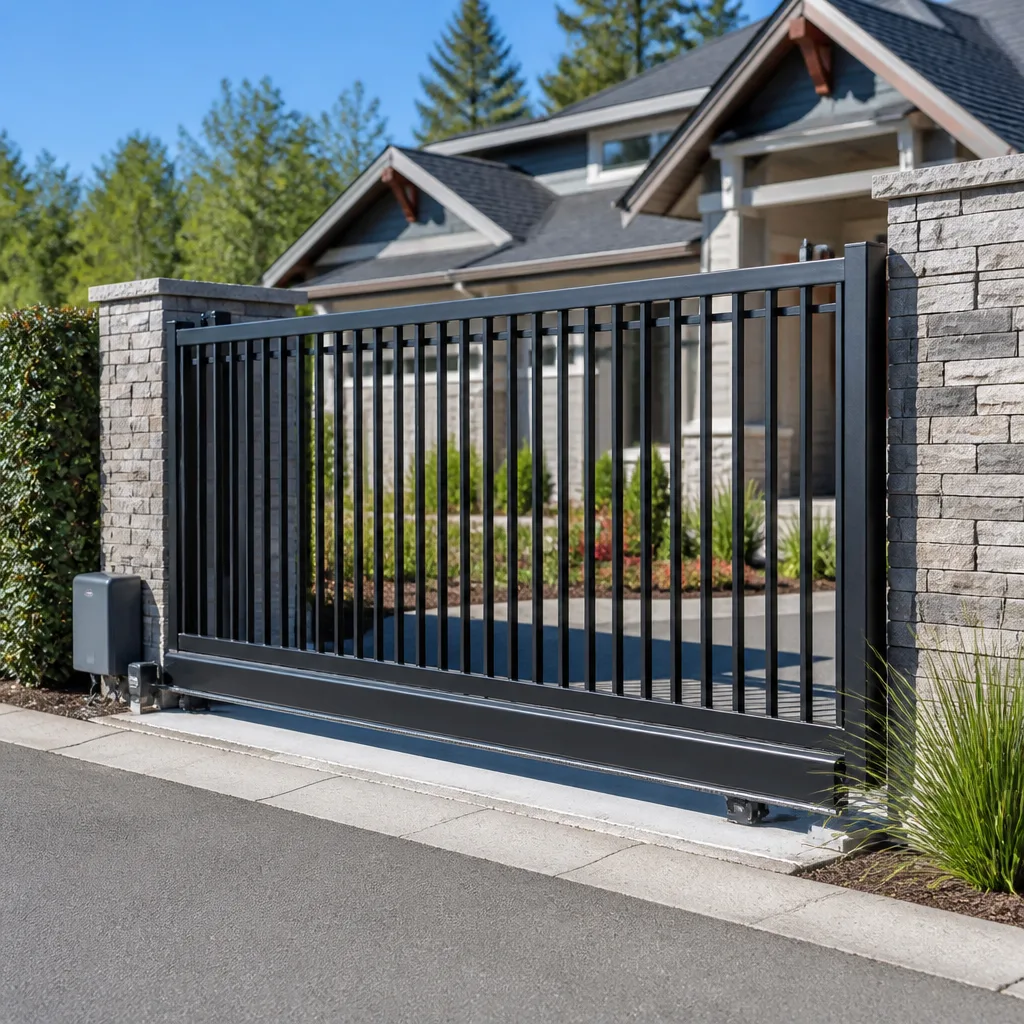
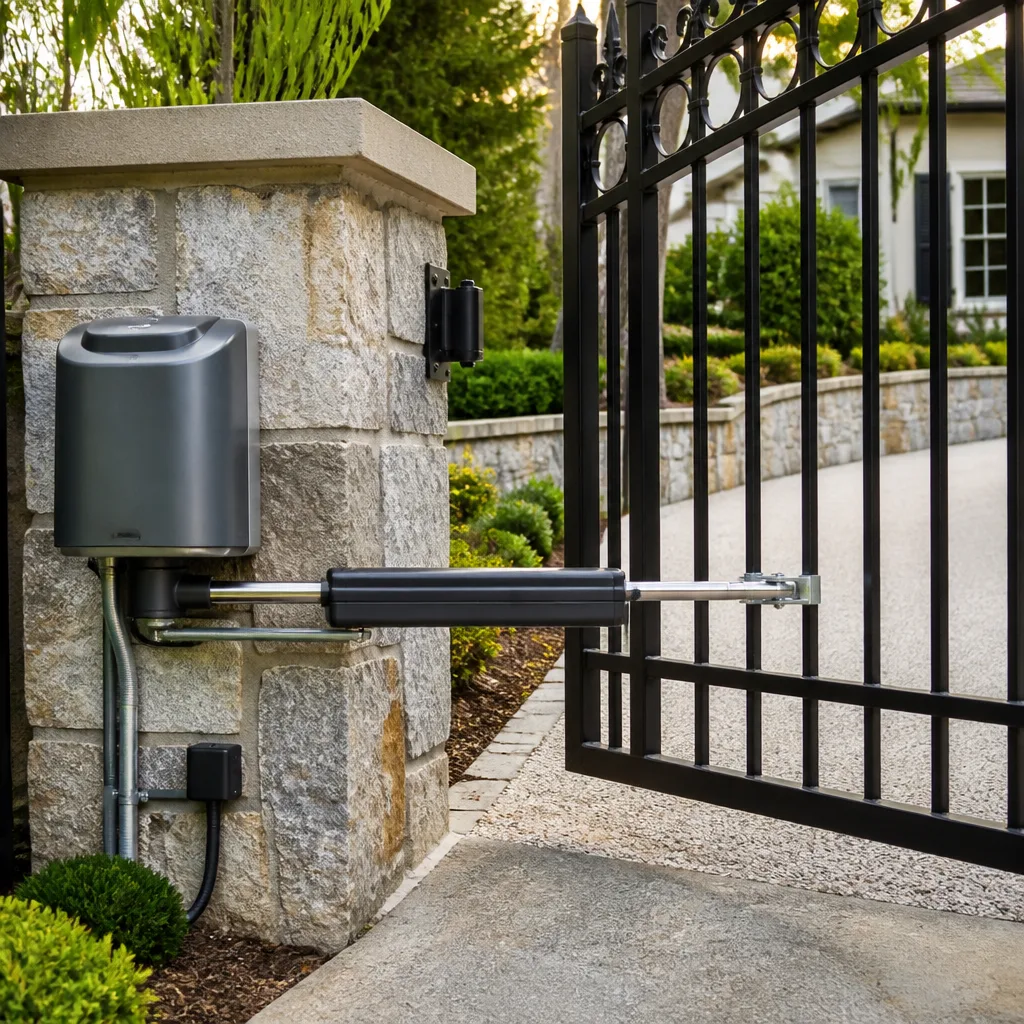
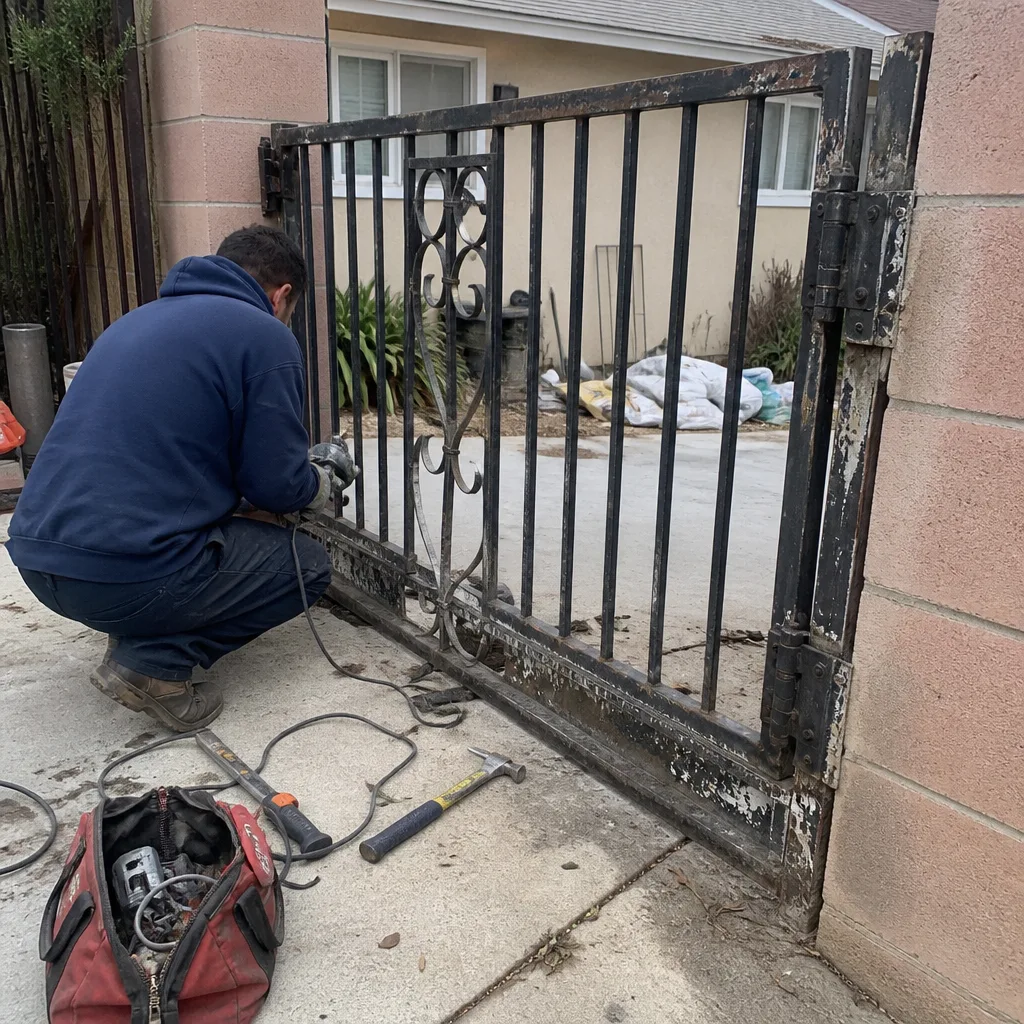 Before
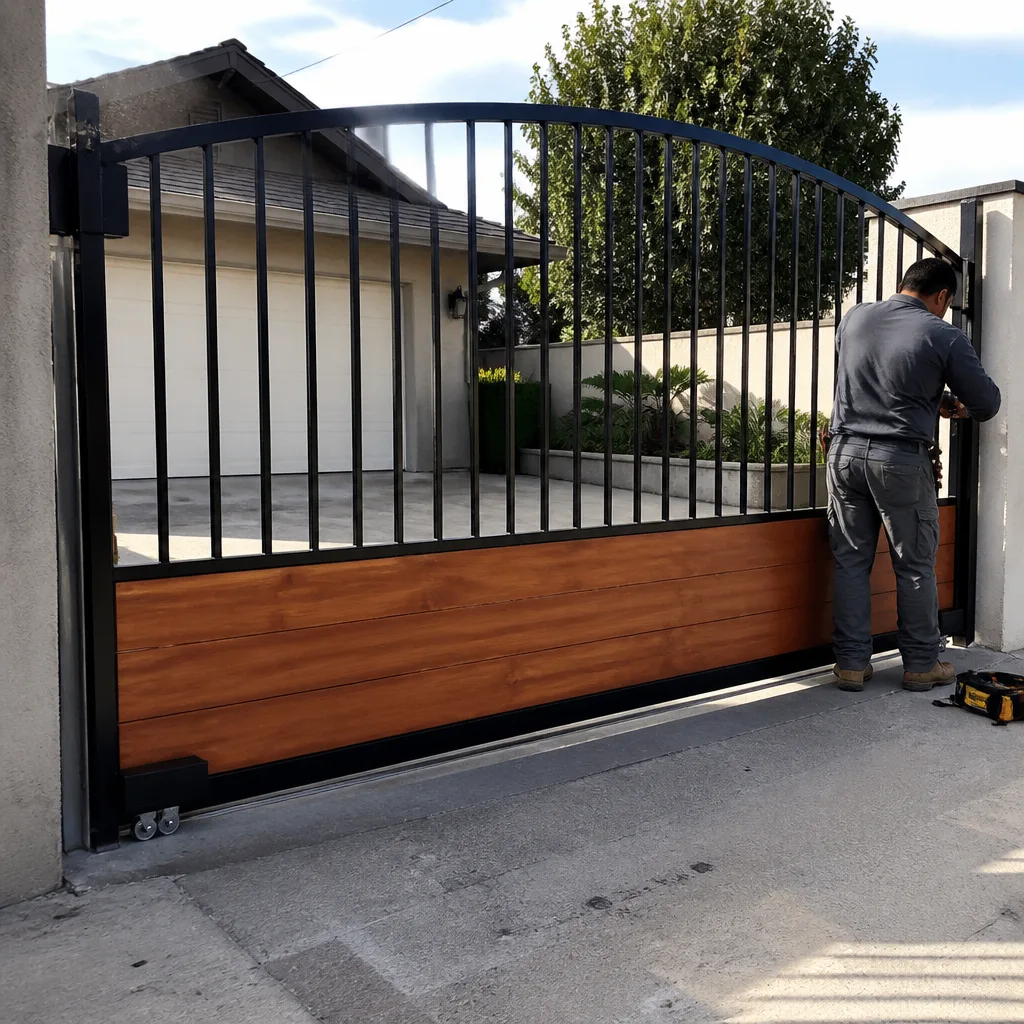 After
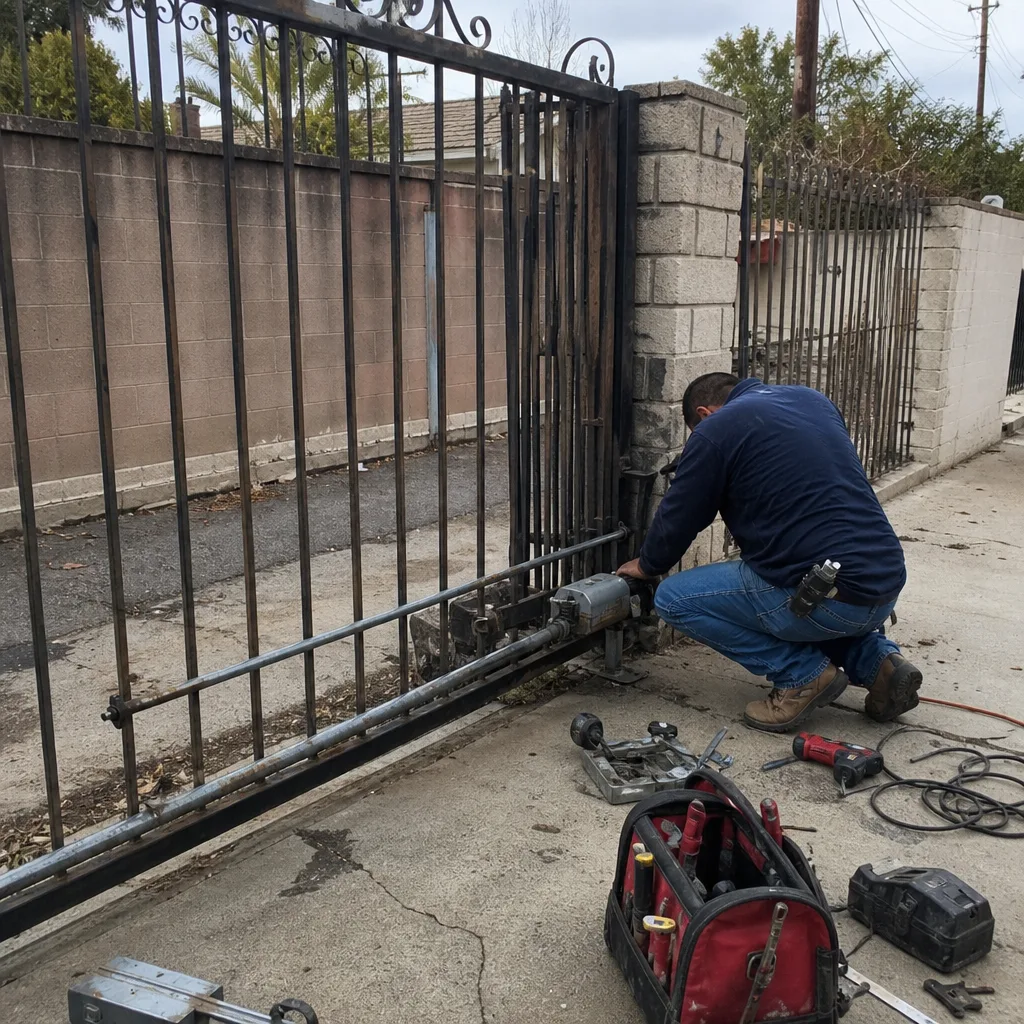 Before
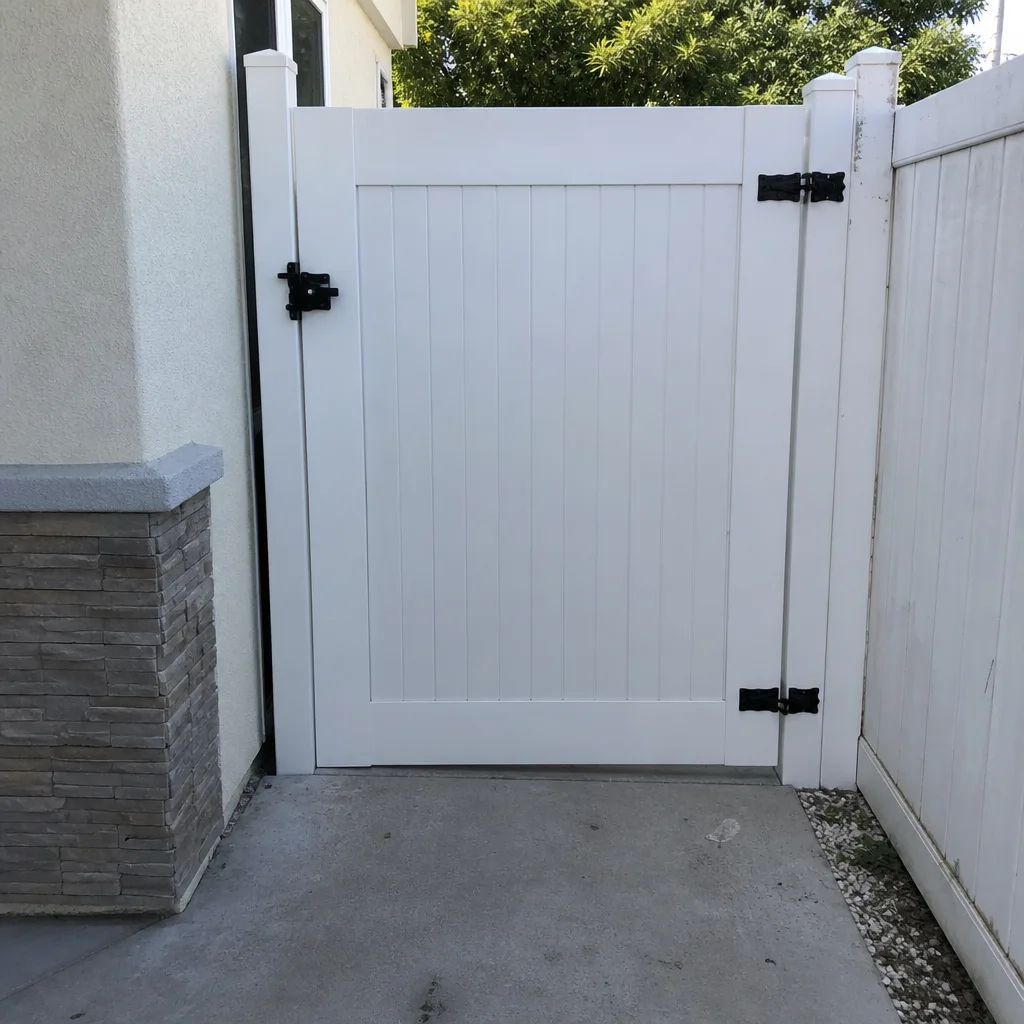 After
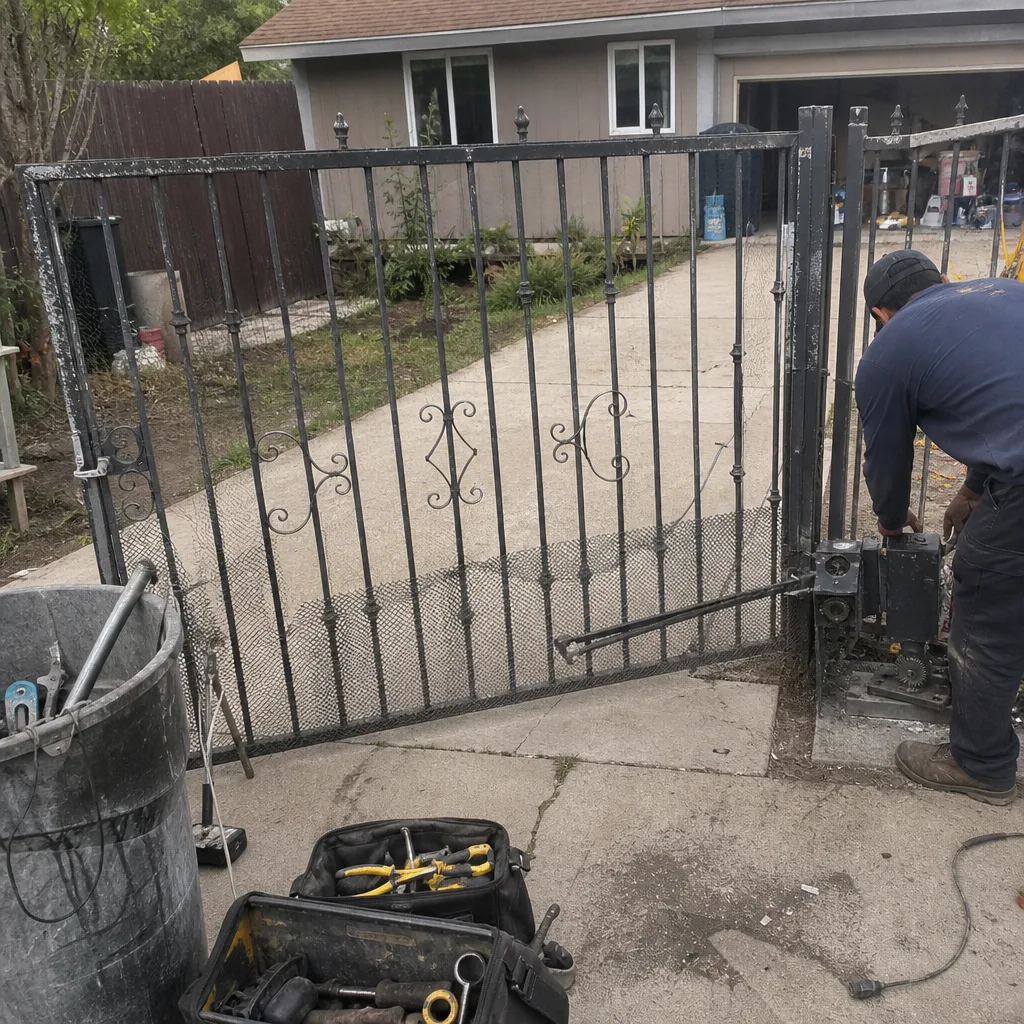 Before
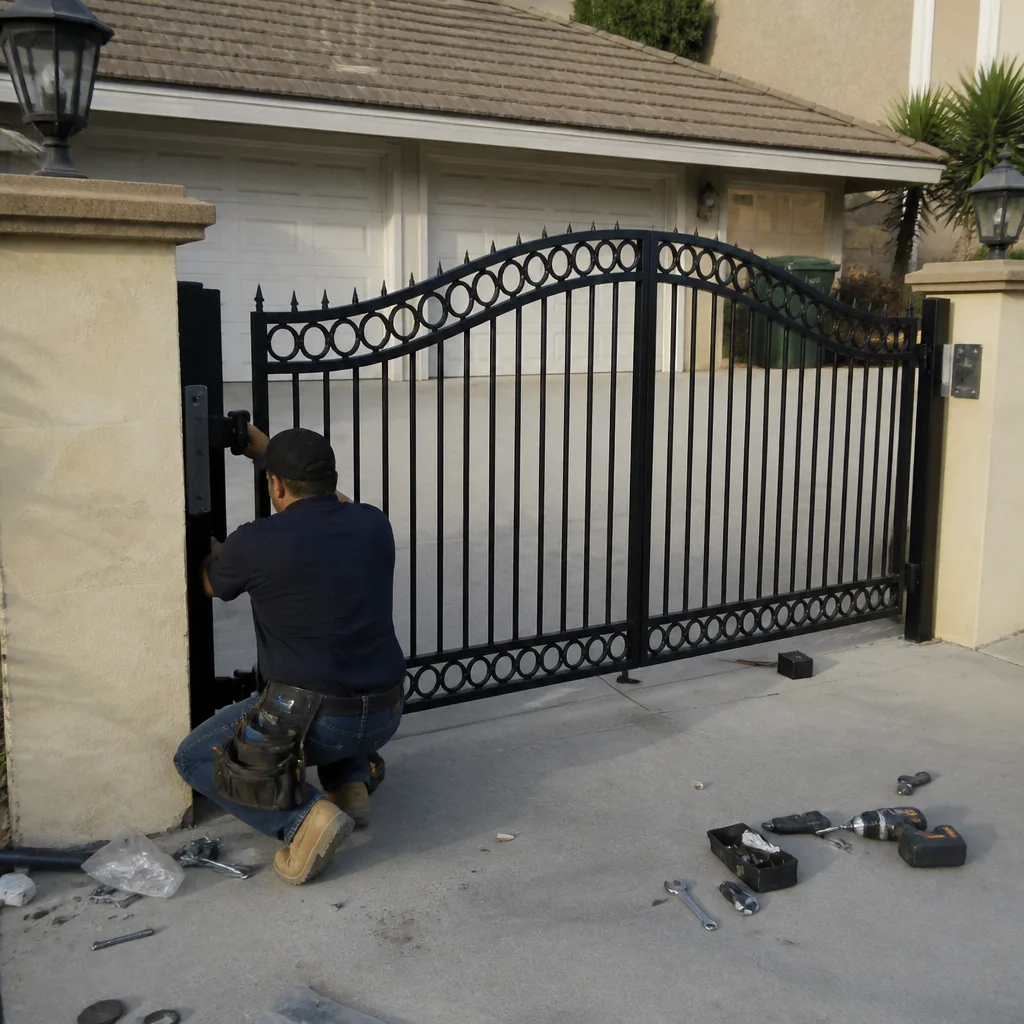 After
Gate Repair Maintenance Checklist for Northridge Homeowners
Most driveway gates in Northridge fail for one of three reasons: a hinge that wore out two years before anyone noticed, a motor that has been fighting a stiff wheel since last summer, or a safety sensor knocked out of alignment by the sprinkler that waters the bougainvillea. None of these failures announce themselves. They build quietly for months, then break on the morning you are late for a doctor’s appointment, or the evening you get home after dark and the gate will not open. This guide gives you a plain-language maintenance checklist built around what we actually see on service calls across Northridge, from Sherwood Forest to Balboa Highlands. You will learn what to check monthly, what to check seasonally, what wears out first on a gate that gets direct San Fernando Valley sun, and what repairs are worth doing before they become emergencies. The goal is simple: you should be able to pull onto your property every single day without thinking about the gate, because it just works.
Quick Answer
A Northridge homeowner should spend 10 minutes each month checking four things on a driveway gate: hinges and wheels for wear, the opener’s force settings and safety sensors, the chain or belt for slack, and the track or ground path for debris. Once a year, schedule a $89 seasonal tune-up to service the motor, lubricate moving parts, and catch small problems before they become $800 repair bills. In our dry, dusty San Fernando Valley climate, the two things that fail fastest are sun-baked plastic components and hinges that take 150 pounds of gate weight every single cycle.
Table of Contents
- The Monthly 10-Minute Gate Checklist
- Seasonal Maintenance: Valley Heat and Winter Rain
- Hinges, Wheels, and the Metal That Holds It All
- Gate Opener Care: The Motor Is Not the Problem
- Safety Sensors and Photo Eyes: Align, Clean, Test
- The Parts That Wear Out First in Northridge
- What to Check Yourself and What to Leave to a Pro
- What Gate Maintenance Costs in Northridge
The Monthly 10-Minute Gate Checklist
The best gate maintenance is boring. You walk out, you look at the same four things, you walk back in. Ten minutes, once a month, and you will catch 80% of the problems that turn into emergency calls. We tell our Northridge customers to do this on the first Saturday of every month, tied to something they already do, like taking out the trash bins or checking the sprinkler timer.
- Open and close the gate by hand. Pull the manual release handle (usually a red lever or a pull chain on the opener rail) and push the gate through its full travel. It should move smoothly, with no catching, no grinding, and no spot where you have to push harder. A gate that binds halfway is telling you a hinge is dry or a wheel is flat-spotted.
- Look at the gate while it moves. Stand back and watch the gate travel. It should stay square in its frame, with the top and bottom staying parallel to the posts. If the gate leans, sags, or tilts as it moves, the hinge bolts are loosening or a weld is flexing.
- Listen to the opener. Cycle the gate with the opener and listen to the motor. A steady hum is normal. A high-pitched whine, a grinding noise, or a motor that sounds like it is working hard means the gate is binding somewhere and the opener is getting overworked. That is the sound of a motor wearing itself out early.
- Check the ground path. Look at the area the gate sweeps over. Clear away leaves, palm fronds, rocks, and any debris the Valley wind has pushed against the track or the gate bottom. Check for roots from a neighbor’s ficus that have lifted the concrete or pavers slightly. A quarter-inch of lift at the gate’s midpoint can be enough to make the gate bind.
- Test the safety reversal. Put a cardboard box (not a person, not a pet) in the gate’s path and close the gate. It should stop and reverse immediately when it contacts the box. If the gate pushes through the box or stops without reversing, the force settings or safety sensors are wrong. This is a safety issue first and a repair issue second.
If any of these five checks fails, note it and address it that week. A hinge that needs grease will be a snapped hinge in six months. A sensor that is slow to reverse is a lawsuit waiting to happen. In Northridge, we see gates that get used 10 to 20 times a day between family members, landscapers, and delivery drivers. That is 300 to 600 cycles a month. Every one of those cycles is a little bit of wear.
Seasonal Maintenance: Valley Heat and Winter Rain
Northridge gets a specific kind of weather that a gate feels more than a person does. From June through September, daytime temperatures regularly pass 95 degrees, and the sun works on every piece of exposed plastic, rubber, and paint. From late November through March, we get the winter rain, and water finds every hairline crack the summer created. Your gate lives in both, every day, all year.
Summer: Heat and UV
The San Fernando Valley sun is hard on gate components. Plastic photocell housings become brittle after a few years of direct exposure. Rubber weather seals dry out and crack. Powder-coated steel fades, but worse, the coating can micro-crack, letting moisture reach the metal underneath. Grease in hinges thins in high heat and runs out, leaving bare metal-on-metal contact by mid-July. Here is the summer tune-up in order:
- Re-grease hinges and wheels in early June. A heavy-duty lithium grease or a marine-grade grease holds up better than a spray lubricant in Valley heat. Wipe off the old material first with a rag, then work fresh grease into each hinge pin and the wheel axles.
- Inspect every plastic component. Look at the photocell covers, the keypad housing, the antenna housing, and the opener’s plastic gear covers. Any yellowing or hairline cracking means UV damage. Replace these before the plastic fails completely and exposes the electronics inside.
- Check the gate’s paint and rust spots. Look at the bottom rail of the gate and the inside face of each hinge post. If you see rust blooming, sand it lightly, treat it with a rust converter, and touch it up with a matching paint. Ignoring a rust spot in June means a weld repair in February, after the rain has done its work.
- Verify the motor’s cooling clearance. Make sure the opener housing has airflow around it and is not covered with vines, yard debris, or stacked boxes. Motors in direct afternoon sun with no airflow overheat faster and die years early in Northridge.
Winter: Rain and Drainage
Rain is the quiet killer of gate electronics. In January, a three-day storm soak can collect water in a conduit, a sensor housing, or a low point in the track. Water plus an energized circuit equals a short. Here is the winter check:
- Clear the gate’s drainage path. If your gate sits at a low point or its track collects water, make sure the water has somewhere to go. Remove debris from any channel drains near the gate posts. Standing water against a gate post for three days will accelerate rust like nothing else.
- Check the opener housing seal. Most opener housings have a rubber gasket around the cover. Walk out on a dry day and run a finger around the seam. If the gasket is cracked or missing, replace it. A five-dollar gasket beats a four-hundred-dollar control board.
- Inspect the electrical conduit. Look at the wiring that runs from the house to the gate opener. If the conduit is cracked, separated, or has pulled away from a junction box, water can get inside and run downhill into the opener. This is a common one we find on Northridge properties where the original conduit is old PVC.
- Cycle the gate after every major storm. You do not need to wait for your monthly check. After a heavy rain, open and close the gate a few times and listen. Moisture that got where it should not be often causes a subtle change in how the opener sounds. Catch it early.
Hinges, Wheels, and the Metal That Holds It All
The gate itself is a steel or iron frame with a skin, and all of its weight hangs on two or three hinges. Think about that: 200 to 600 pounds of metal, hanging on steel pins, swinging through a 90-degree arc thousands of times a year. The hinges are the hardest-working parts on the entire gate system, and in Northridge they are also the most neglected.
A hinge works by distributing the gate’s weight across a pin. When the hinge is properly greased and the gate is properly hung, that pin rotates smoothly inside the hinge barrel with almost no friction. When the grease breaks down, the pin begins to grind inside the barrel. Over months, the pin and barrel both wear. The gate starts to sag a fraction of an inch. That sag puts the gate’s weight on the latch and the opener, which are not designed to hold weight. The sag gets worse. The gate starts to scrape the ground or hang up on the latch post. Eventually, the hinge pin snaps or the hinge barrel tears, and the gate falls.
The monthly check is simple: open the gate halfway and try to lift the free end. If there is any vertical play at all, more than an eighth of an inch, the hinge pins are wearing. On a sliding gate, crouch down and look at the wheels or the V-track rollers that the gate travels on. Each wheel should be round, with no flat spots, and should spin freely when the gate moves. A wheel that has stopped spinning is now a skid, dragging along the track and grinding a flat spot into both itself and the track.
For Northridge homes, the climate adds one more variable: dryness. Wood gates (still common on older Porter Ranch-adjacent properties and some Sherwood Forest estates) expand and contract with humidity changes. A wood gate that hangs perfectly in January may bind slightly in August. Metal gates do not move much with temperature, but their powder coating does, and any exposed bare steel will rust in the winter rain. Check for rust at the hinge welds, the latch plate, and the bottom corners of the gate every single month. A wire brush, a rust converter, and a matching paint touch-up kit cost about forty dollars. Replacing a rusted hinge plate on an iron gate that has sagged into the post costs many times that.
Gate Opener Care: The Motor Is Not the Problem
Here is the counterintuitive fact most Northridge homeowners do not know: the motor inside your gate opener almost never fails on its own. When we replace an opener on a Northridge gate, the motor is usually the victim, not the culprit. The motor burns out because it has been working against resistance for months or years. A stiff hinge, a flat-spotted wheel, a misaligned track, a gate that has settled out of square: all of these make the opener push harder on every cycle. The motor compensates until it cannot. Then it dies, and the homeowner believes the opener was just old.
Your opener maintenance is mostly about making the opener’s job easy. Start with the force settings. Every modern opener, including the BFT and Linear models we service most often in Northridge, has an adjustable force setting that controls how hard the motor pushes before it gives up and reverses. That setting should be high enough to move the gate smoothly on a normal day, but low enough that the gate stops when it hits something. If you have cranked the force setting up because the gate “just needs a little more power,” you are not fixing the gate; you are burning out the motor. The correct response is to fix the binding, not to mask it with more force.
Next, look at the chain or belt. Chain-driven openers, still common on older Viking and older LiftMaster installs in Northridge, need the chain checked for slack twice a year. A sagging chain slaps the rail, wears the sprockets, and makes the opener work harder. The chain should have about a quarter-inch of deflection at the midpoint of the rail, not more. If you can press it down an inch, it needs tensioning. Belt-driven openers do not stretch, but the belt should still be checked for cracking, especially after a summer in Valley heat.
The opener’s printed circuit board is another component that suffers in our climate. Boards do not like heat, and they do not like moisture. If your opener is out in the open with no shade, consider adding a simple sun shield (a piece of sheet metal mounted an inch above the opener housing does the job). If your opener is mounted low and the area floods in winter, consider raising it, or at minimum, sealing the conduit entry. On Ghost Controls openers, we find that most board failures trace back to water in the wiring.
One more monthly check: the opener’s manual release mechanism. It is the red lever or pull chain that disengages the opener so you can move the gate by hand during a power outage. That mechanism should move easily by hand. If it is stiff, it will seize exactly when you need it, which is during a blackout when your truck is in the driveway and the automatic gate will not open.
Safety Sensors and Photo Eyes: Align, Clean, Test
Every automatic gate in Northridge is required by California law to be equipped with safety devices designed to prevent the gate from closing on a person, a car, or a pet. The most common of these devices is the photo eye, also called a photo sensor or photocell: a pair of small plastic boxes mounted low on the gate posts or the driveway pillars, one sending an infrared beam and the other receiving it. If anything breaks that beam while the gate is closing, the gate must stop and reverse. This is not an accessory. This is the law, and it is the difference between a functioning gate and a tragedy.
Photo eyes drift out of alignment. They get bumped by a wheelbarrow, a lawn mower, or a delivery driver. The sun beats on their plastic housing until it becomes brittle. Dust and spider webs accumulate on the lens. When the beam breaks or the alignment is off, the opener may refuse to close at all, which is the behavior that brings most Northridge customers to the phone. Or, worse, the installer may have bypassed the sensor, and the gate closes with no safety reverse at all.
Your monthly sensor check takes 60 seconds. Walk out and look at both photo eyes. They should be pointing directly at one another, with the small LED indicators on each unit showing solid green or solid red, depending on the model. If the LED is blinking, the beam is off. First, wipe the lens of each eye with a soft cloth. Dust, water spots, and spider silk are enough to scatter the infrared beam. Second, make sure nothing is growing between the two eyes: a shrub that has grown a few inches since spring can break the beam intermittently. Third, gently push each photo eye to make sure it is still firmly mounted. Then test the reverse function, which we covered in the monthly checklist.
If the photo eyes are older than ten years and the plastic housings are showing UV damage, replace them. A new set of photo eyes costs less than a service call, and a failed sensor is the single most common reason an opener stops responding correctly in Northridge. On Viking and Ghost Controls openers, the sensor wiring is relatively simple and a qualified gate tech can replace the eyes in under an hour. On some BFT models, the sensor is integrated with the control board, and the work should be left to someone who knows the board.
The Parts That Wear Out First in Northridge
Certain gate components have predictable lifespans, and knowing them helps you budget. In Northridge, with our dry heat, our winter rains, and our heavy gate usage, here is what we replace most often, in order of frequency:
- Photo eyes (5-8 years). UV damage, water ingress, or alignment drift. The single most commonly replaced component on Northridge gates.
- Hinge pins and bushings (7-10 years). Wear accelerates if the hinges are never greased or if the gate was hung out of square originally.
- Gate opener battery (4-6 years). On openers with battery backup, the battery loses capacity over time and may not hold a charge through a power outage.
- Control board (8-12 years). Heat and moisture are the killers. Boards treated well last the longer end; boards in direct sun and standing water fail early.
- Chain and sprockets (8-10 years on chain-drive). Regular tension checks extend life; a slack chain halves it.
- Wheels and track rollers (7-10 years on slide gates). Flat spots form when the gate is used daily and the wheels are never checked.
- Keypad membrane (4-6 years). Sun and repeated use. The membrane becomes unreadable or the buttons become unresponsive.
- Rubber seals and gaskets (3-5 years). Cheap to replace, expensive when they fail and let water in.
Notice what is not on the list: the motor itself. We replace plenty of motors, but almost always because a worn hinge or a stiff wheel or an over-cranked force setting worked the motor to death. The single best way to protect your motor is to fix the parts on this list before they become a load on the opener.
What to Check Yourself and What to Leave to a Pro
This guide is a maintenance checklist, not a repair manual. Some jobs are safe and appropriate for a homeowner. Others are not, and one of them can seriously injure you.
Safe for a homeowner to check and do:
- Clearing debris from the gate path and track
- Wiping down photo eye lenses and checking for obstructing vegetation
- Greasing hinge pins and wheel axles with a handheld grease gun
- Checking chain tension by sight and feel
- Testing the safety reversal with a cardboard box
- Tightening visible bolts on the gate frame and hinges with hand tools
- Checking for rust and touching up small spots
Leave to a trained gate professional:
- Adjusting the opener’s force settings and limit switches. Setting limits wrong will burn out a motor or drop a gate off its track.
- Replacing or tensioning a gate opener chain. A chain under tension can take off a finger if it slips while you are working on it.
- Replacing or re-hanging a full-size gate. Gate work involves hundreds of pounds of steel or iron. If a gate falls during a repair, it can kill someone. This is not a job for a homeowner, a neighbor, or a handyman.
- Any electrical work inside the opener housing. The control board and capacitor carry household voltage, and a capacitor can hold a charge even when the opener is unplugged.
- Welding repairs. A cracked weld on a gate or hinge post needs a welder who knows gate steel, not a do-it-yourself patch job with a hardware-store bracket.
We have been called to fix more than one Northridge gate that a well-meaning homeowner made worse by trying to adjust the limit switch or the force setting without experience. A $89 seasonal tune-up from a professional is less expensive than replacing a burned-out motor because a homeowner turned the force dial to maximum to solve a binding gate.
What Gate Maintenance Costs in Northridge
Gate maintenance in Northridge falls into three price bands. Knowing them helps you set expectations and avoid paying too much or too little.
| Service | Typical Northridge Price Range | Frequency |
|---|---|---|
| Seasonal tune-up (lubrication, hinge check, sensor alignment, force check) | $89 – $150 | Once or twice a year |
| Photo eye replacement (parts and labor) | $140 – $260 | As needed, every 5-8 years |
| Hinge pin replacement (single hinge) | $120 – $280 | As needed, every 7-10 years |
| Chain tension adjustment | $75 – $150 | Twice a year for chain-drive openers |
| Gear and sprocket replacement | $220 – $450 | Every 8-12 years |
| Full gate opener replacement (motor, board, installation) | $1,200 – $2,800 | Every 12-18 years with proper maintenance |
| Complete gate system service call (diagnostic visit) | $75 – $130 | Only when something fails |
These are ranges, not quotes. Your actual price depends on the age of your equipment, the brand, the gate size, and how accessible the components are. What matters is that these prices are agreed before the work starts. At Ironworks Gate Co. home, we quote a fixed price before a single bolt is turned, and the price you approve is the price you pay. No estimates that turn into bills that are suddenly higher. A square deal: upfront price, no surprises on the bill.
Ironworks Gate Co. offers a $89 Seasonal Tune-Up for Northridge homeowners, done right and backed in writing. We also offer a free second opinion on any written estimate from another company. If you have a written quote and you want a second set of eyes on it, our estimate is free and it is honest. Senior and veteran homeowners always receive a permanent 5% discount, and any repair over $250 takes $50 off. We will be there when we say, and we stand behind it.
Common Mistakes to Avoid
- Turning up the force setting instead of fixing the binding. This is the number one way Northridge homeowners burn out a perfectly good opener motor. If the gate is struggling, the force setting is not the problem; the gate is.
- Skipping hinge lubrication because “the gate works fine.” A dry hinge works fine right up until it does not, and the failure mode is a snapped pin or a torn hinge barrel that costs twenty times what a grease gun costs.
- Ignoring the photo eyes after a landscaping project. A shrub grows, a sensor gets bumped during tree trimming, and suddenly the gate will not close at all. Then a homeowner disables the sensor instead of realigning it. That is a safety violation and a serious liability.
- Waiting until the gate fails to call for service. Most gate failures in Northridge are the final symptom of a problem that was visible for months. A gate that is getting louder is a gate that is asking for help.
- Hiring a general handyman for gate opener work. Gate automation is specialized. A handyman can hang a shelf. A handyman should not be inside a BFT or Linear control board. The correct fix on the first visit depends on someone who knows the brand.
- Not testing the safety reversal after adjusting anything. After any change to the opener, the force settings, the sensors, or the gate hardware, run the cardboard-box test. If the gate does not reverse, do not operate it until the safety system is corrected.
- Painting over rust without treating it. A coat of paint over active rust looks good for three months and then the rust bubbles through. The correct sequence is: remove the rust, apply a rust converter, prime, then paint. Otherwise you will do the job twice.
When to Call a Professional
Some situations call for a phone call rather than a checklist. Call a gate professional if your gate is making a new noise that you have not heard before, if it is visibly sagging or leaning, if the opener stops responding to the remote and the wall button at the same time, if you smell burning plastic anywhere near the opener, or if the gate has come off its track. Also call if the photo eyes are damaged, if the keypad works intermittently, or if you are not comfortable testing any of the items in this guide. Ironworks Gate Co. offers free estimates in Northridge - call (925) 966-4150 and a live person will answer the phone, 24 hours a day, 7 days a week, not a voicemail and not an answering service. We will be there when we say, and the price will be agreed before any work begins. Every job is protected by our written Done Right Promise.
Frequently Asked Questions
A driveway gate in Northridge should be serviced by a professional once a year at minimum, with a homeowner’s basic monthly check in between. A yearly tune-up, like our $89 Seasonal Tune-Up, covers lubrication, hinge inspection, sensor alignment, force setting verification, and a full safety test. Northridge gates that get heavy daily use, or gates older than fifteen years, benefit from service twice a year.
A grinding noise almost always means metal is rubbing against metal without enough lubrication, or a wheel or track roller has stopped rolling and is now dragging. The typical causes on a Northridge gate are dry hinge pins, flat-spotted slide gate wheels, or a sagging gate that is scraping the ground or the track. The fix is lubrication and hardware repair, not a new motor. Call us at (925) 966-4150 and we will diagnose it quickly.
A typical gate opener repair in Northridge runs between $140 for a photo eye replacement and $450 for a gear and sprocket replacement, with full opener replacement running $1,200 to $2,800. The exact price depends on the brand, the age, and what has failed. Our prices are fixed and quoted before the work starts, no surprises on the bill. A service call to diagnose the problem typically runs $75 to $130.
Yes. Ironworks Gate Co. is serving Northridge and we keep our schedule built around same-day and next-day arrival for gate failures. Our live phone support operates 24 hours a day, 7 days a week, so when your gate will not open at 7 a.m. on a Tuesday, a live person answers and dispatches a technician. Call (925) 966-4150 and we will get you scheduled.
Our technicians are trained and certified on nine major gate automation brands: LiftMaster, FAAC, BFT, Linear, Viking, Ghost Controls, DoorKing, Elite, and Mighty Mule. Whatever opener is on your Northridge driveway, we know the board, the motor, the limits, and the common failure points for that specific brand.
Yes. Ironworks Gate Co. has live phone support 24 hours a day, 7 days a week. When you call (925) 966-4150, a real person answers. No voicemail tree, no callback queue, no waiting until Monday morning if your gate fails on a Saturday evening.
The Done Right Promise is a written guarantee on every completed gate job. If the repair is not right within 90 days, we come back and make it right. No paperwork, no arguing, no exceptions. We call it the Keystone Standard, and it applies to every job completed in Northridge.
The Bottom Line
Your Northridge gate is a simple machine that needs simple, consistent attention. Ten minutes a month catches most problems while they are still cheap. A yearly professional tune-up catches the rest. The gate’s weakest links are its hinges, its photo eyes, and its motor’s working conditions, and all three are manageable with the habits in this guide. The gate does not need to be a project. It needs a homeowner who checks it the way they check their smoke detectors and their sprinkler timer. And when something does go wrong, it needs a gate professional, not a generalist, because the correct fix on the first visit saves the homeowner money every single time. Done right, and backed in writing.
Written by the team at Ironworks Gate Co.