
Last updated August 25, 2026
Free on-site gate assessment - hinges, posts, and your LiftMaster or Nice gate operator checked before anything is quoted
The assessment is free and the quote is the invoice.
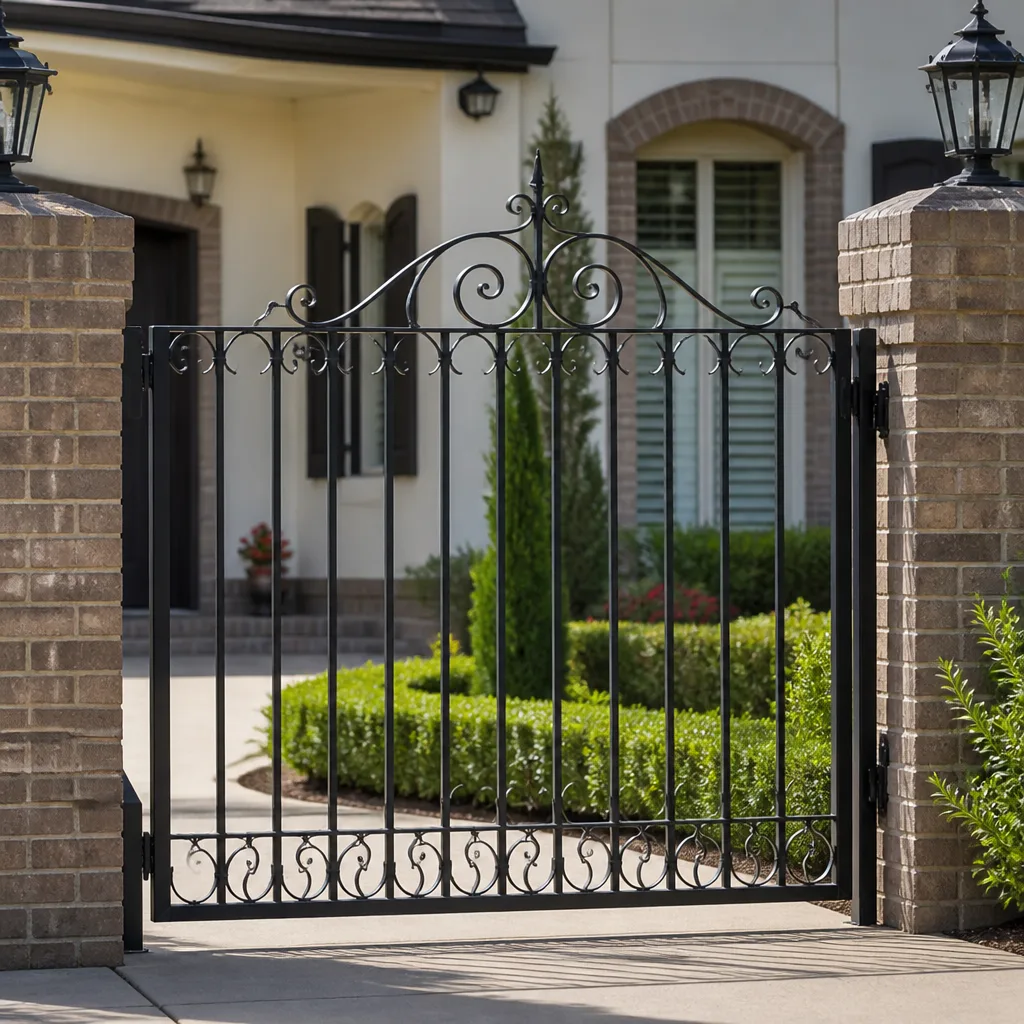
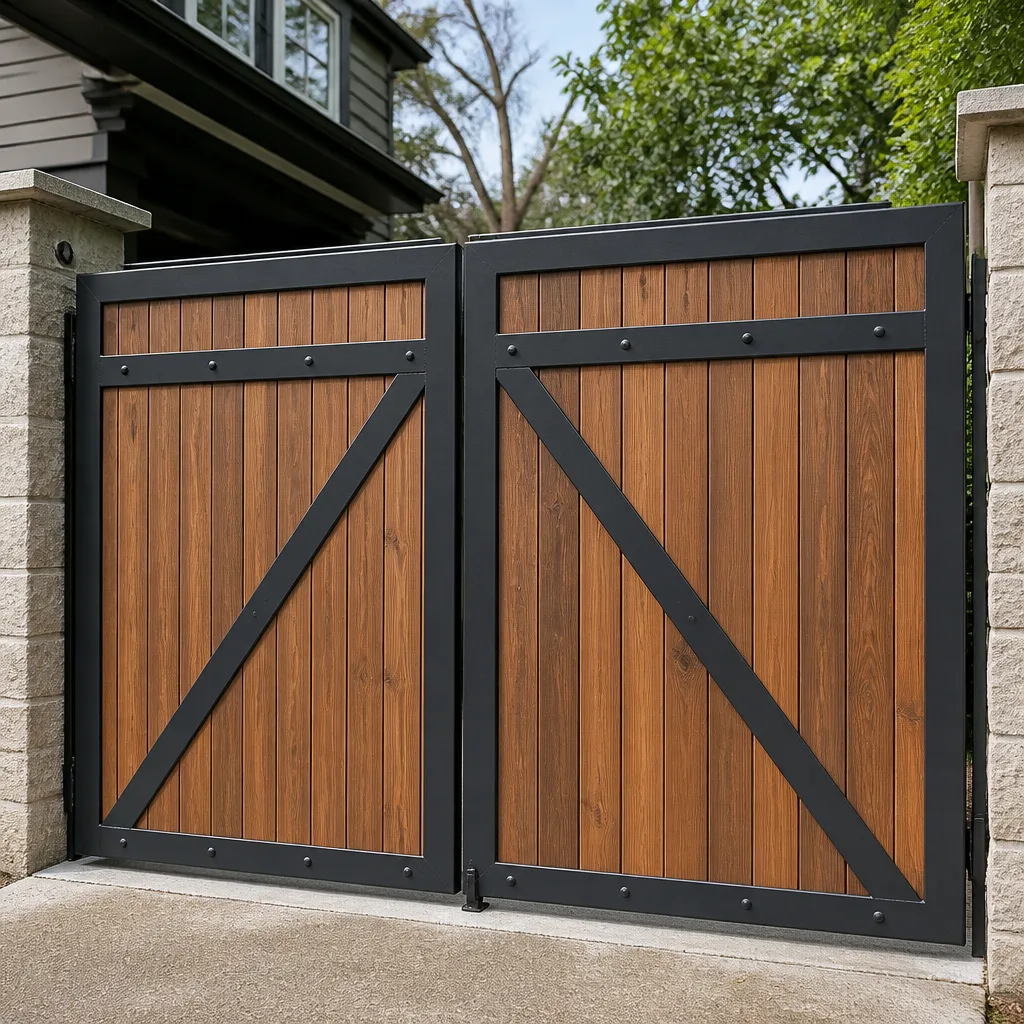
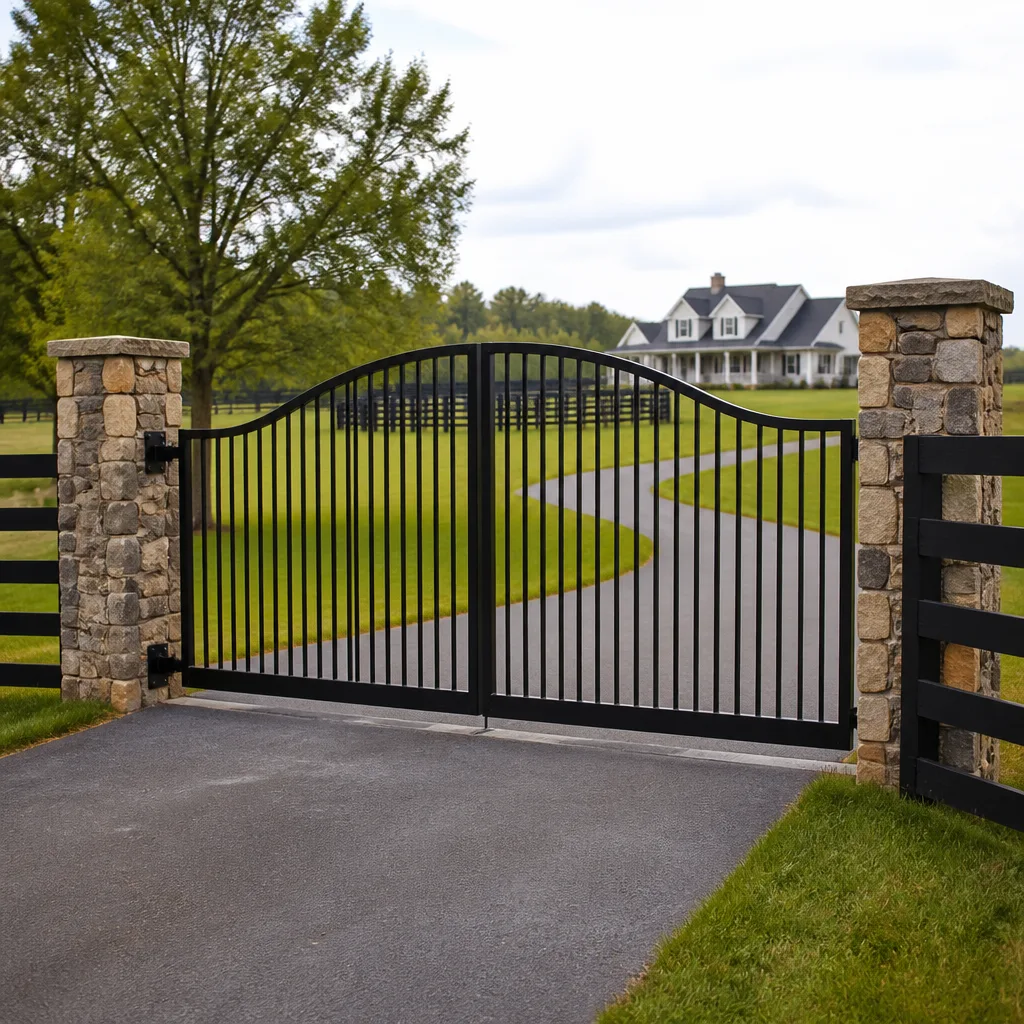
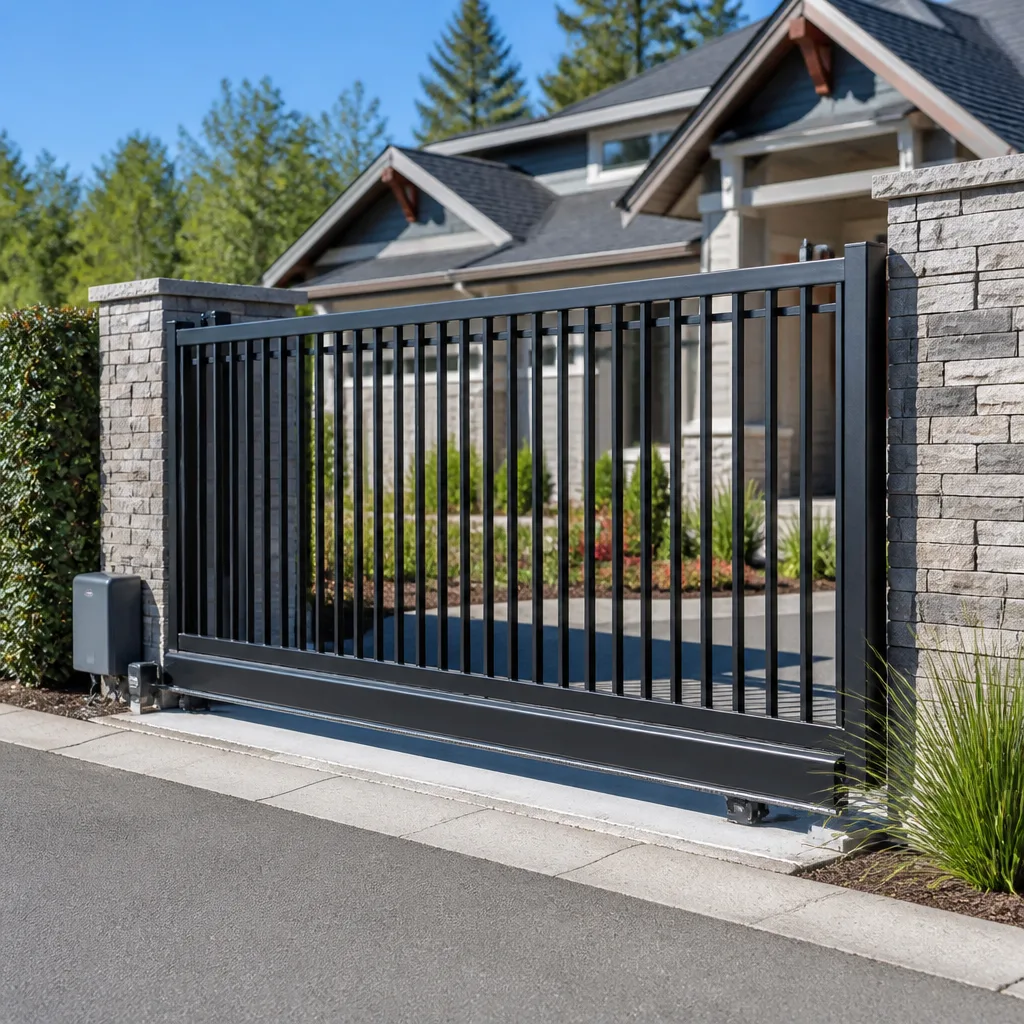
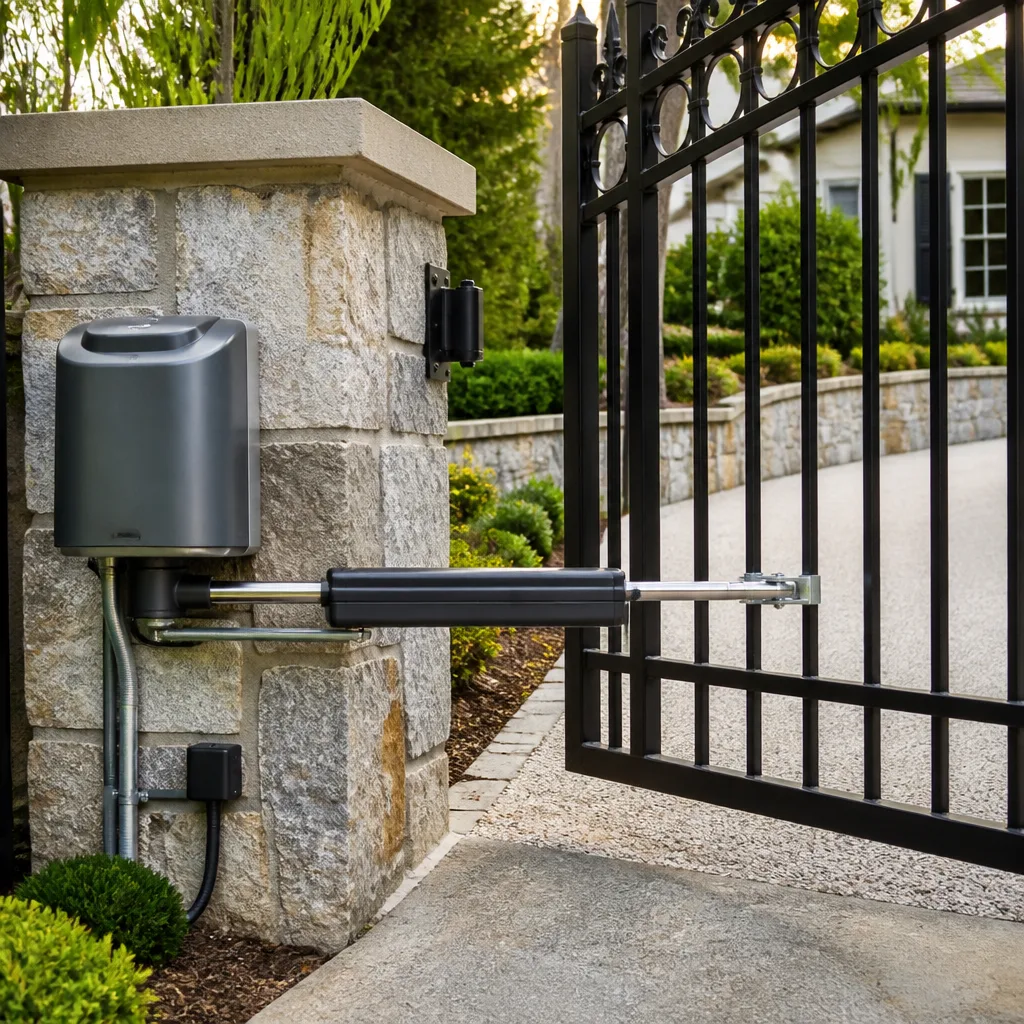
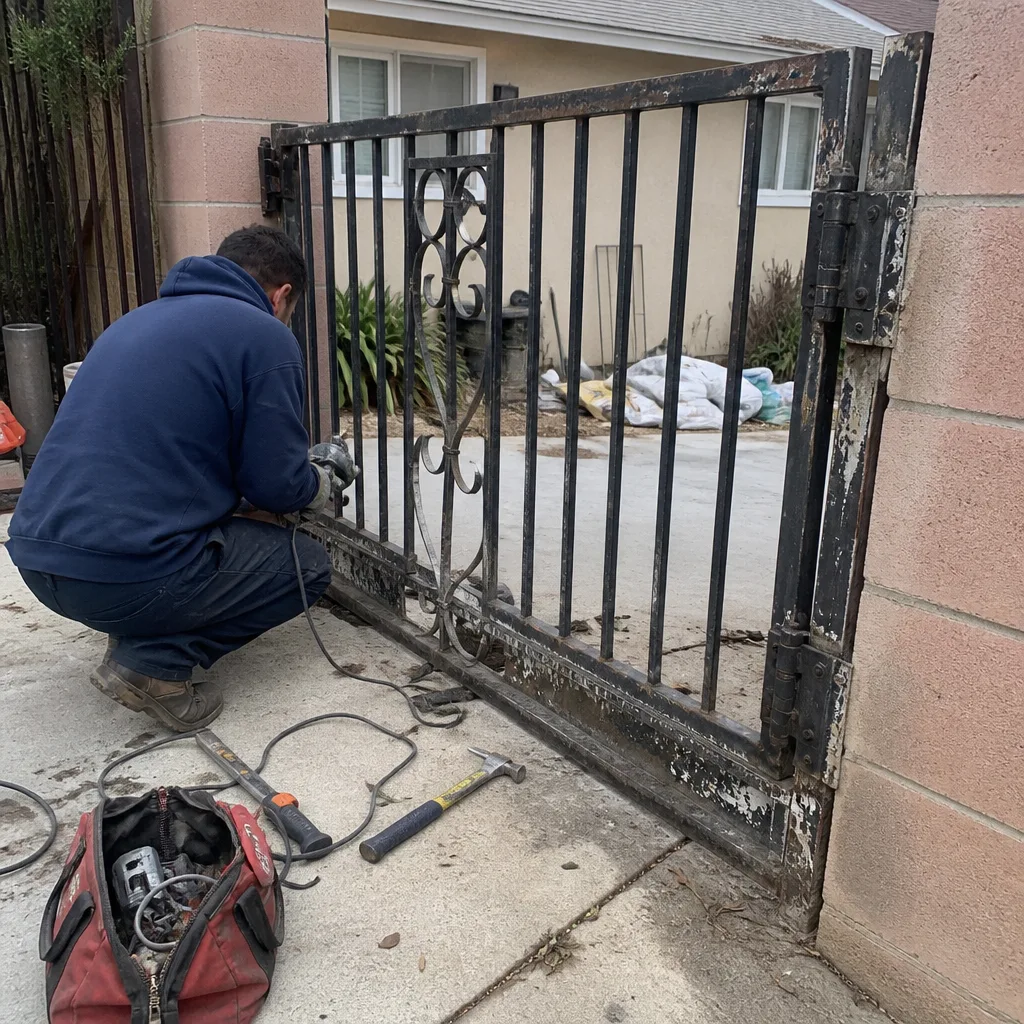 Before
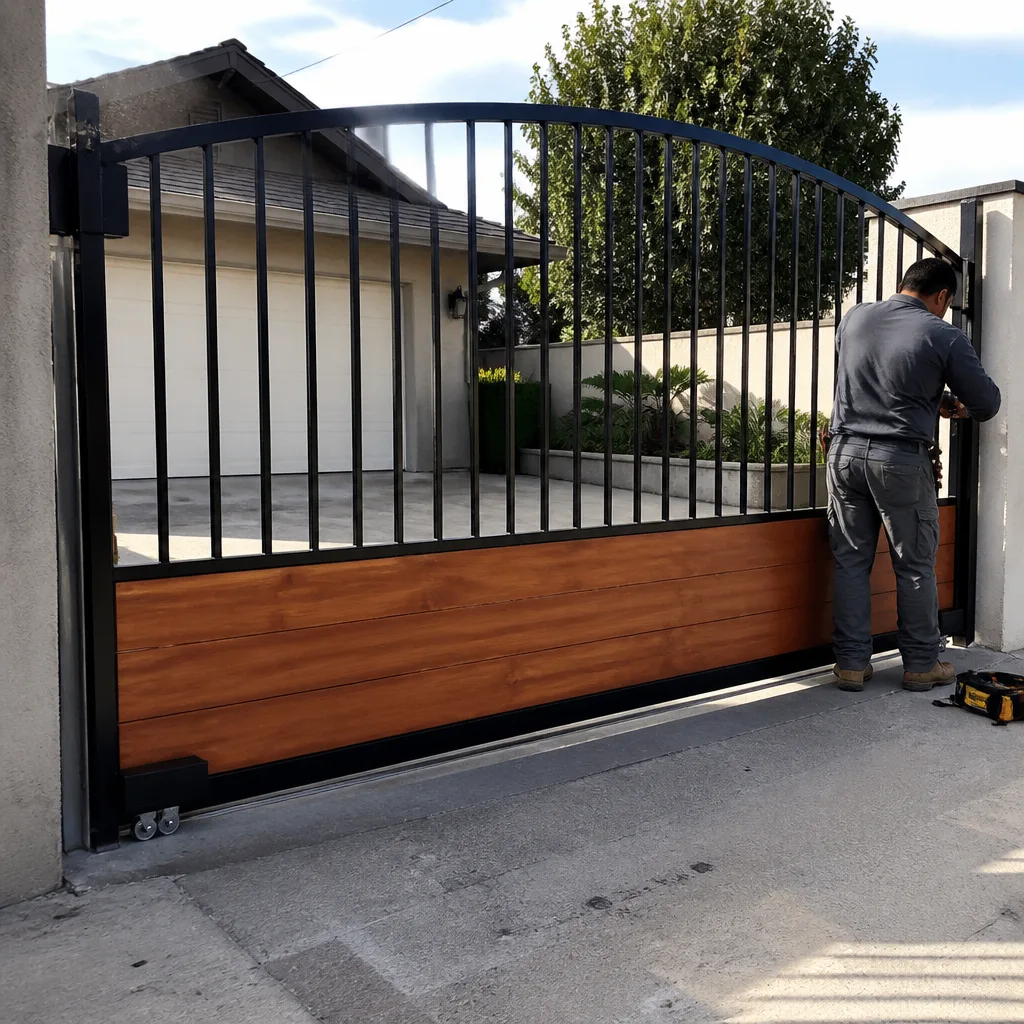 After
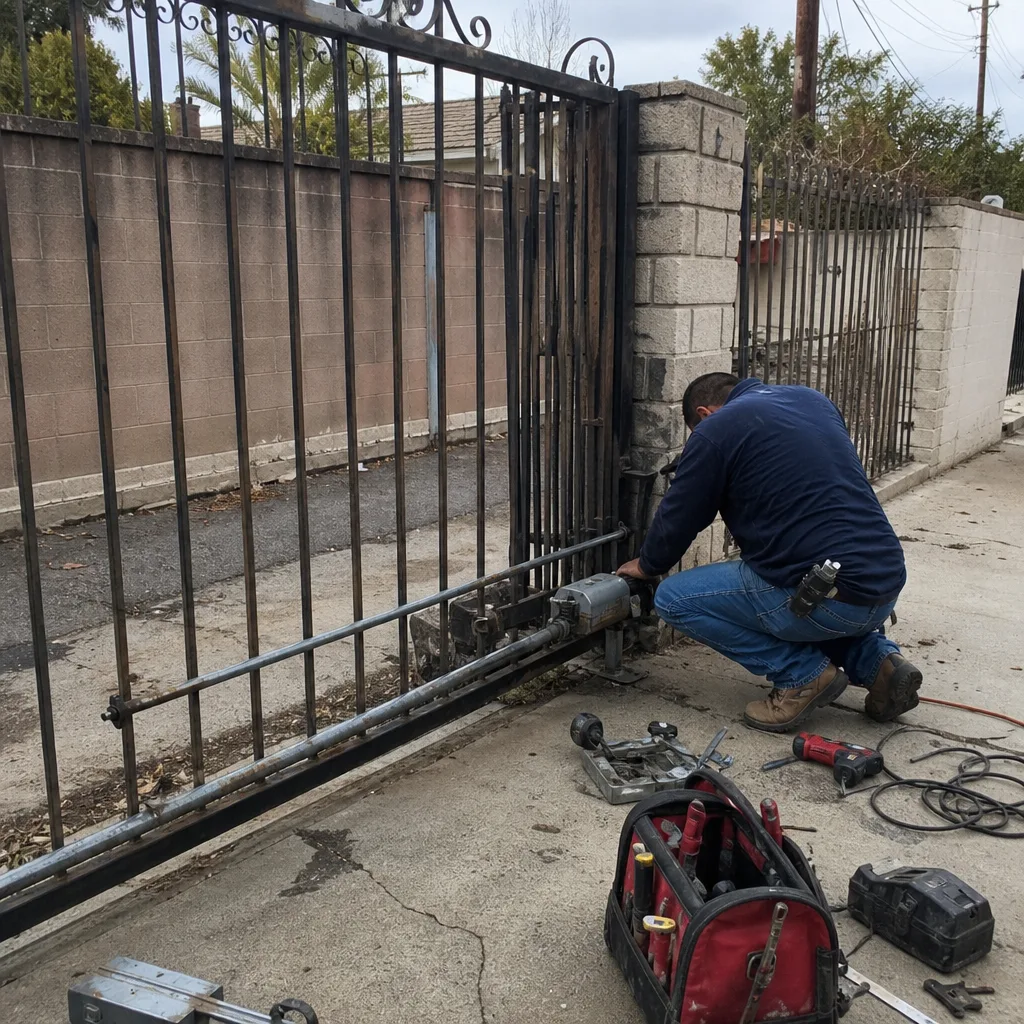 Before
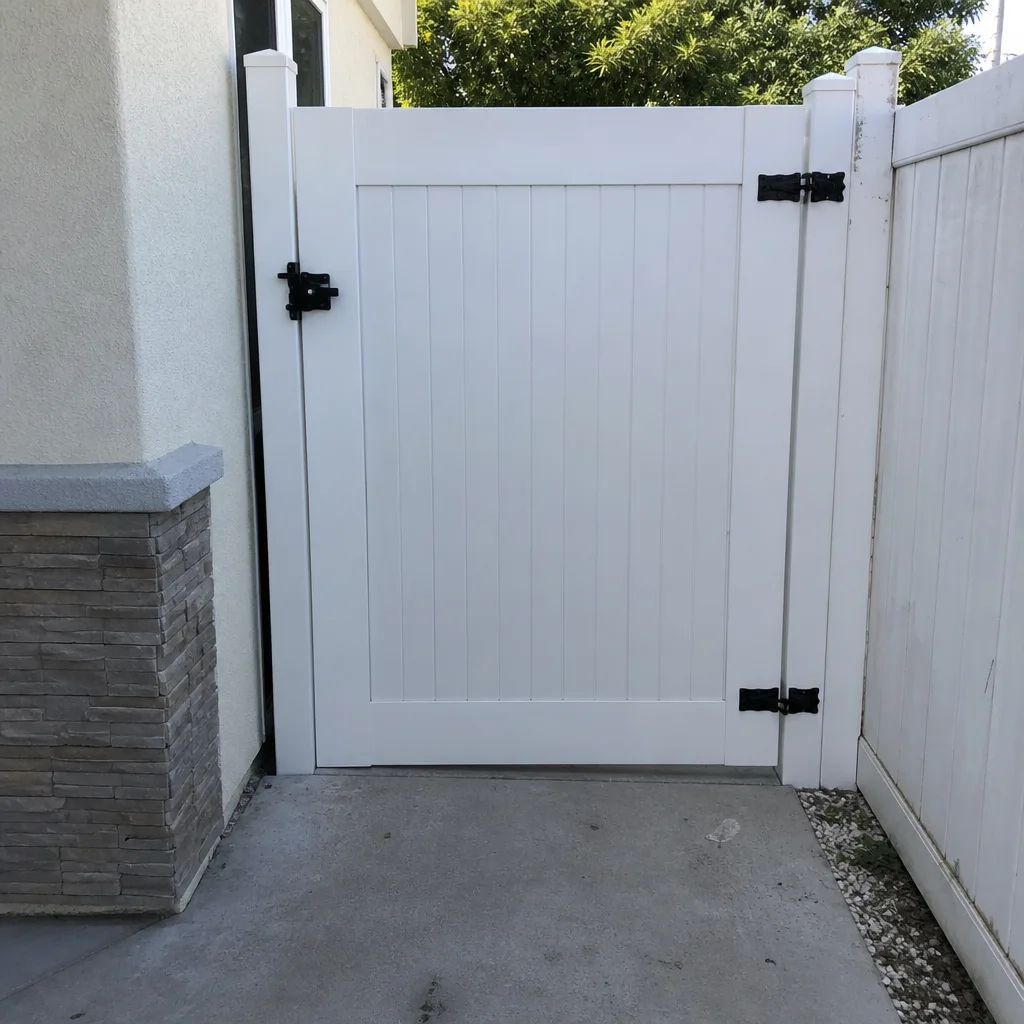 After
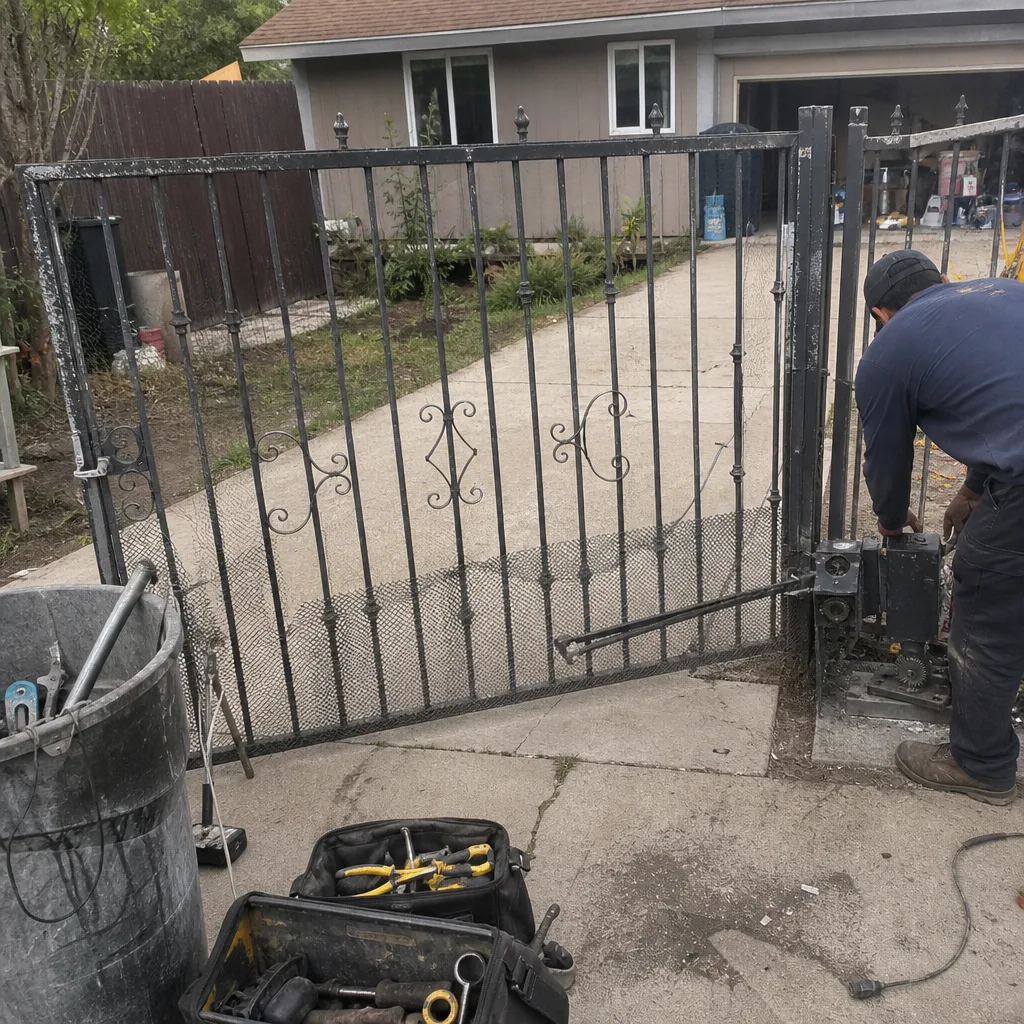 Before
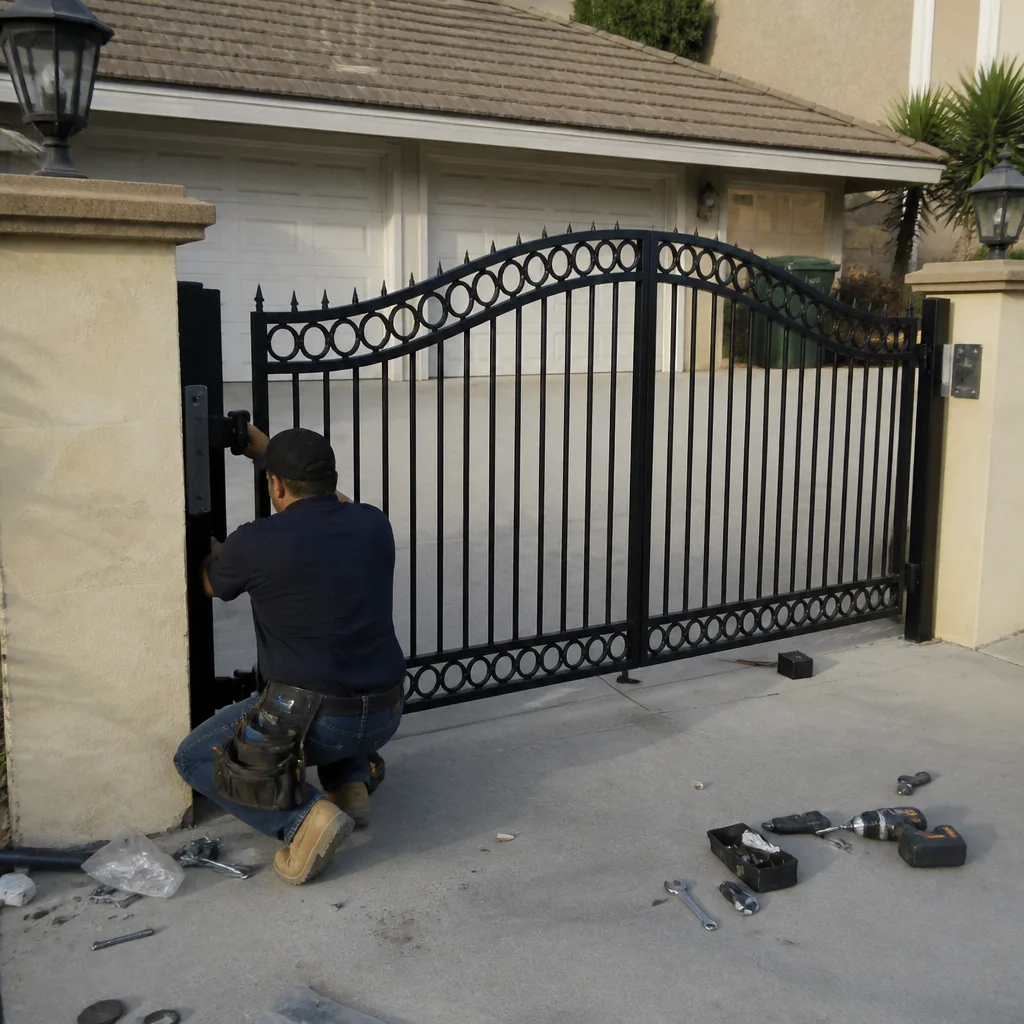 After
The Complete Guide to Gate Repair in Northridge
Most gate failures in Northridge are not the catastrophe homeowners fear. They are a $14 bracket, a tired capacitor, or a limit switch that drifted out of adjustment after three years of San Fernando Valley sun. A gate that hangs, grinds, or refuses to close is usually announcing a small, fixable problem before it becomes an expensive one. The difficulty is knowing which noises matter, which delays are warning signs, and which repairs genuinely cannot wait. This guide covers the full scope of automatic and manual gate repair, what things cost in Northridge, what you can safely inspect yourself, and when the right call is a trained technician rather than a weekend project. We will show you how to think about your gate the way an experienced repair company does, so the next call you make is a calm one and not an emergency.
If you only take one thing from this page: most Northridge gate repairs cost between $180 and $450 when caught early, and the single most expensive mistake is letting a small mechanical problem grind on until it takes the motor with it. Everything below is written from forty-two years of working on gates in this valley, where the heat, the dust, and the soil each do their own particular damage.
Quick Answer
Gate repair in Northridge typically costs $180 to $450 for common fixes like hinge replacement, sensor realignment, limit switch adjustment, or opener capacitor replacement, with more involved jobs like replacing a slide gate motor or repairing a bent steel frame running $600 to $1,400. Most repairs are completed in a single visit by a qualified gate technician, and the repair should carry a written guarantee, not a handshake. If your gate is binding, loud, or moving slower than it did a month ago, the correct repair now is nearly always cheaper than the failure later.
Table of Contents
- How Gates Fail in Northridge
- What Gate Repair Costs in Northridge
- A Step-by-Step Diagnosis You Can Do Before Calling
- Common Gate Repair Procedures, Explained
- What the Northridge Climate Does to Gates
- The Gate Automation Brands We See Most
- Common Mistakes to Avoid
- When to Call a Professional
- Frequently Asked Questions
How Gates Fail in Northridge
Automatic gates look simple from the driveway, but they are a small mechanical system doing heavy work in a hostile environment. A 500-pound steel gate swinging open and closed a dozen times a day is putting thousands of pounds of cyclical stress through its hinges, its opener arm, and its mounting posts. In Northridge, the work is done in hundred-degree summers, dry Santa Ana winds that fill every bearing with fine dust, and the occasional hard rain that turns that dust into grinding paste inside the track.
The failures follow patterns, and after four decades in this valley we can predict them before they happen. The single most common failure is hinge wear. Gate hinges are the only load-bearing connection between a moving mass and a fixed post, and they wear unevenly. When hinges sag, the gate leaf drops, the latch no longer lines up with the opener, and the motor works harder every cycle until its overload sensor starts tripping or the main board burns out. We see this progression constantly. A homeowner notices the gate is noisy, chases the opener for a month, and replaces a $700 control board when the actual problem was a $60 pair of worn hinges that was forcing the motor to work against physics.
The second pattern is electrical, not mechanical. Capacitors age, contacts corrode, and sensors drift. Automatic gate openers in the San Fernando Valley operate in a dust environment, and every uncovered circuit board becomes a collector over time. Limit switches, the small devices that tell the opener where the closed and open positions are, are especially vulnerable. When a limit switch drifts, the gate may open too far, slam, or reverse unexpectedly. Photoelectric safety sensors misalign just enough to trigger a phantom obstruction and leave the gate reversing. These are irritations, but they are also warnings. A gate that reverses near the closed position is not “quirky.” It is telling you the safety loop is confused, and it will fail outright.
Signs That Matter, vs. Signs That Don’t
- Worth watching: Any new scrape, grind, or squeal during operation. Slow movement compared to a month ago. A gate that pauses, reverses, or re-opens near the closed position.
- Worth acting on today: A gate that will not close and latch. A gate that opens on its own. A gate that moves erratically or starts without input. Any smell of hot electrical components.
- Not urgent: A faint hum that has existed for years. Cosmetic rust without structural weakening. A gate that is slightly slower in cold weather than warm.
What Gate Repair Costs in Northridge
The honest answer is that gate repair pricing in Northridge is driven by three factors: the part that failed, the time to reach and replace it, and whether the job is mechanical or automated. Mechanical work, like hinge replacement or wheel bearing replacement, is labor-intensive but parts-cheap. Automation work, like a control board replacement on a Linear or BFT opener, is parts-heavy but usually faster. The ranges below reflect what we see across Northridge, Reseda, Granada Hills, Porter Ranch, and the neighborhoods around CSUN, where the housing stock is a mix of 1960s ranch-style homes with original driveway gates and newer estates with substantial automated entry systems.
| Repair Type | Typical Cost Range | Typical Time |
|---|---|---|
| Hinge replacement (pair) | $180 - $340 | 1.5 to 2.5 hours |
| Limit switch adjustment or replacement | $140 - $260 | 1 hour |
| Photoelectric sensor realignment or replacement | $120 - $220 | 45 minutes to 1 hour |
| Capacitor replacement | $90 - $180 | 30 to 45 minutes |
| Control board replacement | $350 - $700 | 1 to 2 hours |
| Slide gate wheel or bearing replacement | $250 - $500 | 2 to 3 hours |
| Welded frame repair (cracked post or gate frame) | $300 - $800 | 2 to 4 hours |
| Complete slide gate motor replacement | $700 - $1,400 | 3 to 5 hours |
The price is agreed before work begins, in writing, and it does not change unless you approve new scope. That is not a marketing line. It is how the job should work, and if a company will not commit to a number before they pick up a tool, find another company. On the topic of gate repair cost, be suspicious of two extremes: the quote that is dramatically under market (the repair will balloon or the parts will be off-brand) and the quote that is dramatically over it (you are paying for a full system replacement when a component fix would do).
Ironworks Gate Co. offers $50 off any repair over $250 in Northridge, and a 5% senior and veteran discount that never expires. We also provide a free second opinion on any written estimate, because a repair quote should be able to stand up to scrutiny. Every completed job is covered by our Done Right Promise, in writing. Call (925) 966-4150 for an exact quote; estimates are free.
A Step-by-Step Diagnosis You Can Do Before Calling
Before you pick up the phone, five minutes of observation will make the phone call better. When a customer can tell us exactly what the gate is doing and when it started, the first visit goes faster and the price is lower. Here is the diagnostic sequence we walk through with Northridge homeowners every day.
- Watch a full cycle. Open the gate, then close it. Note where the sound comes from: hinge area, opener arm, track, or control box. Note whether the sound is constant or only at certain points in the travel.
- Note any hesitation or reversal. A gate that pauses near the close limit and then re-opens is usually a safety sensor or limit switch issue. A gate that hesitates at the start of travel is usually a capacitor or motor drag issue.
- Check the power. Is the opener’s indicator light on? Is the breaker in the main panel for the gate circuit tripped? Many service calls in Northridge are answered at the panel, not the gate.
- Disengage the opener. Most openers have a manual release handle. Disengage the motor from the gate and push the gate by hand. If it resists, binds, or scrapes, the problem is mechanical, not electrical.
- Inspect the hinges and track. Look for visible sag, rust weeping from the hinge pin area, a track full of debris, or a gate leaf that has clearly shifted. A leaf that has dropped a half-inch at the latch end is already forcing the opener to fight gravity.
- Write down the opener brand and model. The model plate is usually on the side or underside of the opener box. A Mighty Mule, a Linear, a Ghost Controls, a Viking, a BFT, a FAAC, a DoorKing, an Elite, a LiftMaster - it matters, because parts are not universal and guessing wastes your money.
This is a diagnostic list, not an instruction to perform the repair yourself. Gate openers contain capacitors that hold charge, and springs and chains under tension. The observation you do from the driveway is safe. Opening the control box with power live is not. The goal is a phone call with specific information, not a DIY repair in a live electrical enclosure.
Common Gate Repair Procedures, Explained
Understanding what a repair actually involves makes you a better customer and a worse mark for estimates. These are the procedures that make up the majority of Northridge gate repair calls, in plain language.
Hinge Replacement
Gate hinges are wear items, not lifetime components, especially on heavier gates in the Valley where heat expansion and contraction work the metal season after season. A hinge replacement involves supporting the gate leaf with a jack or brace, cutting or unbolting the old hinges, positioning the leaf to restore the correct latch alignment, and welding or bolting in new hinges rated for the gate’s weight. The gate should swing freely after the replacement, and the opener should run easier. On ornamental iron gates, this usually means welding. On wooden or vinyl gates, it means lag-bolted hardware. In both cases, a correctly done hinge replacement extends the life of the opener motor, because the motor is no longer fighting a sagging load.
Limit Switch and Sensor Repair
Limit switches are the small adjustable stops that tell the opener where the closed and open positions are. When they drift, the gate may travel too far and slam into the post, or not far enough and fail to latch. Sensor issues usually involve the photoelectric eye or the loop detector. A photoelectric eye misaligned by vibration will treat everything as an obstruction and reverse the gate. We see this constantly after the small earthquakes that roll through the Northridge area, which nudge posts and brackets just enough to knock sensors out of alignment. The repair is typically an adjustment, not a replacement, unless the sensor is physically damaged.
Track and Wheel Work on Slide Gates
Slide gates, common on the wider lots through Sherwood Forest and the newer developments on the north side of Northridge, ride on a steel track or a set of cantilever wheels. The track fills with decomposed granite, leaf litter, and the fine dust that blows in the Santa Anas. A track that is obstructed will cause the gate to labor, then stall. Wheel bearings fail too, and the symptom is a grinding sound and lateral wobble as the gate travels. The fix involves cleaning the track, replacing worn wheels or bearings, and re-aligning the gate on its rail. It is straightforward work, but it should be done with the gate supported, because a 600-pound sliding gate off its rail is not something a single person safely handles.
Opener Capacitor and Control Board Replacement
The capacitor gives the motor its starting kick. When it fails, the opener hums but does not move, or moves weakly. Capacitors are inexpensive and quick to replace. Control boards are the decision-makers, and on newer automation they are loaded with safety logic, radio receiver functions, and limit programming. A board failure presents as a dead opener, a gate that ignores the remote, or erratic travel. Board replacement on a BFT, Viking, or Ghost Controls unit requires matching the board to the operator model and re-programming the limits and any access peripherals. This is not a guess-and-check repair; the board either matches the opener or it does not, and the wrong board can damage the motor.
What the Northridge Climate Does to Gates
The San Fernando Valley is not one environment. It is three environments that alternate: the dry heat of summer that pushes steel past 140 degrees on a July afternoon, the cold nights of winter that contract that same steel, and the October wind season that carries abrasive dust into every mechanical joint. Any gate in Northridge is living all three, year after year.
The heat does two things. It expands the metal, which multiplies the effect of misalignment, taking a slightly binding hinge and making it worse at 3:00 pm than it was at 8:00 am. Homeowners often report that the gate works in the morning and struggles in the afternoon. That is thermal expansion, not imagination. The heat also ages electrical components. Capacitors, which are already the most common failure in opener electronics, fail faster in continuous high temperatures. An opener in a metal housing on a west-facing Northridge driveway bakes in the sun all afternoon.
The wind seasons fill tracks and hinge pins with dust, and the rain, when it comes, turns that dust into a paste that accelerates wear. The soil in Northridge is expansive, and gates set into it can shift as it swells and shrinks with moisture. A post that leans half a degree is enough to affect latch alignment. The practical takeaway is simple: gates in this valley need a seasonal inspection, and the $89 Seasonal Tune-Up from Ironworks Gate Co. exists because we have watched the climate do this work for four decades. A tune-up that catches hinge wear in the fall prevents a dead gate in the winter rains.
The Gate Automation Brands We See Most
Northridge driveways carry a wide range of opener brands, because the housing stock spans from 40-year-old systems still running to new automation installed in the last few years. Some brands earn their reputation. We service, program, and repair nine major automation brands, including LiftMaster, FAAC, BFT, Linear, Viking, Ghost Controls, DoorKing, Elite, and Mighty Mule. Being trained and equipped across all nine means the fix is correct the first visit, regardless of what the previous owner left on the driveway.
BFT systems are common on the larger estate gates through the southern hills, and they are generally well-built hydraulic or electromechanical operators. Their weak points in this climate are the capacitors and the limit systems, which need periodic adjustment. Linear operators, very common on mid-century Northridge homes, are reliable for the price but sensitive to voltage fluctuation, and their boards need clean power. Ghost Controls is a newer brand on many swing gates, and its systems are popular in the DIY market, which means we sometimes arrive to find a competent gate installed with a few crucial mistakes, like an underpowered transformer or a mis-set close limit. Viking operators are heavy-duty and usually found on larger, fabricated slide gates. They are excellent machines, but they do not tolerate neglect; a Viking that is binding at the track will eat its own drive belt, and that is an expensive part.
The brand on the box matters less than the condition of the gate it is moving. A cheap opener on a perfectly hung gate will outlast an expensive opener dragging a sagging leaf. When a customer asks whether they should replace their opener or their gate hardware, the answer is usually hardware first.
Common Mistakes to Avoid
- Ignoring the noise. A new scrape or grind is never cosmetic. It is metal wearing against metal, and every cycle makes the underlying problem larger and the eventual repair more expensive. A hinge that squeals today is a replacement in three months and a burned-out motor in two years.
- Oiling everything in sight. Spray lubricant on a gate hinge is temporary relief, not repair. Worse, spray lubricant on a track or on a chain drive attracts the Northridge dust, which turns it into an abrasive slurry. If you are lubricating monthly, the root cause is still unaddressed.
- Adjusting limit switches by guesswork. The limit controls on a BFT, Linear, or Ghost Controls opener are small, sensitive components. A quarter-turn matters. Guessing at adjustments usually makes the gate slam, fail to latch, or reverse unpredictably, and the fix afterward costs more than the original adjustment would have.
- Replacing the opener before checking the gate. Most “dead openers” are healthy motors forced to move a gate that is mechanically failing. Replacing the opener without fixing the underlying mechanical issue means the new opener dies young.
- Hiring on price alone. A gate repair quoted at half the market rate in Northridge is usually a technician without training on your specific brand, using off-brand parts, or planning to upsell after the gate is apart. The cheapest repair is the one done correctly the first time.
- Treating a safety sensor reversal as an annoyance. A gate that reverses near the ground is telling you something. It may be a misaligned photoelectric eye, which is a five-minute fix, or a failing loop detector, which is more involved. Either way, bypassing the safety system is never the answer.
When to Call a Professional
Call a gate technician when the gate has become a safety issue (it reverses onto vehicles or pedestrians, or it no longer latches), when you hear metal binding, when the opener trips a breaker, or when any repair involves an electrical enclosure, a spring under tension, or a gate heavy enough to cause real injury. Automatic gates in Northridge can weigh 300 to 800 pounds, and the springs and chains that move them carry stored energy. A modest mechanical repair done incorrectly puts you and your family at risk. Life safety, in our experience, is never a weekend project.
If you are in Northridge and your gate is misbehaving, the diagnostic phone call costs nothing. Ironworks Gate Co. offers free estimates in Northridge, call (925) 966-4150. A live person answers, 24 hours a day, seven days a week, and you will have a clear answer and a written price before anyone touches a tool.
Frequently Asked Questions
Most gate repairs in Northridge cost between $180 and $450, based on the failure. Sensor realignment, capacitor replacement, and limit switch adjustment sit at the lower end. Control board replacement, welded frame repair, and slide gate motor replacement sit at the higher end, from $350 to $1,400. You will receive a written, exact price before the work begins, and our $50 Off Any Repair Over $250 helps keep the bill down. Call (925) 966-4150 for a free estimate.
Yes, in most cases. Because we carry common parts and service nine major opener brands, most gate repairs in Northridge are completed in a single visit. We do not send a salesperson, we send a trained gate technician in a stocked service vehicle. Call (925) 966-4150 and a live person will schedule the visit.
We service LiftMaster, FAAC, BFT, Linear, Viking, Ghost Controls, DoorKing, Elite, and Mighty Mule. The homeowner does not need to know which brand is on the driveway. You can read the model plate to us over the phone, or the technician identifies it on arrival and carries the correct parts.
Yes, two standing offers apply to Northridge customers. We take $50 off any repair over $250, and we offer a permanent 5% senior and veteran discount. We also offer a free second opinion on any written estimate you have received from another company, and an $89 seasonal tune-up. The tune-up is the smartest money a gate owner can spend in this valley, given the heat and dust load.
Call us immediately at (925) 966-4150. A live person answers 24 hours a day, seven days a week, including nights and weekends. A gate stuck open is a security issue; a gate stuck closed is a blocked driveway. We will talk you through the immediate safety steps over the phone and get a technician dispatched for the same visit whenever possible.
The deciding factor is usually the condition of the gate structure itself, not the opener. If the steel is sound, the hinges are replaceable, and the track is intact, a repair is almost always the better value. If the gate has rusted through at the structural members, the posts have shifted significantly, or the opener is an orphaned brand with no parts supply, replacement becomes the honest recommendation. We will tell you plainly which one applies, and we will write the recommendation on the estimate.
We have been serving the San Fernando Valley and started in 1984. Every technician is background-checked and uniformed. Every job, including Northridge gate repairs, is covered by our written Done Right Promise. We service nine major opener brands, we complete most repairs in one visit, and the price is agreed in writing before work starts. That is the whole promise.
The Bottom Line
Your gate is a machine, and machines in the San Fernando Valley work hard. The dust, the heat, and the years all take their toll on hinges, sensors, tracks, and motors. Most gate repair in Northridge is not a crisis and should not be priced like one, but it is also not something to ignore. Noises become damages. Delays become dead gates. The right approach is the same one we have followed for over forty years: watch the symptom, fix the cause, quote the price in writing, and stand behind the work. When you call (925) 966-4150, a live person answers, the estimate is free, and the repair is done right.
For more about who we are and how we work, start at the Ironworks Gate Co. home page.
Written by the team at Ironworks Gate Co.